


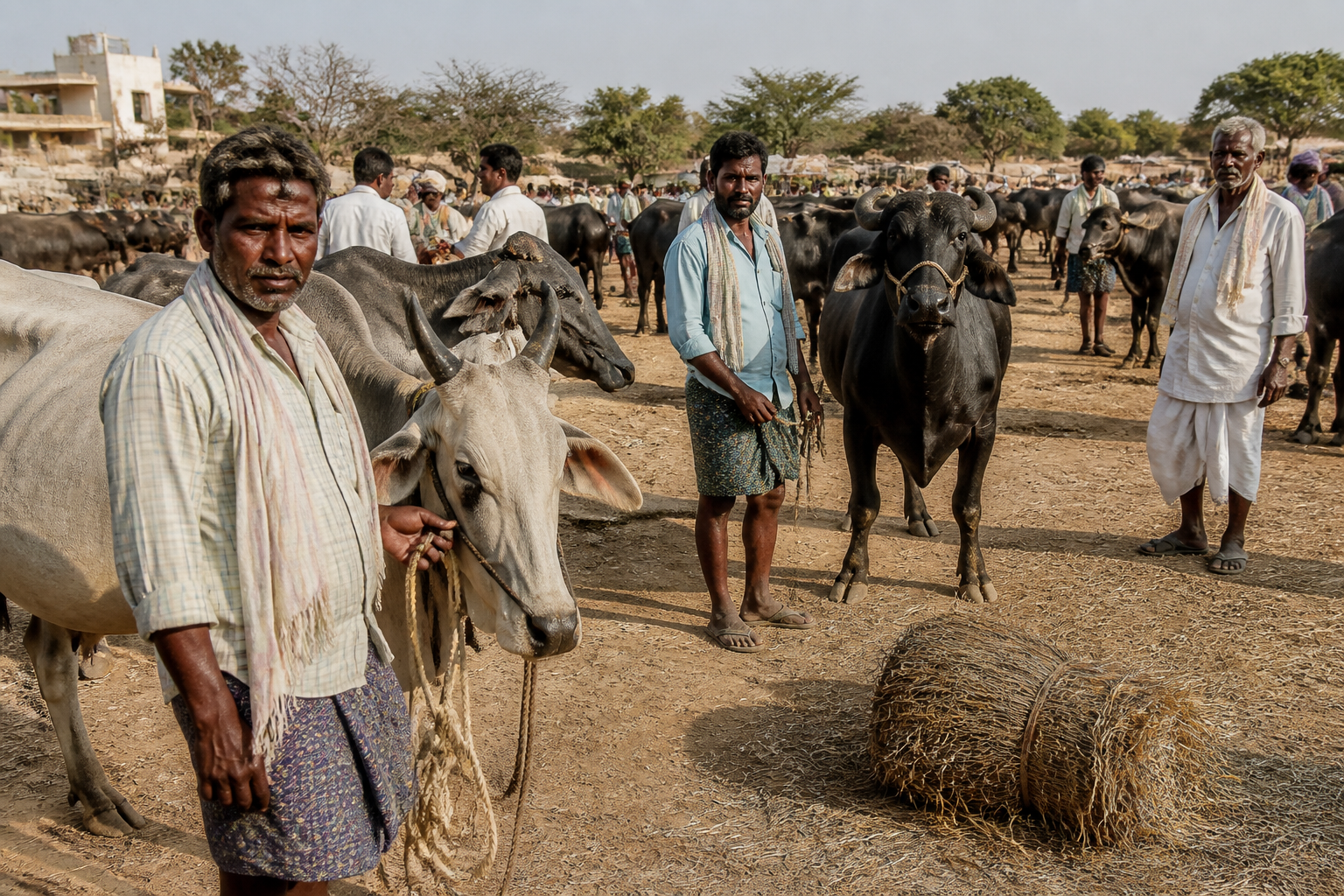
Anantapur drought conditions are forcing farmers to sell cattle at steep losses as drinking water and fodder become scarce across villages in Andhra Pradesh, according to a report by Deccan Chronicle. Farmers who paid about ₹80,000 for cattle said they were struggling to find buyers even at prices as low as ₹30,000.
The distress was reported from the cattle market at the Anantapur market yard, where farmers had brought cows, bulls and milch buffaloes for sale. Among them was Thimmappa, who was reportedly seeking to sell cattle valued at around ₹80,000 for ₹30,000 after becoming unable to afford their feed.
The situation was observed during a visit by a delegation of the Communist Party of India led by national secretary K Ramakrishna. Ramakrishna interacted with farmers at the market and heard accounts of crop failure, depleted water sources and falling demand for livestock.
Farmers told the delegation that deficient rainfall had damaged groundnut, red gram, green gram and cowpea crops. The report also said horticulturists were facing losses after borewells dried up, removing a key source of irrigation in the drought-affected areas.
Ramakrishna attributed the severity of the situation to the El Niño effect and deficient rainfall, and said nearly 300 mandals had been severely affected. His statement linked the distress cattle sales to a wider breakdown in farm support systems: when crops fail and borewells run dry, farmers face the additional cost of keeping animals without reliable access to fodder or water.
The delegation demanded that the government declare the drought a national calamity and provide drinking water and fodder to affected communities. It also sought compensation for crop losses, a waiver of farm loans and fresh credit for farmers facing financial distress.
The CPI leader further called for expanded works under the Mahatma Gandhi National Rural Employment Guarantee Scheme to help prevent migration. The demand places rural employment alongside water, livestock and credit support as part of the immediate response sought for affected households.
The report did not provide details of any government order declaring the drought, the number of cattle being sold, the prevailing market price of livestock or the status of compensation and relief measures. The next steps will depend on the state government’s response to the demands for drinking water, fodder, crop-loss assistance, credit relief and expanded employment works.
