


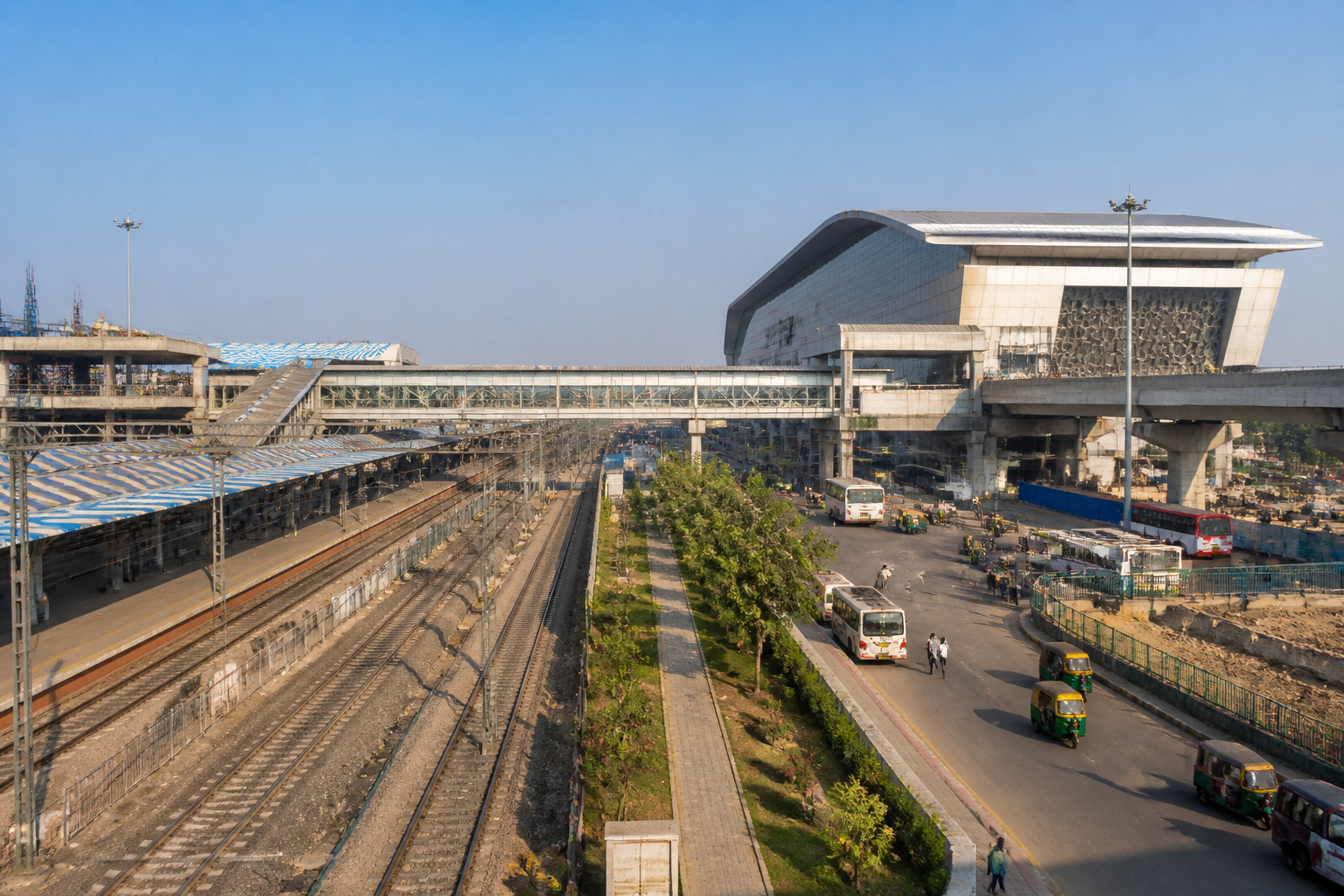
The Vadodara bullet train station on the Mumbai-Ahmedabad corridor is being developed as a major interchange linking India’s railway network, GSRTC bus services and the city’s local transport system, according to a report by Loksatta – Mumbai. The station is planned on Platform 7 of the existing Vadodara railway station and will include three pedestrian bridges connecting it with nearby transport facilities and neighbourhoods.
The station is expected to serve students, young professionals and industry workers travelling between Vadodara, Ahmedabad, Surat and Mumbai. Vadodara is home to institutions including Maharaja Sayajirao University, Gati Shakti Vishwavidyalaya and IIIT, while its industrial base includes engineering, pharmaceuticals, chemicals and manufacturing.
The planned transport integration is intended to reduce the need for separate city transfers when passengers arrive at the high-speed rail station. A 534-metre pedestrian bridge will connect the bullet train station with the existing Vadodara railway station and the GSRTC central bus depot. The bridge is also expected to include traveller facilities to support passenger movement between the linked transport modes.
A separate 90-metre pedestrian bridge will provide direct access to the Alkapuri area. A third bridge, measuring 51 metres, will connect the station plaza with the parking area. The station’s pedestrian infrastructure will include lifts and escalators, according to the report.
The station facilities are planned to include a waiting lounge, toilets, retail outlets, pick-up and drop-off areas, and separate parking arrangements for cars, buses and autorickshaws. A modern station plaza and wayfinding system are also part of the proposed passenger facilities.
The design places the station within an existing transport and institutional corridor rather than treating it as a standalone terminal. Its direct connection with the railway station and bus depot is intended to make transfers more convenient for passengers travelling beyond Vadodara’s city centre.
For the city’s education and industrial sectors, the proposed high-speed rail connection could provide faster access to institutions, workplaces and business centres along the Mumbai-Ahmedabad corridor. The report specifically identifies students, researchers and young professionals among the groups expected to benefit from improved connections to Ahmedabad, Surat and Mumbai.
The available report does not specify the station’s opening date, passenger capacity, fare structure or the current construction timeline. These details will determine how the planned interchange operates alongside Vadodara’s existing rail, bus and road networks. The next milestone remains the completion and commissioning of the station and its connecting pedestrian infrastructure.
