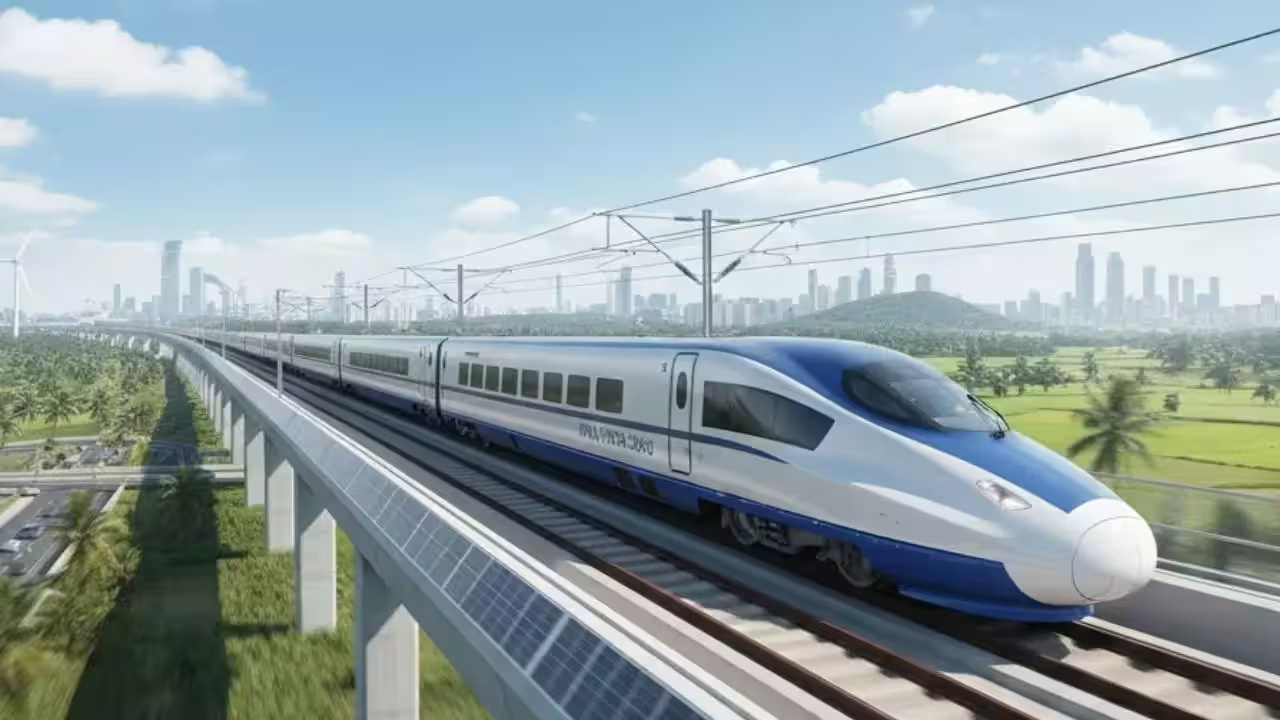
Mumbai Pune High Speed Corridor Targets Faster Journeys
A proposed high-speed rail corridor between Mumbai and Pune could reduce the journey between the two cities to about 48 minutes, placing one of Maharashtra’s busiest inter-city routes at the centre of India’s next phase of rail expansion. Announced in the Union Budget 2026–27, the project is intended to strengthen economic links between two major urban centres while offering an alternative to increasingly congested road and conventional rail routes. The Mumbai Pune high speed rail corridor is one of seven new routes announced as part of the Centre’s high-speed rail programme. Together, the proposed corridors cover nearly 4,000 kilometres and are expected to attract investment of about ₹16 lakh crore. The government has described them as “growth connectors” aimed at improving movement between major cities and supporting wider regional economies.
For Maharashtra, the significance extends beyond cutting journey time. Mumbai and Pune already operate as interconnected employment, education, technology and business markets. A faster rail connection could widen the practical geography of these markets, allowing more people to access jobs and services across the two cities without depending as heavily on private cars or long-distance road travel. That shift could also influence where businesses locate and where people choose to live. Areas around future stations may attract new commercial and residential activity, potentially spreading economic opportunities beyond established urban centres. But urban planners caution that improved connectivity can also increase land values and development pressure. Without coordinated housing, public transport and land-use planning, infrastructure-led growth can make newly connected areas less affordable.
The environmental case will depend on how the corridor is ultimately designed and operated. The Union government has positioned high-speed rail as part of a more sustainable passenger transport system, but the climate benefit is strongest when rail replaces significant volumes of road and air travel. Convenient station access, affordable fares and connections with local public transport will therefore matter as much as headline speeds. The Mumbai Pune high speed rail project also sits within a much larger national strategy. Other proposed corridors include Pune–Hyderabad, Hyderabad–Bengaluru, Hyderabad–Chennai, Chennai–Bengaluru, Delhi–Varanasi and Varanasi–Siliguri. Importantly, the government has not yet announced a definitive construction or completion schedule for the Mumbai–Pune corridor. The next stage will need to establish its alignment, stations, financing, land requirements and implementation framework. For commuters, the 48-minute figure is therefore a future mobility target rather than an immediate travel option.
If planned alongside suburban rail, metro systems, buses and walkable station districts, the corridor could become more than a faster inter-city service. It could help create a more integrated Maharashtra mobility network while limiting the pressure for road-led expansion.