


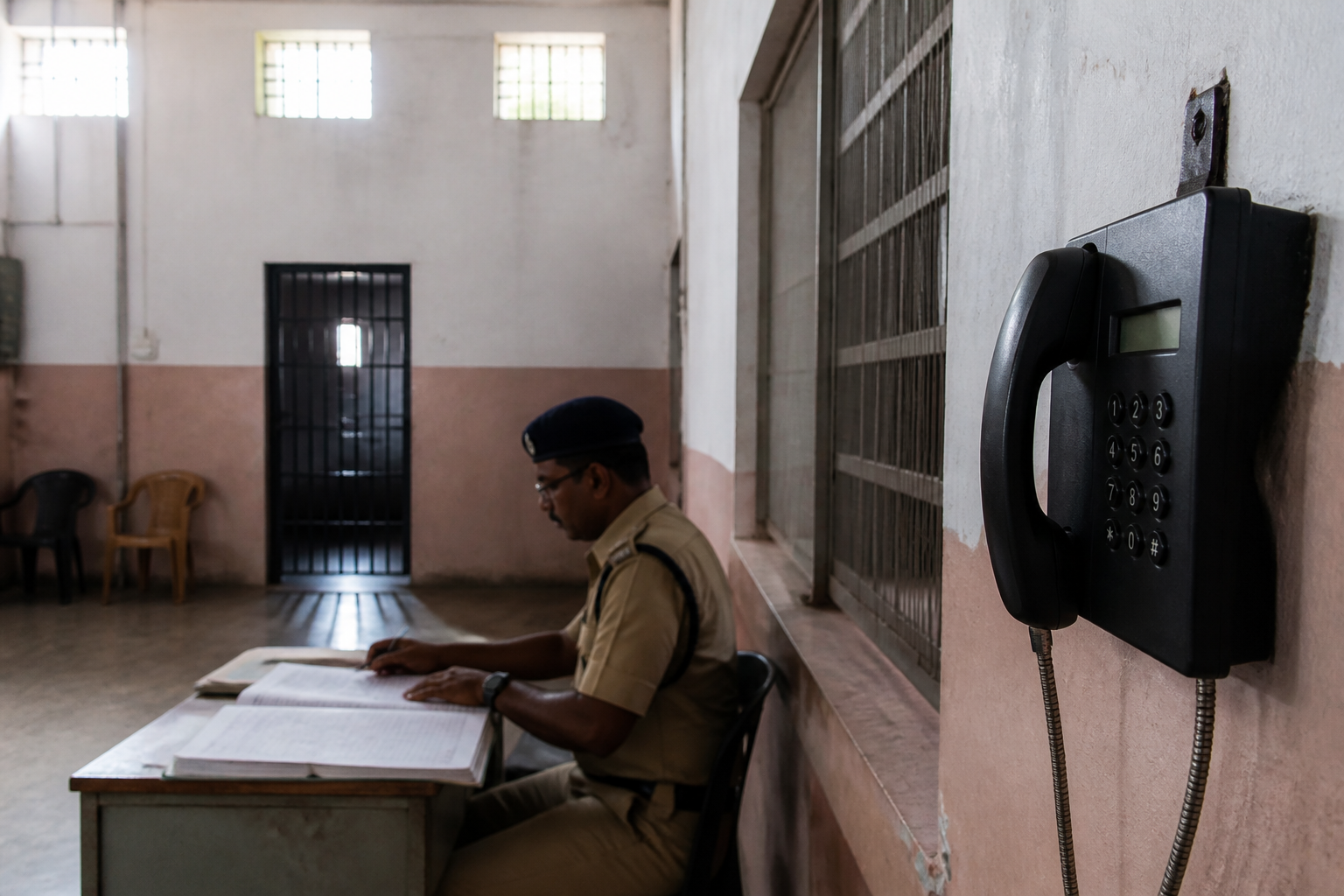
West Bengal’s prison department has introduced a monitored prepaid landline service for inmates to speak with family members, while excluding foreign prisoners and those accused in sedition cases from the facility, according to a recent directive issued by the Inspector General of Prisons.
Under the arrangement, prisoners can submit up to three telephone numbers in advance and make calls between 8 am and 5 pm through a specified process. Each call will be limited to 10 minutes, after which the line will be disconnected automatically. Incoming calls will not be permitted, the report said.
The conversations will be recorded, with prison authorities monitoring whom inmates contact and what they discuss. Prison department sources cited the recent recovery of mobile phones from several correctional facilities as the reason for introducing the system.
The measure has drawn objections from human-rights organisations. The Association for Protection of Democratic Rights, or APDR, has questioned the exclusion of prisoners accused under the Unlawful Activities (Prevention) Act, prisoners suspected of Maoist links and those facing sedition cases. APDR vice-president Ranjit Shur said the removal of telephone access in such cases amounted to a violation of human rights and called for the new arrangement to be withdrawn.
The reported rules also leave access for prisoners facing serious allegations to the discretion of the jail superintendent. Human-rights activists have alleged that superintendents sometimes withdraw the facility at their discretion. The report cited the case of Narayan Mahato, an inmate at Dum Dum Central Correctional Home who is accused in a political murder case and is reportedly being denied access to the service.
The prison department has maintained that the action is consistent with prison regulations. A department official cited in the report said surveillance had been increased following mobile-phone seizures and that prison employees were also facing disciplinary action. The official’s statement did not specify the number of seizures, disciplinary cases or facilities covered by the new arrangement.
The introduction of recorded landline calls comes as authorities attempt to control unauthorised mobile-phone use inside prisons while retaining a regulated channel for contact between inmates and their families. The system’s effectiveness in preventing mobile phones from entering correctional facilities remains a matter of concern raised in the report. Questions have also been raised about whether prison staff could be involved in the movement of prohibited devices.
The reported arrangement requires prisoners to use only pre-approved numbers, limits calls to a fixed daily window and prevents incoming communication. Its implementation will therefore depend on how prison superintendents apply eligibility rules and how the department handles requests from excluded or restricted inmates.
