


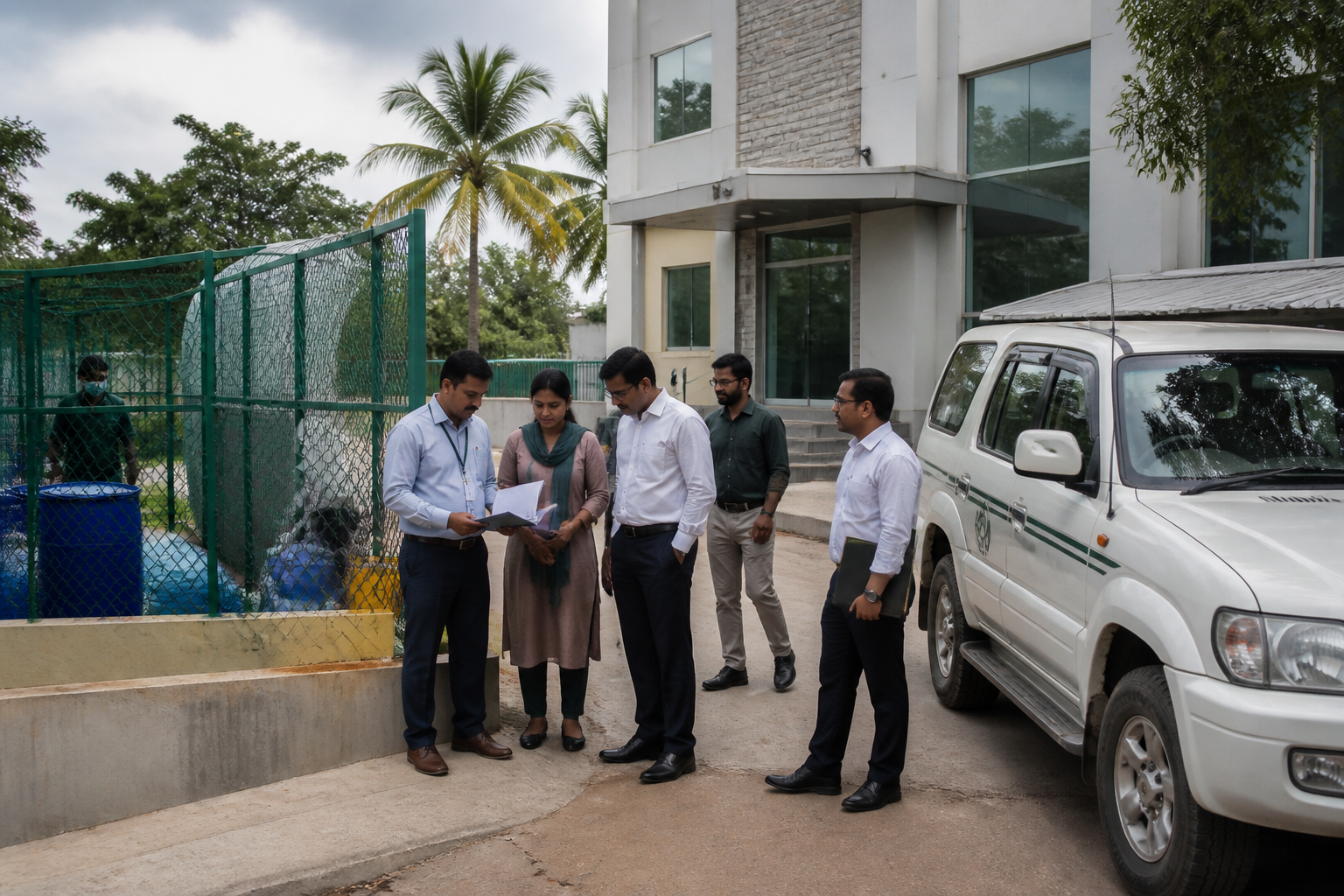
A private environmental testing laboratory in Bengaluru is facing scrutiny after a surprise inspection by Karnataka Forest, Ecology and Environment Minister Ramalinga Reddy and senior Karnataka State Pollution Control Board (KSPCB) officials found violations involving staffing, regulatory consent and waste disposal.
The inspection was conducted at Bengaluru Analytics and Research Laboratory Private Limited. Officials found that the laboratory had secured prior permission from the Ministry of Environment, Forest and Climate Change (MoEFCC) on the basis that three analysts would be employed. However, only one analyst was present during the inspection.
According to the inspection findings reported by the Times of India, the other two analysts had not worked at the facility for the previous five months. The discrepancy has raised questions about whether the laboratory continued to meet the staffing conditions under which it received regulatory permission.
Officials also found that the laboratory’s Consent for Establishment issued by the KSPCB had expired in 2025. Despite the expiry, the unit was operating without a valid consent from the pollution control board, according to the report.
The inspection further identified shortcomings in the handling of waste generated by the laboratory’s activities. The facility allegedly lacked a proper waste-disposal system and was discharging waste into an open pit, the report said. The finding places the laboratory’s operations under scrutiny because environmental testing facilities are expected to manage their generated waste through prescribed systems.
Consent mechanisms administered by pollution control boards are intended to ensure that industrial and laboratory units meet specified environmental conditions before and during operations. These conditions can cover the nature of activities, staffing, emissions, effluents and waste management. Operating after the expiry of consent can therefore create a regulatory gap, particularly when the unit continues to generate waste.
The inspection also highlights the role of surprise checks in testing whether documentary compliance reflects conditions on the ground. In this case, the findings involved both records and physical operations: the number of analysts present did not match the staffing details submitted for approval, the KSPCB consent had expired, and waste was allegedly being discharged into an open pit.
The laboratory’s reported activities are linked to environmental testing, making compliance especially significant for Bengaluru’s wider pollution-control system. Testing laboratories can support regulatory monitoring and industrial compliance, but the reported findings indicate that the operation of such facilities also requires continuing oversight rather than reliance only on initial permissions.
The report did not include a response from Bengaluru Analytics and Research Laboratory Private Limited or specify the precise enforcement action that will follow the inspection. Further proceedings will depend on the findings recorded by the environment department and the KSPCB, including whether the laboratory is directed to rectify the deficiencies or faces additional regulatory measures.
