


The Motor Accident Claims Tribunal has awarded nearly Rs 68 lakh to 44-year-old deep-sea diver Sukhbinder Paramjit, holding that his physically demanding occupation must be considered when assessing disability and future loss of earning capacity after a road crash in Mumbai.
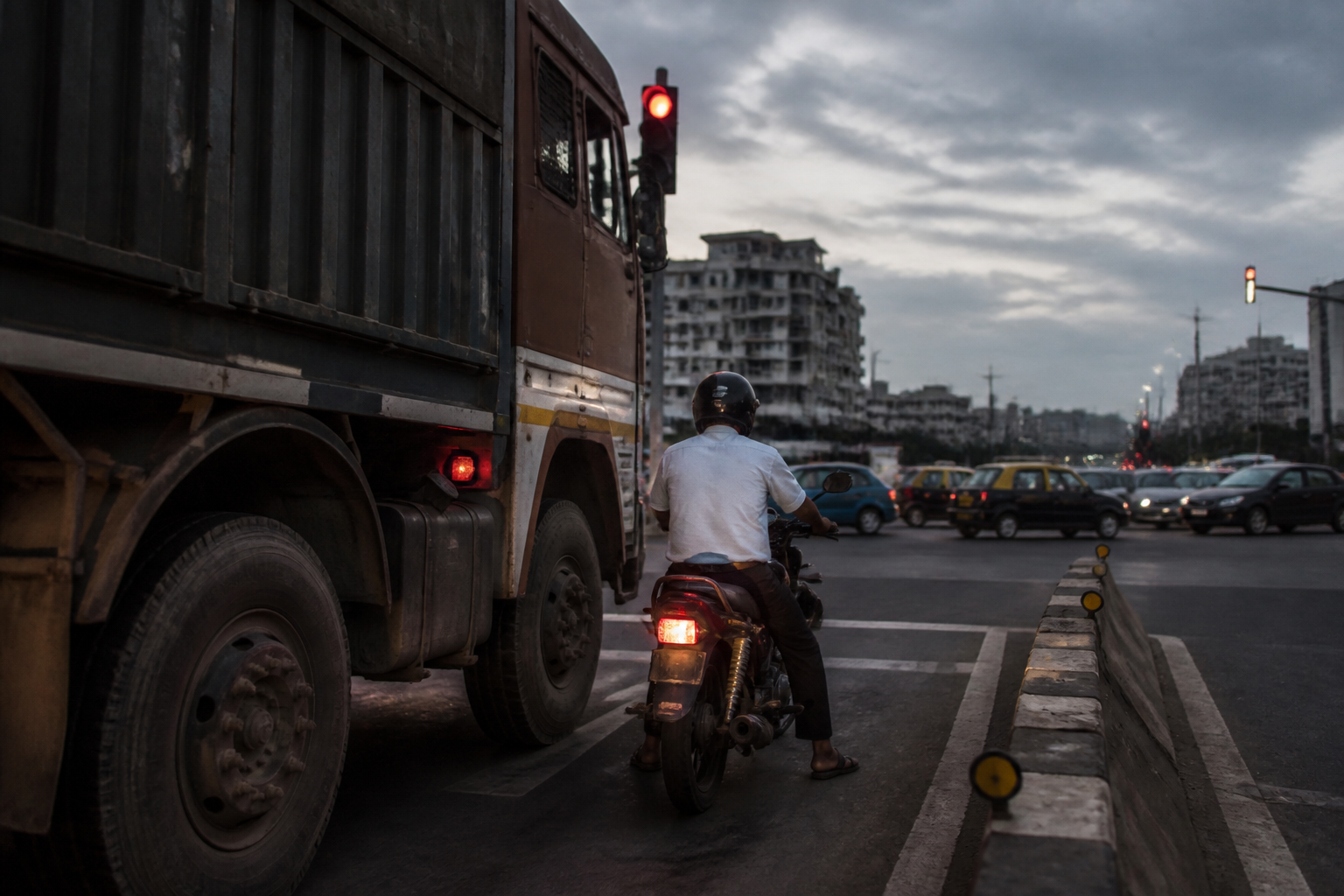
Paramjit, a resident of Andheri East, was travelling as a pillion rider on a motorcycle when a truck hit it from behind at the Jay Coach Junction signal on the Western Express Highway in Goregaon West. The accident took place at about 5.15 pm on September 13, 2017, while the motorcycle was stopped at a red light.
The tribunal found truck driver Danish Khan responsible for the collision and held the driver, owner Anilkumar Gupta and insurer Universal Sompo General Insurance Company jointly and severally liable. The insurer was directed to deposit the compensation within two months. The amount will be transferred to Paramjit’s verified bank account after identity and bank verification.
The tribunal said the evidence established that the truck had struck the stationary motorcycle from behind. It held that a heavy goods vehicle approaching a traffic signal had a duty to maintain proper control, reasonable speed and adequate distance from vehicles ahead. Since Paramjit was a pillion rider, the tribunal found that no negligent act could be attributed to him personally.
The injury assessment was central to the award. Medical records showed that Paramjit suffered a sacral or sacropelvic fracture, required bed rest for about three months, experienced restricted movement for about a year, and underwent physiotherapy and rehabilitation. A disability certificate assessed his disability at 30% and recommended light duties.
The tribunal said that percentage-based medical disability could not be considered in isolation when determining the impact on earning capacity. It noted that Paramjit worked as a Diving Supervisor or Deep-Sea Diver, an occupation requiring physical fitness, mobility, the ability to undertake underwater and offshore work, climbing, balancing and other physically demanding tasks. The tribunal accepted that the injury seriously affected his ability to continue in that line of work and that he lost an overseas job offer as a diver.
For the income calculation, however, the tribunal did not accept Paramjit’s claim that he was assured earnings of US$400, or about Rs 26,000 per day, in 2017. He had produced an employment offer dated August 18, 2017, from a European company, but the tribunal treated it as evidence of earning potential rather than proof of permanent income because the proposed earnings had not been established as actual income.
Instead, the tribunal relied on Paramjit’s income tax return, which showed annual net professional or business profit of Rs 7 lakh, equivalent to about Rs 58,240 a month. It also considered his affidavit describing the accident, treatment, prolonged bed rest, physiotherapy and loss of work.
The tribunal noted that Paramjit did not later appear for cross-examination. It said his untested assertions could not automatically be treated as conclusively proved, but held that the medical records and other supporting documents could not be ignored. The driver and vehicle owner had remained absent, and proceedings against them continued ex parte.
Universal Sompo General Insurance Company had disputed the truck driver’s negligence, Paramjit’s occupation, income and disability. It also alleged negligence by the motorcycle rider and a breach of policy conditions relating to the driver’s licence. The tribunal rejected those objections and directed the insurer to comply with the deposit order within two months.
