


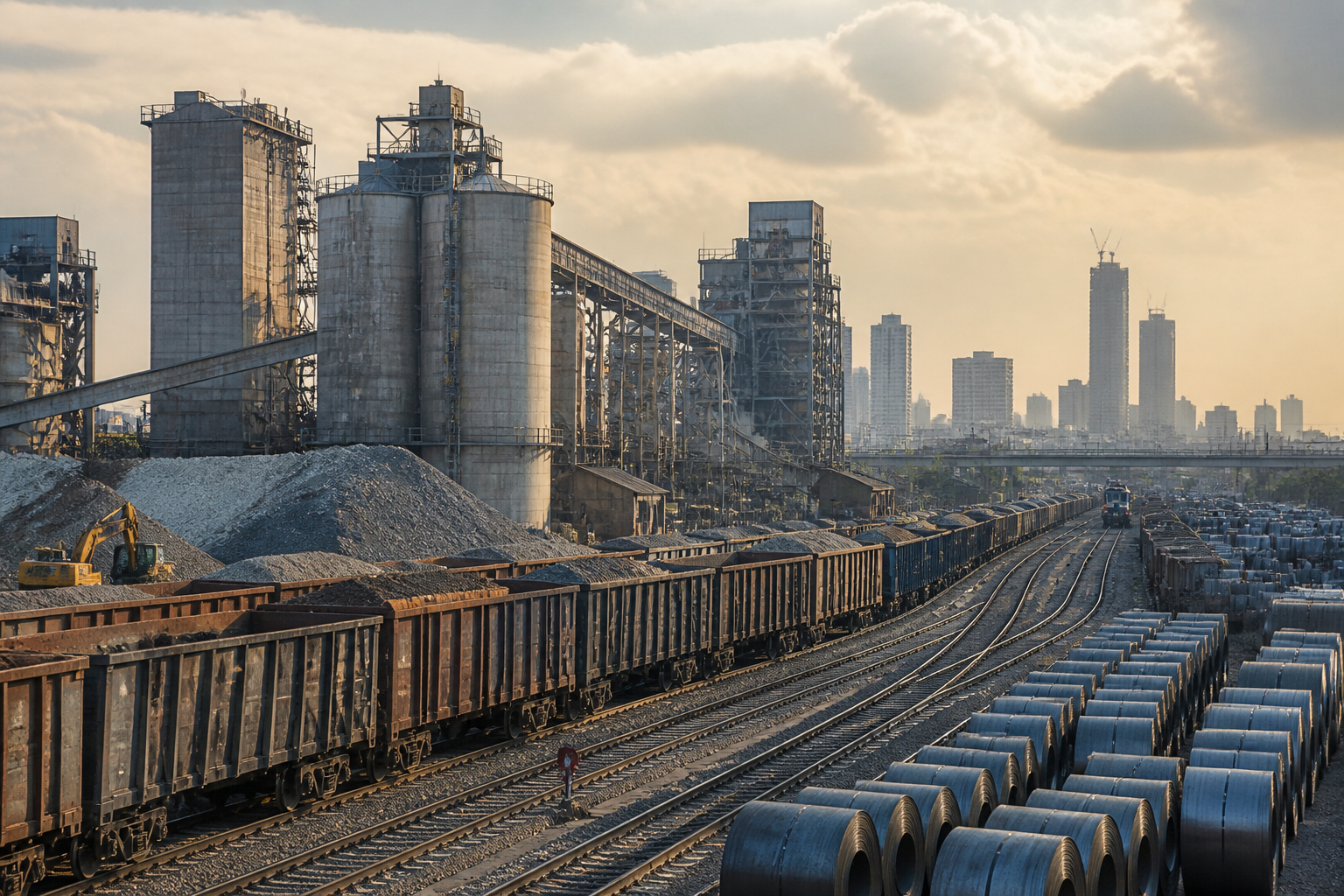
The BRICS opposition to carbon border adjustment mechanisms gives producers of steel, cement, fertiliser and aluminium a temporary policy reprieve, but the New Delhi Declaration also exposes a deeper tension in the transition to lower-carbon construction and industrial supply chains: climate measures designed in one market can impose costs on producers in another without resolving how developing countries will finance cleaner production.
BRICS leaders said they opposed unilateral, punitive and discriminatory measures such as carbon border adjustment mechanisms, arguing that these measures undermine developing countries’ efforts to address climate change, build adaptive capacity and improve resilience. The declaration was reported by Economic Times from the leaders’ discussions in New Delhi.
A carbon border adjustment mechanism, or CBAM, is an additional import duty linked to the emissions generated during the manufacture of carbon-intensive goods. The Economic Times report said the European Union and the United Kingdom have announced plans to impose such a carbon-linked import charge. The affected product categories include iron and steel, cement, fertiliser and aluminium, all of which are important inputs in buildings, transport infrastructure, industrial facilities and urban utilities.
The declaration therefore places a trade instrument at the centre of a built-environment question. The carbon intensity of materials is no longer only a matter of production technology or environmental reporting. It can also influence whether a product remains commercially competitive when it crosses a border. For cities and construction markets, that creates a link between international trade rules, industrial capacity and the eventual cost and availability of basic materials.
The BRICS position does not remove the possibility of carbon-related trade measures. Nor does the supplied declaration establish a common alternative mechanism, a shared carbon price or a financing arrangement for producers seeking to reduce emissions. What it does is record collective opposition to unilateral measures and call for a fairer and more predictable environment for sustainable development. The distinction matters: a political declaration can shape negotiations, but it does not by itself change the import rules of the European Union or the United Kingdom.
The strongest concern expressed by the leaders is distributive. Developing countries may be required to address climate impacts while also dealing with the costs of adaptation, resilience and industrial upgrading. If a carbon border charge is calculated on the emissions associated with manufacturing, exporters may face an additional cost even when their domestic policy, technology access and financing conditions differ from those of importing markets. The declaration argues that such measures could undermine, rather than support, developing countries’ climate efforts.
For construction materials, the issue is particularly consequential because the relevant goods sit near the beginning of long supply chains. Steel and aluminium enter structural systems, transport networks, machinery and building services. Cement is a basic input for concrete, housing, roads, bridges and urban infrastructure. Fertiliser is not a construction material, but its inclusion shows that the proposed trade concern extends beyond the built environment to wider industrial and agricultural production systems.
The declaration also connects the carbon border dispute to the broader organisation of global value chains. BRICS leaders said they wanted global value chains to become resilient, efficient, predictable, productive, transparent, secure, fair, stable and inclusive. They expressed an intention to explore policy levers that could increase intra-BRICS trade and supported cooperation on trade facilitation, capacity building, critical infrastructure, industrial capacities, connectivity, intellectual property protection and access to technology.
That language points to a structural challenge. Lower-carbon production depends not only on a company’s decision to change its equipment or energy source. It also depends on access to technology, finance, reliable infrastructure, technical skills, data and markets. If carbon-linked trade rules are introduced without equivalent cooperation on those conditions, the burden may fall most heavily on producers that are least able to absorb the cost of industrial transition.
The leaders’ reference to digitisation of global value chains is relevant to this problem. They called for cooperation on digital trade documentation and for a more efficient, transparent and seamless environment, while recognising that BRICS members have different capacities. In principle, better documentation could make it easier for producers and buyers to exchange information about goods and their manufacture. However, the supplied declaration does not specify a common emissions accounting system or explain how the bloc would verify carbon data across different national systems.
That unresolved measurement question is central to any carbon border regime. A charge based on manufacturing emissions requires agreement on what is measured, how it is calculated, which production stages are included and how the information is verified. The BRICS statement raises concerns about fairness and international law, but it does not set out a shared technical framework that would replace the measures it opposes.
The declaration’s treatment of special economic zones offers another route through which the group wants to build industrial capacity. BRICS leaders described these zones as mechanisms for trade, investment, industrial cooperation, innovation and integration into resilient and sustainable global value chains. They associated their potential with enabling business environments, efficient infrastructure and streamlined regulatory procedures.
For cities, the relevance is not limited to export statistics. Industrial zones and manufacturing clusters require roads, ports, power, water, waste systems, worker housing and reliable digital connectivity. If the zones are to support higher-value manufacturing and cleaner production, those urban and regional systems must operate together. The declaration identifies the need for infrastructure and connectivity, but does not provide project-level commitments, funding allocations or implementation schedules.
The leaders also agreed to work towards broader and more equitable participation by developing countries and emerging markets in higher-value-added segments of global manufacturing and production. They referred to trade and investment initiatives, technical cooperation, productive capacities and technology transfer, subject to each member’s laws, regulations and policies.
This is significant because the debate over carbon border taxes is also a debate over where value is created. Producers that remain concentrated in lower-value segments may carry the environmental and compliance costs of global manufacturing without capturing a proportionate share of higher-value activities. The BRICS position seeks to connect climate-related trade concerns with industrial upgrading, rather than treating the carbon cost as an isolated tariff question.
The declaration’s parallel focus on intellectual property and artificial intelligence reinforces that wider ambition. BRICS leaders agreed to expand cooperation between intellectual property offices on awareness, capacity building, commercialisation, patent examination, traditional knowledge, geographical indications and AI applications. They also recognised risks involving the misappropriation and misrepresentation of knowledge, heritage and cultural values that are insufficiently represented in datasets and AI models.
That agenda is separate from carbon border measures, but it reflects the same institutional concern: developing countries want access to technology and participation in new production systems without surrendering control over knowledge or bearing unequal costs. The statement specifically refers to respect for intellectual property used in digital environments, including for AI training, alongside fair remuneration for rights holders and the priorities of developing countries.
For the construction and infrastructure sectors, the immediate question is how this diplomatic position will interact with material procurement. The supplied report does not establish whether BRICS members will create common standards for low-carbon cement, steel or aluminium, or whether they will coordinate responses to the European Union and the United Kingdom. It also does not quantify the potential financial impact on exporters or identify projects that could face higher material costs.
What the declaration does establish is a policy direction. BRICS members want trade and climate measures to be aligned with international law, to recognise different national capacities and to avoid protectionist effects. They also want stronger cooperation in infrastructure, connectivity, industrial production, technology transfer and digital trade systems. Those priorities place the carbon border debate inside a broader attempt to reshape manufacturing and trade relationships.
The next stage will depend on whether the declaration is converted into operational arrangements. The leaders welcomed further development of a BRICS Global Value Chain Action Plan for 2026–2030 and supported implementation of a workplan on shared understanding of global value chains. The declaration also calls for continued exploration of policy levers to expand intra-BRICS trade and for cooperation on the digitisation of trade documentation.
The evidence currently supports a clear conclusion but not a prediction. BRICS has formally opposed unilateral carbon border measures and linked that opposition to the unequal climate, technology and industrial capacities of developing countries. It has also identified infrastructure, connectivity, special economic zones and technology transfer as tools for more inclusive participation in global manufacturing. What remains uncertain is whether those commitments will produce common standards, financing mechanisms or alternative carbon-accounting arrangements. Until that becomes clearer, exporters and the urban industries that depend on their materials will be navigating a policy landscape in which climate compliance and trade competitiveness are becoming inseparable.
