


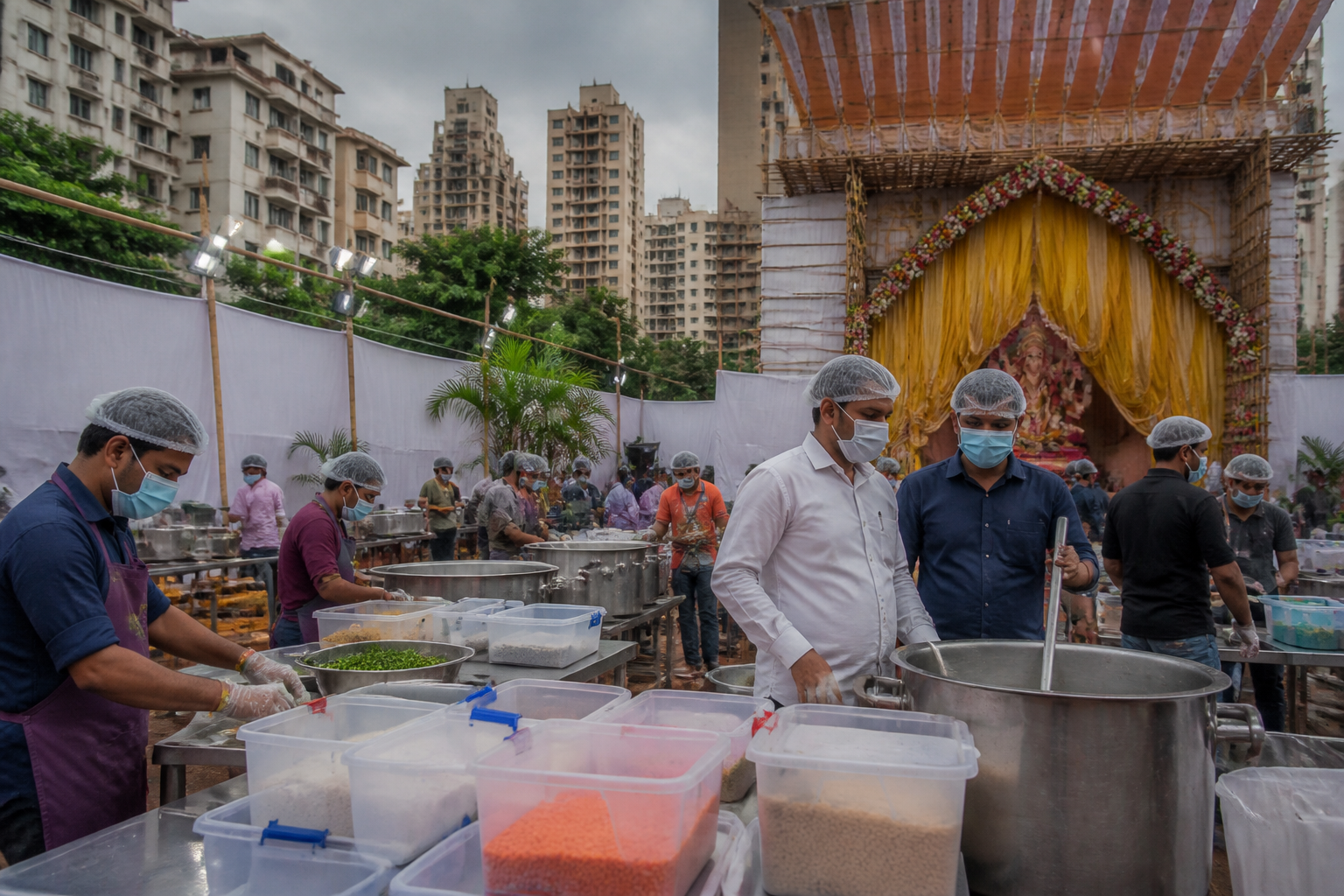
Several Ganesh mandals in Mumbai have cancelled this year’s mahaprasad programmes after food-safety compliance requirements issued by the Food and Drug Administration raised concerns over costs, registration and the need to use licensed catering services, according to a report by Loksatta – Mumbai.
Mahaprasad, a community meal traditionally organised during Ganeshotsav, is an important part of the celebrations for many mandals. The report said mandals are now required to follow a set of conditions intended to ensure that devotees receive safe and hygienic food. Mandals organising mahaprasad must register on the FoSCoS portal, the report said.
Under the reported requirements, ingredients such as cooking oil, ghee, gram flour and mawa must be purchased from registered traders. Food preparation and distribution must also be handled by a licensed caterer. These conditions have created financial and procedural difficulties for smaller mandals, which often rely on local volunteers and limited budgets to organise community events.
The issue has emerged shortly before Ganeshotsav, leaving mandals with limited time to complete arrangements or revise their programmes. According to the report, several organisers decided to cancel mahaprasad rather than risk non-compliance or possible action by the FDA. The decision reflects the practical challenge faced by community organisations when formal food-safety requirements are applied to short-duration public events managed largely by volunteers.
The reported dispute is also linked to a delayed consultation process. The Sarvajanik Ganeshotsav Samanvay Samiti wrote to the FDA on July 12 seeking discussions on the rules, but the organisation had not received a response by the beginning of September, Loksatta – Mumbai reported. The FDA subsequently called a meeting for September 7. However, most mandals reportedly could not attend because preparations for the festival were already under way.
The requirements place responsibility on organisers for several stages of the food-supply chain, including registration, procurement and preparation. For larger mandals, these obligations may be incorporated into existing event-management arrangements. Smaller mandals, however, may have to bear the cost of licensed catering and compliant sourcing for a single event, making the traditional model of volunteer-led cooking more difficult to sustain.
The episode highlights the administrative gap that can arise when public authorities introduce or enforce compliance requirements without a sufficiently early consultation and support process. Food safety remains the stated objective of the FDA’s guidelines, but the reported cancellations show that implementation costs and procedural clarity are also determining whether community programmes take place.
The FDA’s September 7 meeting was the immediate official step reported in connection with the issue. Further discussions between the administration and Ganesh mandals will determine whether organisers receive clarification or assistance before the festival programmes are finalised.
