


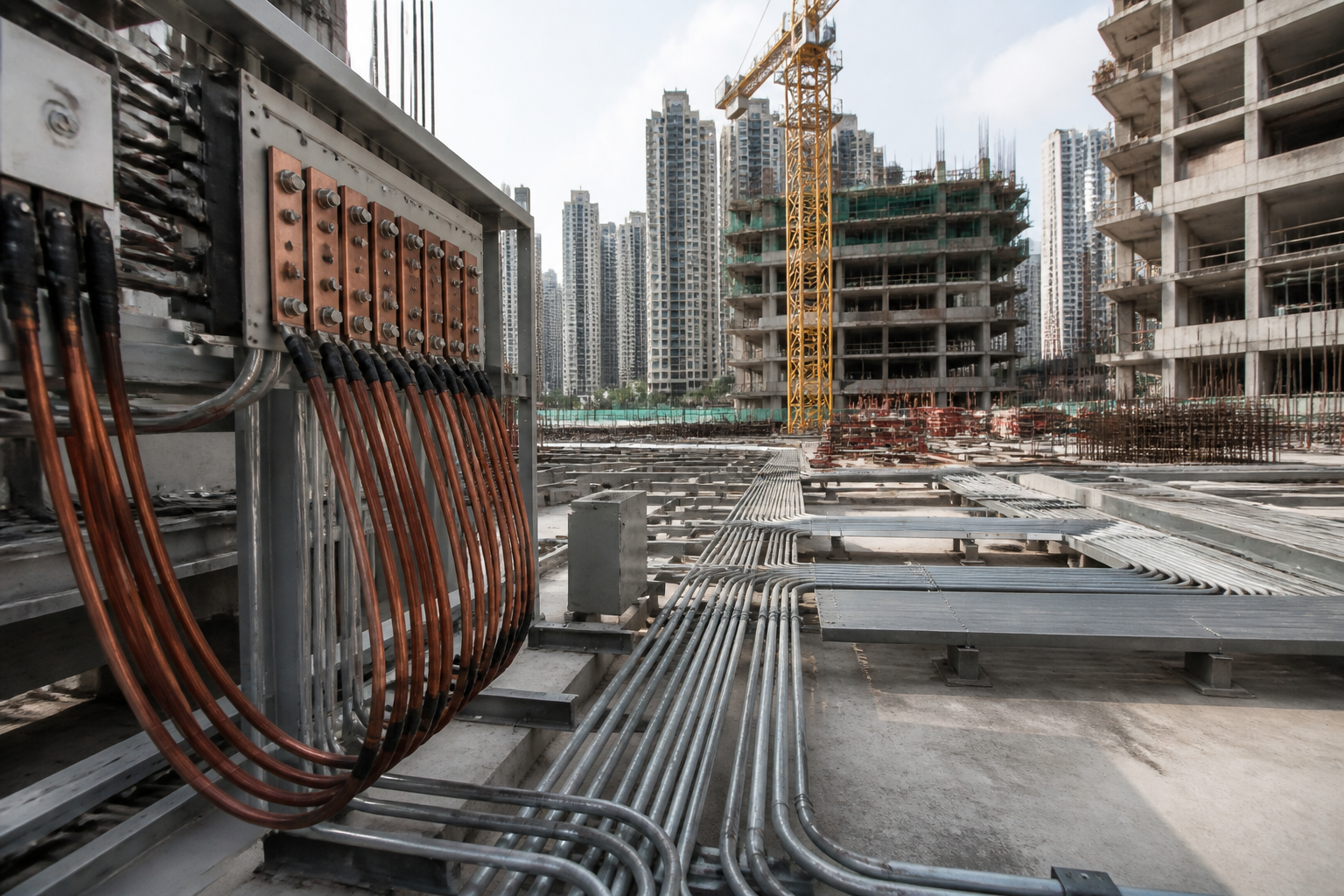
The latest surge in copper prices has created a new cost pressure for India’s construction and infrastructure sectors, even as the broader economy faces sluggish demand. Copper and crude oil have both rallied, according to the Times of India report, creating different but connected risks for companies that build, operate or supply the urban systems on which Indian cities depend.
Copper prices are central to this story because the metal is used extensively in cables and wires, electrical and electronic equipment, power generation, transmission and distribution systems, and several mechanical, electrical and plumbing components used in real estate projects. When the price of the raw material rises, the effect does not remain confined to mining companies or metal traders. It can move through procurement contracts, equipment prices and construction budgets.
The report said three-month copper futures on the London Metal Exchange reached an all-time high of $14,617 a tonne on Tuesday. It also said the metal’s price had risen by about 17% over the previous year. The increase was attributed to tightening mine supply, particularly from Chile, changing global trade flows linked to possible United States tariffs on refined copper, and stronger demand associated with electrification, renewable energy, power infrastructure and artificial intelligence.
These forces place copper at the intersection of two major developments. On one side is a supply constraint affecting a key industrial material. On the other is a rise in demand from technologies and infrastructure that require substantial electrical capacity and connectivity. Electrification, renewable-energy systems, power networks and data-intensive technologies all depend on copper-intensive equipment. The same material is also required in the urban construction projects that support housing, commercial development and public infrastructure.
The result is a cost problem with no simple offset. Higher copper prices may improve the earnings outlook for Indian producers and miners, but they can increase input costs for industries that consume the metal. The Times of India report identified real estate, cables and wires, electrical and electronic equipment, and power production, transmission and distribution among the sectors exposed to the increase.
For real estate, the exposure is especially relevant because copper is embedded in a project well before a building is occupied. Wiring, electrical distribution equipment, plumbing and building services are typically procured during the construction process. A rise in the cost of these components can affect the mechanical, electrical and plumbing, or MEP, budget even when the project’s overall design remains unchanged.
A report by real estate consultancy Anarock Property Consultants cited in the article estimated that MEP costs in the real estate sector had risen by 8-12% because of the war in West Asia, with part of that increase attributed to higher copper prices. The figure does not establish that copper alone caused the full increase. It does, however, show how commodity volatility can become visible in the cost structure of a building through a wider combination of geopolitical and material pressures.
This distinction matters for interpreting the effect on housing and urban development. A copper-price increase does not automatically translate into an equivalent increase in the final sale price of a home or commercial property. Developers may absorb some of the cost, renegotiate procurement, alter specifications where permissible, delay purchases or pass the increase to buyers. The report said companies were facing the choice of raising prices or absorbing higher costs at a time when demand was already sluggish, which could squeeze profit margins.
The pressure is therefore likely to be distributed across the project chain rather than appearing in one place. Manufacturers of cables and electrical equipment may face higher input costs. Contractors may have to manage quotations that become less reliable over time. Developers may see their construction budgets change between project launch and procurement. Infrastructure agencies and utilities may also face higher equipment costs when projects require copper-intensive systems.
The parallel rally in crude oil adds a second layer to the urban cost equation. Brent crude was reported to be nearing $100 a barrel, while the Indian crude basket had crossed $100 earlier in the month. Crude is India’s largest import item by value, according to the report. A sustained rise could add to inflationary pressure and increase the possibility of a Reserve Bank of India rate hike, the article said.
Crude and copper affect cities through different channels. Copper is closely tied to the material and equipment content of buildings, grids and electrical networks. Crude affects transport, logistics, fuel and broader input costs. Construction materials, workers, equipment and components all move through supply chains that depend on energy. When both commodities rise together, the impact can extend beyond any single bill of quantities.
The monetary-policy channel is also important for real estate. If higher crude prices contribute to inflation and interest rates rise in response, financing costs could increase for developers, contractors and homebuyers. The supplied report does not establish that a rate increase will occur, but it identifies that possibility as a concern if crude prices remain near or above $100 a barrel. This makes the commodity rally relevant not only to construction costs but also to the demand and financing conditions surrounding urban development.
At the same time, the copper rally reflects demand associated with infrastructure expansion. Electrification, renewable energy and power networks require investment in transmission, distribution and related equipment. Higher copper prices can therefore signal strong demand for systems needed to support urban growth while making those systems more expensive to build. The same trend that strengthens the case for infrastructure investment can raise the cost of delivering it.
The market response described in the report shows this split between beneficiaries and users. On the Bombay Stock Exchange, Hindustan Copper closed about 4.7% higher on Tuesday and Vedanta rose 1.3%. Onix Solar, MSCTC and Bhagyanagar India each gained about 5%, according to the article. Oil India closed 2.1% higher and ONGC rose 1%. These movements indicate that investors were seeking exposure to companies expected to benefit from higher commodity prices, although stock-price performance alone does not establish the long-term effect on any company.
For cities, the more important question is how procurement and delivery systems respond when input prices move quickly. Urban projects often involve multiple contracts and long implementation periods. A price change in a raw material can affect suppliers, subcontractors and the final asset at different stages. The supplied material does not provide details of contract clauses, hedging practices or public procurement rules, so the precise distribution of risk between developers, contractors and public authorities cannot be determined from the report.
It does establish, however, that commodity markets are increasingly connected to the performance of the built environment. Copper is not simply a traded metal. It is a component of the electrical systems that make buildings functional and of the networks that allow cities to expand. Crude is not simply an energy-market indicator. It influences the cost of moving materials, operating machinery and managing inflationary pressure.
The immediate evidence points to a mixed outcome. Indian copper producers and miners may benefit from higher prices, while construction, real estate, electrical equipment and power-sector consumers face greater cost exposure. Developers may experience margin pressure if demand limits their ability to raise prices. Buyers and public agencies may eventually face higher project costs if the rally persists, although the available material does not quantify the likely increase across entire projects.
What remains uncertain is the duration of the price surge and the extent to which companies can manage it through procurement, inventory and contract arrangements. The report attributes copper’s rise to supply constraints, trade uncertainty and structural demand, while the crude rally is linked mainly to geopolitical tensions in the Persian Gulf. These are distinct drivers, and their persistence cannot be established from the supplied evidence.
The developments that warrant monitoring are therefore clear: whether copper remains above its recent levels, whether Brent crude moves decisively around the $100 mark, how MEP costs evolve in new and ongoing real estate projects, and whether higher commodity costs begin to appear in construction prices, project timelines or financing conditions. The evidence currently confirms a growing cost interface between global commodity markets and India’s urban build-out. It does not yet establish the full scale or duration of the effect.
