


Goldman Sachs has warned that oil prices could rise to $120 a barrel if shipping attacks and disruption around the Strait of Hormuz intensify. The immediate story is about crude markets and Middle East tensions. The larger urban question is how a sustained energy shock would move through transport systems, logistics networks, household budgets and the operating costs of cities.
The warning, reported by the Economic Times and attributed to Daan Struyven, co-head of global commodities research at Goldman Sachs, came after renewed hostilities raised concerns over crude supplies. Brent crude futures were reported at $98.30 a barrel on Tuesday, up $1.21, or 1.25 per cent, while US West Texas Intermediate gained $2.10, or 2.30 per cent, to $93.63. Brent had reached its highest level since July 24 in the previous session.
Those figures describe a market already pricing in risk. They do not, by themselves, establish that a prolonged physical supply shortage has occurred. The distinction matters for cities because the effects of an energy shock depend on its duration, scale and transmission into fuel, electricity, freight and industrial costs.
The Strait of Hormuz is central to the concern because it is a key route for global oil shipments. According to the report, Iran said energy infrastructure across the Gulf, including US oil and gas interests, could be vulnerable after tit-for-tat strikes over the weekend. Iran also said it would announce a new exclusion zone extending from the line of a US naval blockade towards the strait and into the Persian Gulf.
Iranian officials further warned that ships entering the area with the intention of passing through the strait and identified by Iran could be placed on its sanctions list. These statements increase uncertainty for shipping operators and commodity traders. The report does not establish how many vessels have been rerouted, how much crude has been physically removed from the market, or whether the proposed exclusion zone has begun operating.
That uncertainty is what gives the oil price its risk premium. Traders do not need to wait for a complete interruption before pricing the possibility of one. If vessels face higher insurance, longer routes, security restrictions or delays, the cost of moving energy can rise even before a sustained reduction in supply is recorded.
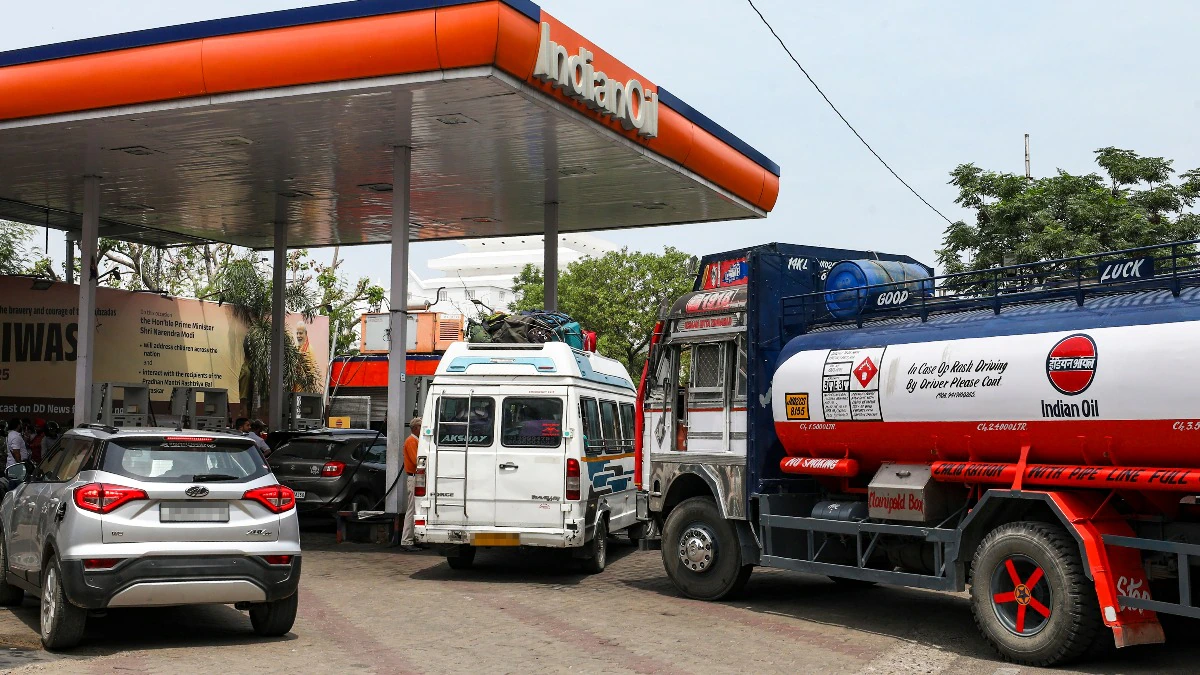
For cities, the first transmission channel is mobility. Urban transport systems depend on fuel directly or indirectly. Buses, taxis, delivery vehicles, construction fleets and goods carriers all operate within a wider fuel and logistics system. A rise in crude prices does not translate mechanically into an equivalent increase in every retail fuel price, but prolonged pressure can raise operating costs across road-based transport.
The effect is broader than the daily commute. Cities are also distribution platforms. Food, building materials, medicines, consumer goods and industrial inputs move through ports, highways, warehouses and local delivery networks. Higher fuel and freight costs can therefore reach urban markets through several stages, from international shipping to domestic transport and last-mile delivery.
Construction is another exposed sector. The source report does not provide a cost estimate for Indian builders or infrastructure agencies, but it identifies a potential rise in crude, natural gas and refined-product prices. A broad energy shock could affect the transport of cement, steel, aggregates, machinery and other materials, as well as the operation of construction equipment. The scale of that effect would depend on contracts, inventories, fuel composition and the length of the disruption—none of which is established in the supplied material.
Goldman Sachs’ warning also extends beyond crude. Struyven said the firm saw meaningful upside to crude oil prices and suggested that investors should bet on higher natural gas and refined-product prices. He said supply shocks in gas and fuels were larger than those in the crude market. This is significant for urban systems because cities consume energy in multiple forms: transport fuels, cooking fuels, electricity generated from different sources and industrial energy used in buildings and public infrastructure.
However, the available report does not identify a specific shortage of natural gas or refined products in any city. It also does not state that urban utilities have altered operations, raised tariffs or announced rationing. The evidence supports a discussion of exposure, not a claim that disruption has already reached municipal services.
The policy landscape is consequently defined by responsibilities spread across different institutions. Shipping security and international conflict sit outside municipal control. National governments and energy agencies are better placed to respond to strategic supply risks, while transport departments, public bus operators, utilities and local administrations would manage the urban consequences if costs or availability changed.
That institutional separation can make energy shocks difficult to manage locally. A city may be responsible for bus services, waste collection, street lighting or water pumping without controlling the international price of fuel or the security of shipping routes. Its room to respond depends on operating contracts, budgets, subsidies, reserve arrangements and the ability to pass costs through to users.
The source material does not specify whether any such measures have been activated. It reports market movements, official threats and analyst assessments. That means the present evidence is strongest on perceived risk and weaker on confirmed urban impact.
The data supplied in the report nevertheless shows how quickly market expectations can move. Brent rose to $98.30 a barrel, while WTI reached $93.63. Goldman Sachs’ upper-risk scenario was $120 a barrel for Brent if attacks on shipping intensified. JPMorgan was also reported to see further upside if disruption continued. These are not equivalent forecasts: one is a conditional warning and the other is a reported view of additional upside. Neither establishes that prices will reach a particular level.
The difference between current prices and a possible $120 scenario is important for city planners and operators because budgets are usually built around assumptions rather than daily headlines. A short-lived spike may be absorbed through inventories or existing contracts. A longer disruption could affect procurement cycles, transport fares, construction schedules and household spending. The supplied material does not provide the baseline assumptions used by any city, agency or infrastructure operator.
The report also shows the importance of duration. Markets are reacting not only to the attacks described but to the possibility that shipping restrictions and retaliation could continue. The longer vessels, insurers, traders and energy buyers treat the Strait of Hormuz as a heightened-risk route, the greater the chance that higher costs will move beyond financial markets into physical supply chains.
For urban India, the central issue is therefore not simply whether crude reaches $120. It is whether higher energy costs persist long enough to affect the systems through which cities function. Transport, construction, freight and utilities have different exposure levels and different capacities to absorb volatility. Without further evidence, it is not possible to quantify the effect on fares, municipal budgets, household fuel bills or project costs.
What the available evidence confirms is narrower but still consequential: geopolitical escalation has pushed oil prices higher, analysts see further upside if shipping disruption worsens, and the Strait of Hormuz remains a source of risk for global energy flows. What remains uncertain is the extent of any physical disruption, the duration of the market response and the point at which international risk becomes a measurable urban cost. Those are the developments that will determine whether the current warning remains a market shock or becomes an operating problem for cities.
