


Karnataka is presenting renewable energy not only as a way to add electricity capacity, but as the foundation of a wider industrial ecosystem involving manufacturing, storage, electric mobility, rooftop solar and technology-led investment. That proposition was central to Energy Minister K.J. George’s invitation to investors, start-ups and industry leaders at a roadshow in Bengaluru for the Bharat Renewable Energy Summit and Expo 2026.
The minister said Karnataka was open to investment and partnerships across the renewable-energy sector. His remarks placed the state’s existing wind and solar capacity alongside a broader set of opportunities, including hybrid projects, rooftop solar systems, electric transport, renewable-energy equipment manufacturing and battery-based energy storage.
The announcement is important because it reflects a shift in how states are competing for clean-energy investment. Renewable power is no longer being presented only as a generation target. It is increasingly linked to industrial policy, supply chains, employment, innovation and the ability of cities and regions to manage a more complex electricity system. Karnataka’s roadshow brought those strands together, although the available announcement did not specify new investment commitments, project capacities or implementation timelines for the opportunities described.
George said Karnataka would align itself with India’s national target of achieving 500 gigawatts of installed renewable power capacity by 2030. He also said the state had more than 8.5 gigawatts of installed wind-power capacity and had emerged as a significant renewable-energy destination. The source report did not provide a breakdown of Karnataka’s total renewable capacity, the share contributed by solar power, or the extent to which the state’s existing infrastructure can absorb additional generation.
That missing detail is significant. Capacity announcements describe the potential to generate electricity, but the functioning of a renewable-energy system depends on several linked assets. These include transmission networks, evacuation infrastructure, distribution systems, forecasting and balancing mechanisms, storage capacity and customers capable of consuming power when it is available. The minister’s reference to hybrid projects and battery storage indicates that the state is discussing this wider system, but the roadshow account does not establish the scale or status of specific projects.
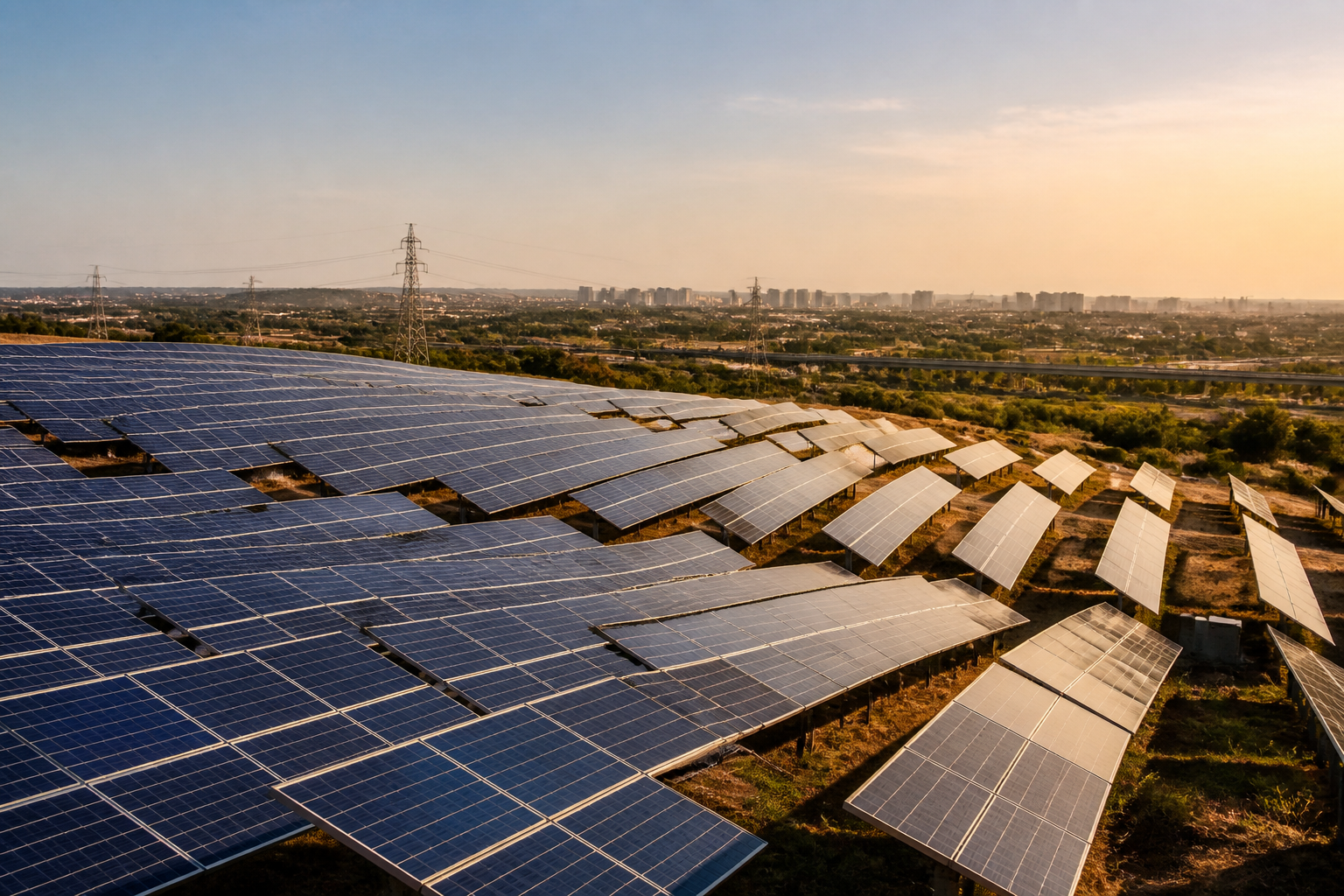
The Pavagada Solar Park was presented as a leading example of Karnataka’s approach. George described the project as evidence of the state’s innovative thinking and said it had developed into a globally recognised model for large-scale renewable-energy development. The source report did not provide updated figures on the park’s capacity, land arrangements, generation performance, affected communities or the institutional structure through which the project operates. Those details would be necessary to assess how transferable the Pavagada model is to future projects.
The use of Pavagada as a reference point nevertheless shows how the state is framing its next phase of development. Large solar parks can provide scale and visibility, but the newer investment pitch is more distributed and diversified. Rooftop solar connects renewable energy to buildings and electricity consumers. Electric mobility connects it to transport systems. Storage connects it to reliability. Equipment manufacturing connects it to industrial employment. Each segment has different land, finance, regulatory and infrastructure requirements.
This creates a more demanding policy task than simply approving generation projects. A state seeking renewable-energy investment must coordinate energy departments, industrial agencies, electricity utilities, transport authorities, urban local bodies, research institutions and private companies. The roadshow included officials from Karnataka’s energy department and the Karnataka Renewable Energy Development Limited, along with representatives from the Confederation of Indian Industry and Hitachi Energy. Their participation suggested an effort to bring government, industry and technology stakeholders into the same investment conversation.
The institutional question will be especially important for cities. Bengaluru was described by Energy Department Additional Chief Secretary Gaurav Gupta as a major centre for start-up-led manufacturing activity. He said Karnataka’s renewable-energy growth was being translated into production, investment and employment, and that the state wanted to use this capacity to become one of India’s leading renewable-energy states.
For Bengaluru, the implications extend beyond the city’s electricity supply. A renewable-energy manufacturing and innovation ecosystem can create demand for industrial land, testing facilities, logistics, skilled labour, research partnerships and reliable power. It can also intensify competition for land and infrastructure if new facilities cluster around an already pressured metropolitan region. The source material does not indicate where such manufacturing would be located or how the state intends to manage the resulting urban and regional infrastructure needs.
The same uncertainty applies to electric mobility. The minister identified electric transport as an area of opportunity, but the report did not specify whether the proposed investment focus would include vehicle manufacturing, charging infrastructure, battery production, fleet conversion or grid upgrades. These are connected but distinct activities. Their urban impact would vary depending on whether investment is directed towards public transport, commercial fleets, private vehicles or industrial production.
Battery-based energy storage presents a similar policy challenge. Storage can help manage the variability of solar and wind power, but its role depends on procurement models, grid requirements, safety standards, project economics and the design of electricity markets. The roadshow identified storage as an opportunity for investment, but did not announce a state-backed storage programme, a tender, a capacity target or a specific financing mechanism.
The policy message from Karnataka was therefore broad rather than project-specific. The state is seeking investment across the renewable-energy value chain and is positioning itself as a place where energy production, technology, manufacturing and entrepreneurship can develop together. The Ministry of New and Renewable Energy’s Secretary, Santosh Kumar Sarangi, said India had provided investors with a clear path towards the green-energy transition and that policy had created a strong foundation for investment, according to the report.
That national policy setting provides the framework within which Karnataka is making its pitch. The Bharat Renewable Energy Summit and Expo 2026 is being organised by the Ministry of New and Renewable Energy as a continuation of the success of RE-Invest 2024 in Gujarat, the report said. The 2026 event is scheduled to take place at Bharat Mandapam in New Delhi from November 2 to 5. The programme is also expected to include the ninth assembly of the International Solar Alliance and the fourth international conference on green hydrogen.
The scale of that event gives Karnataka an opportunity to present its capabilities to investors, manufacturers, start-ups and international institutions. But an investment roadshow is only an initial stage in the development cycle. The measure of the state’s renewable-energy strategy will ultimately depend on whether broad opportunities become projects with clear locations, approvals, financing, transmission access, land arrangements, implementation schedules and accountable institutions.
The employment dimension is also central to the state’s argument. Gupta said renewable energy should not be understood only as an increase in electricity-generation capacity, but also as a source of renewable-energy-based growth, manufacturing and job creation. This framing expands the public value of the transition. However, the supplied report does not provide projected employment numbers, manufacturing targets, skill requirements or evidence of how existing renewable-energy investments have affected local labour markets.
That evidence gap does not negate the investment opportunity, but it limits what can be concluded from the roadshow. Karnataka has identified multiple areas for expansion and has pointed to its wind capacity, Pavagada Solar Park and Bengaluru’s start-up ecosystem as assets. It has not, in the reported announcement, set out a consolidated delivery plan showing how generation, storage, equipment production, electric transport and urban demand will be integrated.
The larger urban question is whether renewable-energy investment can be planned as a connected infrastructure system rather than a collection of isolated projects. Solar parks require land and transmission. Rooftop systems require consumer participation and distribution reforms. Electric mobility requires charging networks and transport planning. Manufacturing requires industrial land, logistics and skilled workers. Storage requires grid integration and operating rules. The benefits of investment will depend on how effectively these components are coordinated.
Karnataka’s roadshow establishes the state’s intention to compete for that next generation of clean-energy investment. It confirms a public commitment to renewable-energy partnerships and identifies the sectors officials want investors to consider. What remains uncertain is the conversion of that invitation into funded projects, measurable capacity, employment and infrastructure delivery. The next developments to watch are the investment commitments emerging from the 2026 summit, the project-specific programmes announced by Karnataka and the institutional arrangements created to connect renewable generation with manufacturing, mobility and urban energy demand.

