


Subheadline: UltraTech is combining a new wires and cables business with a larger electric truck fleet, linking construction-materials diversification with a measurable change in cement logistics.
Standfirst: UltraTech Cement has made two moves beyond its conventional cement narrative: it has begun commercial production at its new Ultravolt wires and cables plant in Gujarat, and it plans to expand its electric truck fleet to more than 600 vehicles by December 2026. The announcements point in different directions. Ultravolt is an industrial expansion into another construction-linked product category, while the electric truck programme changes how the company transports one of its existing products. Taken together, they show a company seeking growth through adjacent building-material markets while attempting to reduce the environmental cost of moving cement inputs. The evidence supplied in the announcement and analyst commentary indicates a substantial ambition, but it also leaves important questions about execution, market capture and the practical scale of the emissions gains.
UltraTech’s latest announcements are best understood as two parts of the same expansion question: how can a large cement company grow beyond its core product while improving the logistics that support it? The first answer is Ultravolt, the Aditya Birla Group company’s wires and cables business housed under UltraTech Cement. Commercial production began on September 1 at a manufacturing plant in Jhagadia, in Gujarat’s Bharuch district.
The plant has an installed capacity of 1.1 million kilometres and has been established with an initial investment of ₹1,800 crore. UltraTech aims to become one of the top two players in the wires segment within five years. The launch came ahead of the company’s previously stated December timeline, making the speed of commissioning a central part of the market’s response.
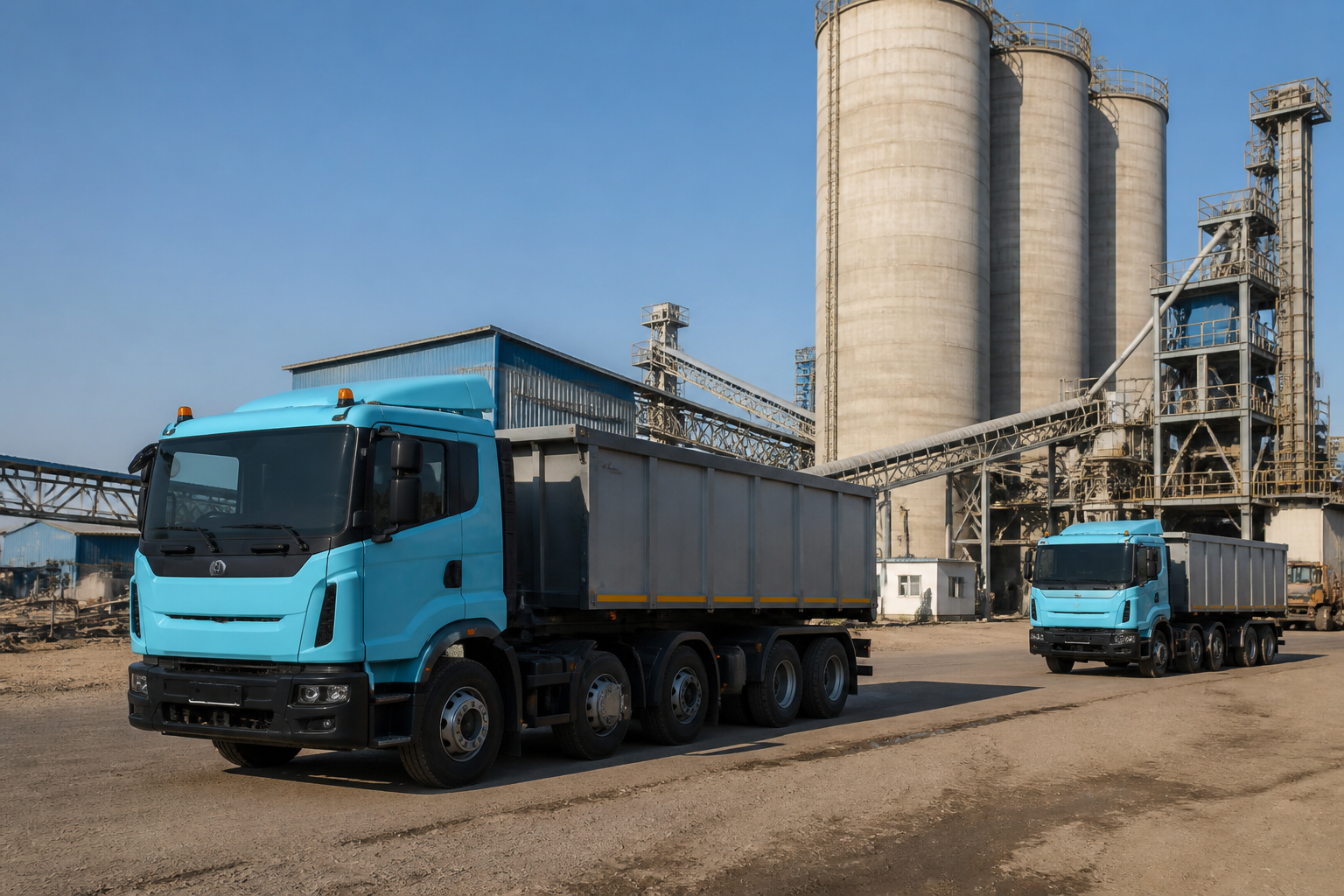
The second move concerns the company’s transport system. On September 2, UltraTech announced plans to expand its electric truck fleet to more than 600 vehicles by December 2026. The trucks are intended to transport five million metric tonnes of clinker annually. The company estimates that the programme could reduce carbon dioxide emissions by more than 1,17,000 tonnes a year.
These are not identical initiatives. Ultravolt is a capacity and market-entry decision. The electric truck plan is an operating and logistics decision. Their significance lies in the way they extend UltraTech’s strategic perimeter in two directions: into a new category of construction-linked products and into the decarbonisation of a high-volume industrial movement system.
The wires and cables launch also changes the interpretation of UltraTech’s growth strategy. Rather than relying only on additional cement capacity, the company is entering a product segment that is connected to construction and infrastructure demand but has a different competitive structure. The supplied material does not establish the company’s detailed product mix, customer segments, distribution strategy or geographic rollout. It does, however, establish the scale of the initial capacity and the timetable attached to the company’s ambition.
That ambition has attracted comparisons with the Aditya Birla Group’s expansion in paints through Birla Opus. The comparison, as reported, reflects an aggressive group-level playbook: enter a large adjacent category, build capacity and pursue a rapid position in the market. But the comparison should not be treated as proof that Ultravolt will follow the same trajectory. The available evidence establishes the aspiration, not the eventual market outcome.
Analyst estimates provide a second layer to the market’s interpretation. Morgan Stanley, which maintains an Overweight rating and a target price of ₹14,700, noted that approximately ₹890 crore had already been deployed by the end of June against the total ₹1,800 crore budget. It identified the pace of execution as a positive signal. Jefferies, with a Buy rating and a target price of ₹14,065, assessed Ultravolt’s positioning as more aggressive than initially expected and estimated that the business could contribute 3–7 per cent of UltraTech’s FY30 revenue and earnings before interest, taxes, depreciation and amortisation at scale.
Motilal Oswal, which also maintained a Buy rating, estimated that UltraTech could capture 5–7 per cent of the cables and wires market by FY31. These figures are estimates, not reported results. Their importance is that they reveal how the market is trying to value a business whose contribution has not yet been demonstrated in the supplied material. The forecasts are therefore evidence of expectations surrounding Ultravolt rather than evidence of its future performance.
The company’s transport announcement presents a different kind of measurable target. The planned fleet of more than 600 electric trucks is linked to the movement of five million metric tonnes of clinker each year. UltraTech also projects an annual carbon dioxide reduction of over 1,17,000 tonnes. The announcement gives the programme a defined fleet size, cargo volume, deadline and emissions objective. It does not provide, in the supplied material, the current size of the electric fleet, the routes involved, the charging arrangement, the ownership model or the baseline used to calculate the reduction.
Those missing details matter because electric freight is not only a vehicle-purchase decision. It is also a question of route length, payload, charging time, electricity supply and operational reliability. The supplied announcement does not establish how these variables will be managed. As a result, the stated emissions reduction should be read as the company’s projected outcome rather than an independently verified performance measure.
The clinker target also shows why the fleet plan has an urban and infrastructure dimension. Clinker is an intermediate product in cement production, and moving five million metric tonnes annually would connect the electric fleet to the physical geography of cement manufacturing and distribution. The information provided does not identify the plants, destinations or corridors involved. It nevertheless indicates that the programme is designed around industrial-scale freight rather than a small demonstration fleet.
For cities, this distinction is important. Construction materials reach urban projects through extensive supply chains, even when the production sites are outside the city. A change in the vehicles used for that movement can affect the emissions associated with building activity. However, the announcement does not quantify the programme’s effect on urban air quality, congestion, road wear or delivery costs. Those outcomes should not be inferred from the projected carbon reduction alone.
The two announcements also expose different implementation risks. Ultravolt must convert installed capacity into sales, distribution and market share. Its stated goal of becoming one of the top two wires players within five years requires more than a functioning plant. It requires sustained production, customer acquisition and competitive positioning, none of which can be confirmed from the supplied report.
The electric truck programme must convert a fleet target into reliable industrial operations. Its success will depend on whether the vehicles can meet the requirements of clinker transport at the intended scale. The supplied material does not provide operating data, so it is not possible to assess whether the projected emissions savings or transport volume have already been tested in comparable conditions.
UltraTech’s stock-market reaction reflects the combined effect of these announcements. Its shares were trading 0.47 per cent higher at ₹11,328 at 10.37 a.m. on Friday, after opening at ₹11,357 and touching ₹11,434. The report attributes the movement to the two developments over the preceding two trading sessions. The stock was nevertheless down about 10.45 per cent over the previous year, compared with a 3.11 per cent decline in the Nifty 50, and its 52-week high was ₹13,110 in February.
The valuation data adds context but not a conclusion. UltraTech was trading at a trailing price-to-earnings ratio of 38.76 at the time of the report. That figure, alongside the analyst targets and ratings, shows that investors were assessing the announcements within a broader valuation framework. It does not establish whether the new businesses will improve the company’s financial performance or justify the estimates.
The policy landscape is only partly visible in the supplied material. The electric truck plan is presented as a company initiative with a carbon-reduction target, while Ultravolt is presented as a corporate investment in manufacturing capacity. No government incentive, regulatory requirement, public funding arrangement or formal policy framework is identified. It would therefore be inaccurate to describe either announcement as the direct result of a specific public programme.
What the evidence does establish is a private-sector response to two structural pressures in the built environment. The first is the need for materials and components associated with construction and infrastructure. The second is the environmental burden of producing and transporting those materials. UltraTech is addressing the first through product diversification and the second through a planned shift in freight technology.
The larger urban question is whether such corporate moves can change the environmental profile of construction at scale. The available information offers an early answer, but not a complete one. The size of the proposed electric fleet and the stated annual carbon reduction are significant company targets. Yet their wider effect cannot be assessed without route-level data, verified emissions accounting and evidence of actual operations.
Ultravolt presents a similar uncertainty on the growth side. The 1.1 million-kilometre plant capacity and ₹1,800 crore investment establish a serious market entry. Analyst estimates suggest that the business could become financially meaningful by FY30 or FY31, but those estimates remain forward-looking. The next evidence will come from production, sales, market share and financial disclosures rather than from the launch announcement itself.
UltraTech’s two moves therefore confirm a strategy of expansion beyond a single cement-centred growth narrative, while linking that expansion to a stated logistics decarbonisation programme. What remains uncertain is whether Ultravolt can achieve its market ambition and whether the electric fleet can deliver the projected transport and emissions outcomes. The milestones to monitor are the build-out of the fleet by December 2026, the performance of the Jhagadia plant and subsequent disclosures on revenue, market share and operating emissions.
