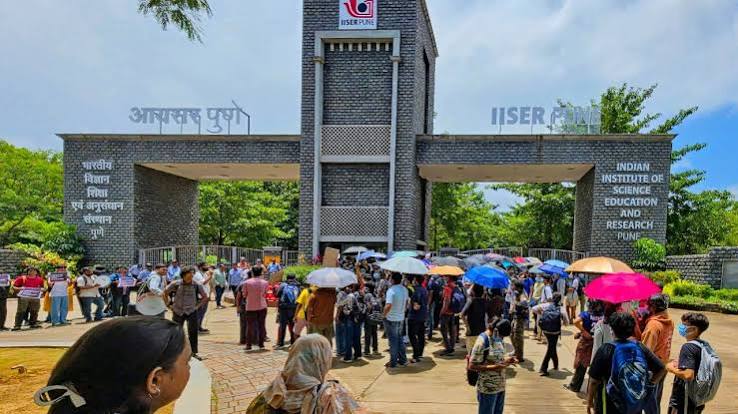
An indefinite student sit-in at the Indian Institute of Science Education and Research (IISER) Pune has entered its sixth day, with the administration responding to a broad set of demands covering mental-health care, hostel access, academic flexibility and student spaces. The standoff is placing renewed attention on how residential research institutions manage student welfare alongside academic and disciplinary systems.
The IISER Pune protest began on August 27, following the death of a student on campus on August 16 and amid separate concerns surrounding the suspension of a student council office-bearer. Students submitted a formal demand letter on August 31, seeking changes that extend beyond the immediate dispute to the institute’s wider support and campus environment. Mental-health capacity is among the central issues. IISER currently has two full-time counsellors and is pursuing the appointment of two additional full-time counsellors, alongside part-time support. The institute is also working with the Maharashtra Institute of Mental Health on suicide-prevention training and considering access to psychiatric services on campus. Students have also sought broader medical and academic safeguards, including more extensive attendance relaxation and stronger emergency support. IISER had already relaxed attendance requirements for lectures and laboratories for a limited period following the recent campus death. The debate points to a wider challenge for intensive academic institutions: welfare systems need to function before a crisis, rather than only expand after one.
Hostel policy has emerged as another major concern. The administration is considering allowing PhD students greater movement between designated hostels following consultations with residents. It has also indicated that gender-neutral washrooms are being introduced on hostel ground floors, while common areas and selected academic spaces are being opened for wider student use. These demands have an important spatial dimension. Residential campuses are not only places for classes and laboratories; students live, work, socialise and seek support within them. Access to safe common areas, recreational facilities and informal meeting spaces can influence community life and wellbeing. Urban-planning principles around inclusive public space therefore have a parallel relevance inside large institutional campuses.
The administration has invited a small delegation of students for discussions and has stated that peaceful participation in the sit-in will not attract retaliatory disciplinary action, provided the demonstration remains lawful and does not disrupt essential operations. The most contested issue remains the suspension of the student council’s general secretary. IISER has maintained that the disciplinary process included an appeal and that the director does not have the authority to overturn the appellate decision. For the IISER Pune protest, the immediate challenge is converting administrative responses into measurable timelines. The outcome will matter beyond the current sit-in: it could shape how research campuses approach mental-health infrastructure, student representation, residential mobility and institutional accountability in the years ahead.