Mumbai Water Reserves Remain Strong Into September
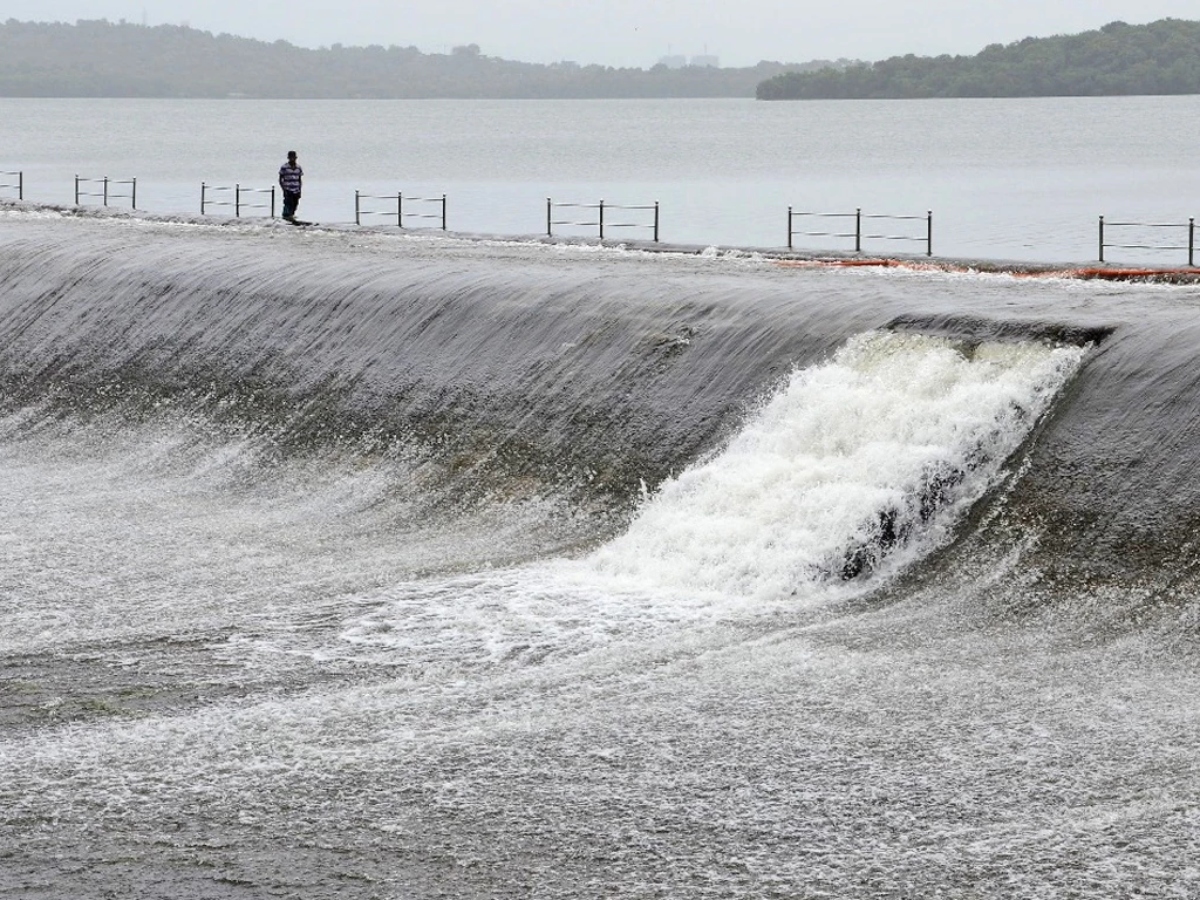
Mumbai’s seven drinking-water reservoirs entered September with storage at 95.87% of their combined live capacity, giving the city a substantial buffer as the monsoon moves towards its closing phase. The lakes held 13,87,618 million litres at 6am on September 1, according to civic water authorities. While the position remains strong, storage is marginally below the levels recorded at the same point in both 2025 and 2024. The current stock is 5,138 million litres below the 13,92,756 million litres recorded on September 1 last year. Compared with 2024, the gap is larger: the reservoirs then contained 14,01,649 million litres, equivalent to 96.84% of their live storage capacity.
The difference is relatively small in percentage terms, but it provides a useful measure of how the city’s water position has evolved across successive monsoons. Reservoir storage depends not only on rainfall totals but also on where rain falls, how quickly catchments receive runoff and the amount of water released or consumed during the season. For Mumbai, the near-full position provides operational security. The seven lakes form the backbone of the city’s municipal water supply, supporting households, businesses and public services. High storage entering the final weeks of the monsoon reduces the immediate risk of supply stress if rainfall weakens earlier than expected. However, high reservoir levels do not eliminate the need for careful water management. Urban water demand remains substantial, while changing rainfall patterns can make periods of intense rain alternate with longer dry spells. Climate-resilient water planning therefore requires the city to look beyond the headline percentage and assess the reliability of inflows across the wider catchment system.
The year-on-year comparison also shows why storage levels should be viewed as a trend rather than a single-day indicator. The current figure is only 0.36 percentage points below last year and 0.97 percentage points below 2024. Such differences do not indicate an immediate shortage, but they can become more relevant if the monsoon withdraws early or the following dry season is unusually long. Urban water specialists say reservoir management must increasingly be linked with demand reduction, leakage control, rainwater capture and protection of natural drainage and catchment areas. These measures can reduce pressure on large reservoirs while improving the city’s ability to absorb periods of irregular rainfall. The immediate outlook remains comfortable, with the lakes holding well above most of the levels seen earlier in the monsoon. The focus now shifts towards how the remaining rainfall is captured and managed.
For Mumbai, the stronger measure of water resilience will not simply be how full its lakes are on September 1, but how effectively the city converts seasonal abundance into reliable supply through the following summer.