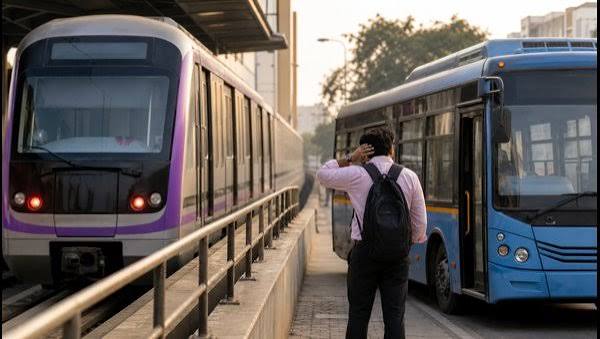
Pune Metro Feeder Gaps Threaten Last Mile Connectivity
Pune Metro’s growing reach is exposing a critical weakness beyond the rail network: the lack of dependable connections between stations and neighbourhoods. With the system spanning 29 stations across Pune and Pimpri-Chinchwad and carrying about two lakh passengers a day, limited feeder bus services are leaving many commuters to bridge the final stretch by autorickshaw, taxi or private vehicle.
The Pune Metro feeder network currently has only 15 buses operating across seven routes under the Pune Mahanagar Parivahan Mahamandal Ltd (PMPML). The limited fleet means passengers can face long waits after completing the faster part of their journey by train. For commuters making time-sensitive trips, this can undermine the main advantage of shifting from road transport to mass transit. Two feeder services have already been withdrawn. Connections between Ramwadi Metro station and Pune Airport, and between Pimpri Metro station and Akurdi railway station, were discontinued after passenger demand failed to meet expectations. While route rationalisation can prevent public resources from being spent on poorly used services, the closures also highlight the difficulty of designing feeder systems around changing travel patterns. Urban transport planners say the issue is not simply the number of buses. Feeder routes must be timed with Metro arrivals, reach residential and employment clusters, and operate frequently enough to make transfers convenient. A bus that runs infrequently may technically provide connectivity but still encourage commuters to choose private vehicles.
The problem has wider implications for Pune’s mobility and environmental goals. Metro systems can reduce road congestion and transport-related emissions only when passengers can access stations without depending heavily on cars and two-wheelers. Poor last-mile links can therefore weaken the wider economic and environmental return from investment in urban rail. PMPML is examining additional buses and changes to existing routes, while MahaMetro has proposed procuring 500 midi-buses for feeder operations as the rail network expands. Smaller vehicles could potentially serve narrower residential roads and connect stations with areas that cannot support conventional buses. However, fleet expansion alone will not guarantee higher ridership.
The more important measure will be how the services are planned and managed. Real-time passenger data, coordinated timetables and regular reviews of route demand could help operators adjust services as new housing, offices and commercial districts develop. For Pune, Metro feeder services need to be treated as part of the rail system rather than an optional add-on. A well-connected station is one that passengers can reach and leave easily. Strengthening the Pune Metro feeder network could determine whether the city’s investment in mass transit translates into fewer private vehicle trips and more reliable everyday mobility.