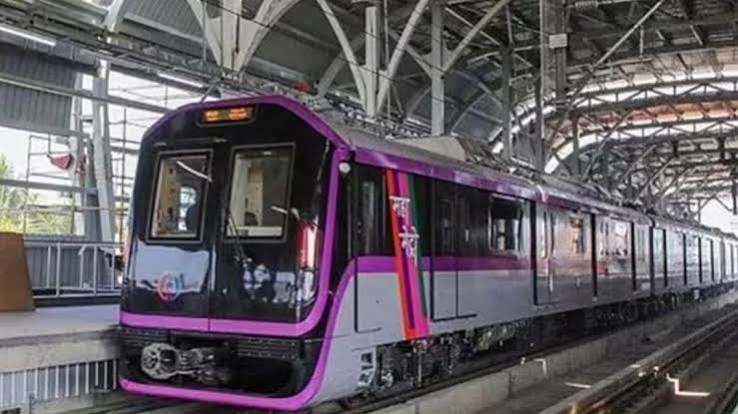
Pune’s expanding Metro system is increasingly being paired with pedestrian infrastructure designed to make station access safer and more direct. Eight pedestrian bridges are already operational across Pune and Pimpri-Chinchwad, while two more are under construction. The shift matters because the success of mass transit depends not only on trains, but also on how easily people can reach stations without crossing busy roads or relying on private vehicles.
The pedestrian links have been planned at locations where Metro stations interact with major roads, commercial areas, public institutions and existing transport networks. Operational structures are located near Deccan Gymkhana, Pune Railway Station, Khadki, Phugewadi, Nal Stop and Sant Tukaram Nagar, along with connections around Sambhaji Udyan. One of the more prominent interventions is the pedestrian connection associated with Sambhaji Udyan station, providing access towards the Balgandharva Rangmandir area. Another bridge, known as the Tanpura pedestrian bridge, links the station precinct with areas across the Mutha river. Such connections reduce the need for passengers to negotiate traffic-heavy junctions at street level. For Pune, the wider significance lies in treating the journey beyond the Metro platform as part of the public transport system. Urban transport planners increasingly view the “last 500 metres” as critical: if walking between a station and a destination is uncomfortable, unsafe or disconnected, commuters can still choose two-wheelers, cars or autorickshaws.
The issue is particularly relevant for older passengers, children, women, caregivers and people with limited mobility. A pedestrian bridge, however, is useful only when its approaches are accessible, well-lit and maintained. Elevators or ramps, clear signage, shade and safe crossings at either end can determine whether infrastructure is genuinely inclusive rather than simply functional. Two additional pedestrian bridges are now being developed near the Bhide Bridge area and Civil Court, including infrastructure intended to support interchange with the Hinjewadi–Shivajinagar Metro corridor. Officials have also indicated that pedestrian connections will be considered while planning future Metro lines.
The investment also has an environmental dimension. Better walking links can strengthen the connection between high-capacity public transport and surrounding neighbourhoods, helping reduce short private-vehicle trips. But the impact will depend on whether station areas are planned as complete pedestrian environments rather than isolated transit structures. As Pune’s Metro network grows, the next challenge is consistency. Safe access, universal design, shade, lighting and seamless links to buses, railways and footpaths will need to accompany every new station. For a city seeking cleaner and more efficient mobility, getting people safely from the station to the street is as important as getting the train there.