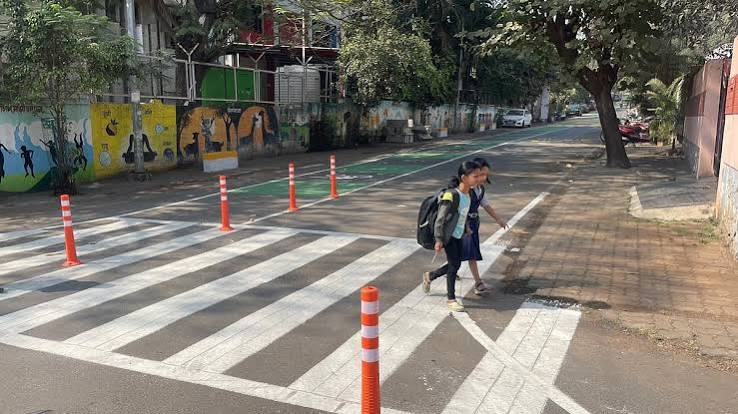
Pune Plans Child Friendly Spaces Across Civic Zones
Pune is set to expand its child-focused urban infrastructure, with the civic administration planning two family-friendly public spaces in every municipal zone by 2026. The initiative will repurpose underused civic areas for young children and caregivers, signalling a broader shift in how public infrastructure is planned, accessed and measured in a rapidly growing city.
The proposed spaces are expected to combine play areas with facilities that support caregivers, including crèches and opportunities for peer interaction. The approach places everyday family needs alongside conventional concerns such as roads, parks and public amenities. Pune’s experience since 2018 provides an indication of how existing infrastructure can be adapted without relying entirely on new construction. The Pune Municipal Corporation (PMC) has spent more than ₹5.5 crore on child-friendly public-space interventions, including upgrades to parks, primary health centres, maternity homes, Anganwadis and streets. One example is Lumbini Park in Yerawada, where longer evening operating hours, improved lighting and CCTV reportedly contributed to a 30% increase in footfall. Extending access into the evening can be particularly relevant for working caregivers, who may otherwise have limited opportunities to use neighbourhood public spaces with children.
Healthcare facilities are also being treated as part of the child-development network. At Kamla Nehru Hospital, an early-stimulation area uses the waiting period during immunisation visits for play and parent-child interaction. A similar facility has been introduced at Rajmata Jijau Nursing Home in Parvati Paytha. The numbers presented at an early childhood development workshop at Yashada point to a wider behavioural change. Civic officials reported increased time spent at child-oriented locations, higher footfall across parks and community facilities, and more caregivers walking to such destinations. The Pune Kids Festival also drew more than 2.5 lakh participants, including over 1 lakh children and more than 1.38 lakh caregivers. For Pune, the significance extends beyond recreation. Child-friendly spaces can influence how families use neighbourhoods, how far they need to travel for basic services and whether public areas remain usable for caregivers outside conventional working hours. Better pedestrian access can also reduce short vehicle trips, although the long-term impact will depend on location, safety and connectivity.
Urban planners say the next challenge is institutionalising the model rather than treating individual projects as isolated improvements. Child-friendly spaces need safe walking routes, shade, sanitation, seating and accessible facilities if they are to function as everyday civic infrastructure. The PMC’s proposed expansion therefore marks a test of whether Pune can integrate early childhood needs into mainstream urban planning. Success will depend less on the number of spaces created and more on whether families can reach and use them safely, affordably and consistently.