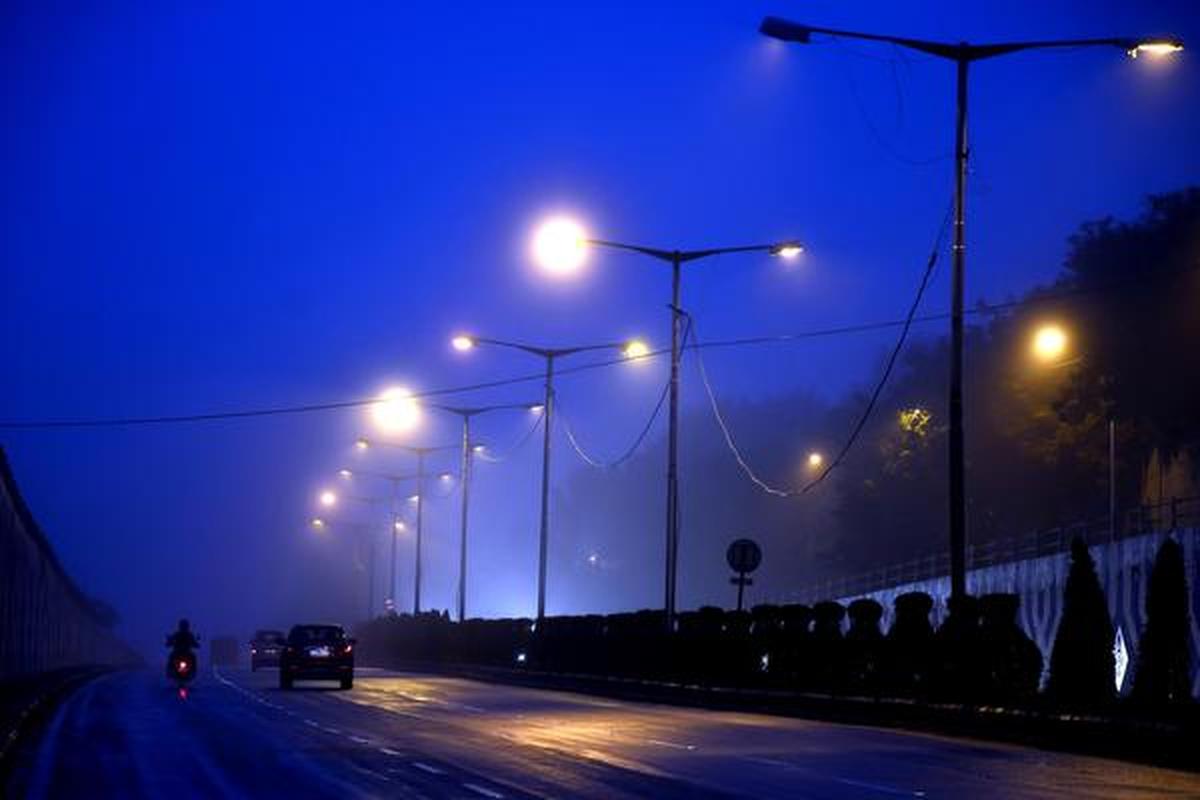
Bengaluru Streetlight Gaps Put Civic Accountability In Focus
Repeated failures to address streetlight complaints in Bengaluru have prompted directions for disciplinary action against officials, putting the city’s basic infrastructure maintenance system under scrutiny. The intervention follows concerns that unresolved lighting problems are leaving stretches of the city inadequately illuminated, raising questions about response times, accountability and the safety of people using roads after dark.
The direction has been issued to the Greater Bengaluru Authority (GBA) after officials reviewed complaints relating to non-functional streetlights. The issue goes beyond individual outages: reliable public lighting is a basic urban service that affects road visibility, pedestrian movement and the usability of public spaces during evening and night-time hours. For a city as densely travelled as Bengaluru, maintenance failures can have disproportionate consequences. Poorly lit roads can make it harder for pedestrians, cyclists and motorists to identify hazards, while people walking to public transport stops or returning from work may face less comfortable and less predictable journeys.
The latest action also exposes a broader weakness in civic infrastructure management. Installing streetlights is only one part of providing the service. Authorities must maintain electrical systems, identify failures quickly, respond to complaints and ensure that repairs are completed within clearly defined timelines. Urban infrastructure experts say complaint-management systems become particularly important as cities expand. Bengaluru’s road network extends across a large and diverse urban area, making manual monitoring alone difficult.
Digital complaint tracking, asset mapping and maintenance contracts with measurable service standards can help civic agencies identify recurring failures and allocate resources more efficiently. There is also an energy dimension to the issue. Bengaluru has been moving towards more efficient public lighting, including large-scale LED deployment. But energy-efficient equipment delivers little public value when lights remain non-functional or maintenance systems are unable to restore them quickly. The Bengaluru streetlight issue therefore needs to be assessed as both a public-service and infrastructure-management challenge. Better lighting can support safer streets, but its benefits depend on consistent operation and equitable coverage across established neighbourhoods, peripheral areas and rapidly developing zones. The emphasis on disciplinary action may strengthen accountability in individual cases, but longer-term improvement will require systems that reduce the likelihood of failures going unresolved in the first place. Clear ownership of streetlight assets, transparent complaint escalation and regular performance audits can make maintenance more predictable. For residents, the immediate expectation is straightforward: reported outages should result in timely repairs.
For Bengaluru’s civic administration, the larger task is to ensure that basic infrastructure works reliably without citizens having to repeatedly escalate routine service failures. The Bengaluru streetlight issue ultimately highlights a simple measure of urban governance: the quality of a city is reflected not only in its major projects, but also in how consistently everyday infrastructure is maintained.