


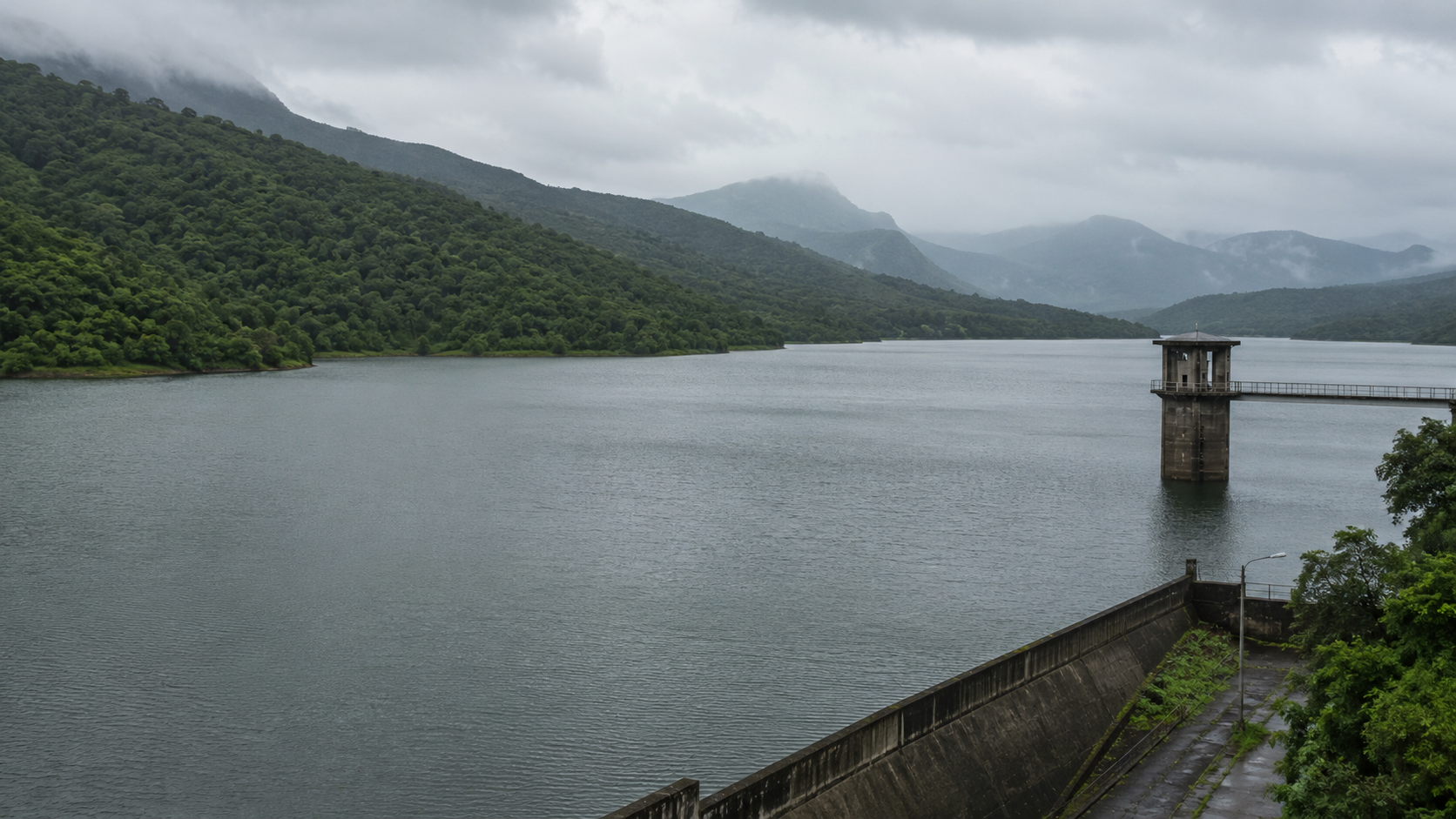
Mumbai lake levels reached 95.90 per cent of total live storage on the morning of August 31, with the city’s seven drinking-water reservoirs holding 13,88,054 million litres, according to data from the Hydraulic Engineers Department at the Bhandup Master Control Centre. Vihar Lake was at full capacity, while Upper Vaitarna remained the lowest-filled reservoir at 89.76 per cent.
The water stock recorded at 6 am was lower than during the same period in 2025, when the reservoirs held 13,93,408 million litres, or 96.27 per cent of live storage. It was also below the level recorded in 2024, when the lakes contained 13,97,342 million litres, representing 96.54 per cent of total live storage.
Among the individual reservoirs, Modak Sagar was at 99.99 per cent, followed by Tansa at 98.33 per cent, Middle Vaitarna at 98.18 per cent and Tulsi at 98.12 per cent. Bhatsa, Mumbai’s largest reservoir, stood at 95.83 per cent. Upper Vaitarna held 2,03,789 million litres, equivalent to 89.76 per cent of its live storage capacity.
Vihar Lake held 27,698 million litres and remained at 100 per cent capacity. The reservoir has been overflowing since July 7, according to the department’s report. The department also recorded a marginal decrease in Modak Sagar’s water level on August 23, while Tansa Dam, which had been overflowing until August 22, was no longer reported at full capacity.
Light showers continued across parts of the lake catchment areas during the 24 hours preceding the department’s morning assessment. Upper Vaitarna received the highest rainfall among the reservoirs, with 5 mm recorded. Modak Sagar received 3 mm, while Vihar recorded 1 mm. No rainfall was recorded at Tulsi, Tansa, Middle Vaitarna or Bhatsa during the period.
Cumulative monsoon rainfall across the reservoirs varied considerably. Upper Vaitarna recorded 3,657 mm, followed by Tulsi with 3,490 mm, Modak Sagar with 3,047 mm, Tansa with 2,752 mm and Middle Vaitarna with 2,717 mm. Bhatsa and Vihar each recorded 2,491 mm of rainfall during the monsoon so far.
The Bhandup Complex, which houses the city’s water-control infrastructure, recorded 2,714 mm of cumulative seasonal rainfall. The department’s operational update stated that the Middle Vaitarna WSCPO gate remained closed. The release of water from Upper Vaitarna has also remained suspended since July 6.
The current figures indicate that Mumbai’s reservoirs remain close to their combined live-storage capacity, although the total is marginally below the corresponding levels recorded in the previous two years. The next update from the Hydraulic Engineers Department will show how subsequent rainfall and reservoir operations affect the city’s available water stock.
