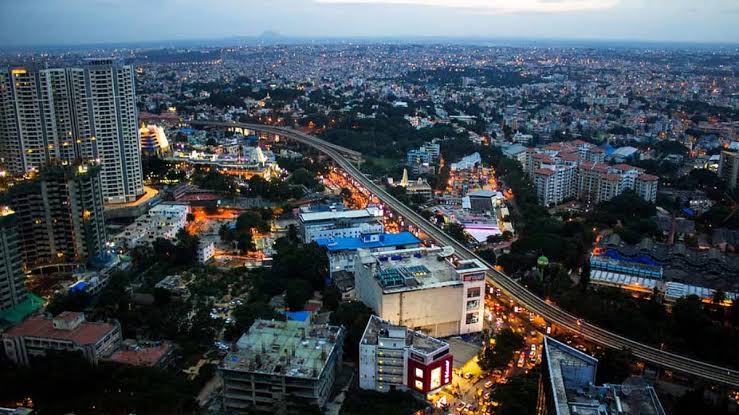
Karnataka is preparing to develop five cities as stronger urban centres alongside Bengaluru, signalling an attempt to distribute economic activity and infrastructure more evenly across the State. The plan could reshape Karnataka’s urban growth pattern, but its success will depend on whether new investment is matched by jobs, housing, public transport and basic services rather than simply expanding built-up areas.
The proposed strategy identifies Mysuru, Hubballi-Dharwad, Mangaluru, Kalaburagi and Belagavi as cities with potential to emerge as major economic and urban hubs. The objective is to strengthen their infrastructure and competitiveness while reducing excessive dependence on Bengaluru for employment and investment. For Bengaluru, such decentralisation could eventually ease some of the pressures associated with rapid population growth. Congestion, rising housing costs, infrastructure demand and pressure on water resources have all intensified as economic activity has concentrated around the capital. However, developing alternative cities requires more than upgrading roads and government buildings. Urban planners say cities become economically resilient when infrastructure is supported by a diversified employment base, affordable housing, reliable utilities, educational institutions and efficient connections to surrounding districts. The proposed Karnataka city development approach could therefore have wider implications for regional economic opportunity. Stronger urban centres outside Bengaluru could allow people to access jobs and services closer to their home regions, potentially reducing long-distance migration and pressure on the capital’s housing market.
Transport connectivity will be particularly important.
Rail, bus and road networks connecting these cities to surrounding towns can help create larger economic regions without forcing every major employment opportunity into Bengaluru. Within the cities themselves, reliable public transport will be essential if growth is to avoid becoming increasingly dependent on private vehicles.There is also a sustainability test. Replicating Bengaluru’s low-density expansion model across five cities could multiply demands on water, land, energy and transport infrastructure. Instead, planners may need to prioritise compact growth, public transport corridors, efficient buildings, local water systems and protection of natural areas.The economic opportunity is substantial if investment is distributed intelligently. Mangaluru’s coastal economy, Mysuru’s established education and tourism base, Hubballi-Dharwad’s position in northern Karnataka and the regional roles of Belagavi and Kalaburagi could support different development pathways rather than identical urban models. The Karnataka city development strategy will ultimately be judged by whether these cities can generate sustainable employment and improve everyday quality of life.
Building physical infrastructure is only the first step; ensuring that residents have access to affordable homes, mobility, clean water and essential services will determine whether decentralisation produces balanced growth.For Karnataka, strengthening multiple urban centres could provide a more resilient alternative to a single-city growth model. The challenge now is to ensure that the next generation of urban expansion creates liveable cities rather than simply larger ones.