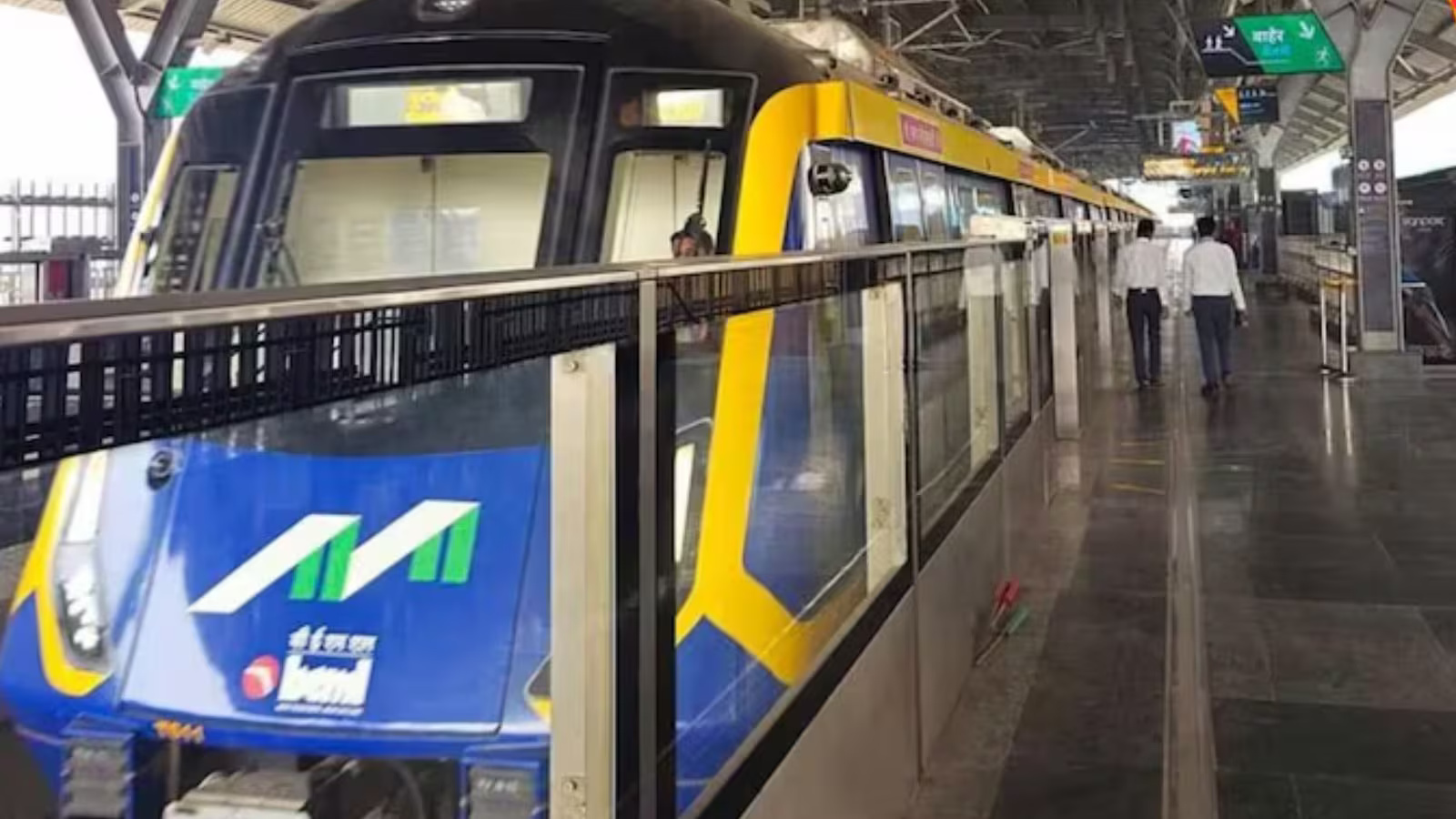
Mumbai Metro 4 Nears Launch After Safety Clearance
Mumbai’s Metro 4 and 4A corridors have moved closer to passenger operations after their train sets received safety clearance, bringing the Thane-side expansion nearer to its first public opening. The approval removes a key technical hurdle, but operational certification and other statutory requirements remain. The initial service is expected to cover the Gaimukh–Cadbury Junction section, offering a new rapid-transit option across a fast-growing urban belt. The combined corridors are planned to stretch about 35.2 km. Metro 4 forms the main 32.32-km route linking Wadala with Gaimukh through Ghatkopar and Kasarvadavali, while the 2.88-km Metro 4A branch extends from Kasarvadavali to Gaimukh. For commuters in northern Thane and surrounding residential areas, the first operational segment could provide an alternative to heavily congested road journeys.
The opening phase is expected to cover roughly 10.5 km and include 10 stations. Trial operations began in September 2025, allowing technical teams to assess train performance and infrastructure before commercial services. Safety clearance for the rolling stock is an important step, but it should not be treated as equivalent to final permission for passenger operations. Further approvals and operational readiness will determine the actual launch date.A temporary operating arrangement also highlights the infrastructure challenges facing the project. The planned Mogharpada depot has not yet been completed, meaning Gaimukh station is expected to support train stabling and basic maintenance initially. A maintenance pit has reportedly been created at the station for this purpose. The initial fleet is expected to comprise six rakes.
Since the dedicated trains ordered for Metro 4 and 4A are not yet available, existing trains from the Charkop depot may be used temporarily. These rakes currently support services on Metro Lines 2A, 7 and 9. While such deployment can help start services earlier, fleet availability and maintenance capacity will need careful management as passenger numbers increase. The dedicated fleet is planned to include 39 six-coach driverless train sets, or 234 coaches. Contracts covering rolling stock and signalling were awarded in February 2025. The new trains will require their own safety certification before entering passenger service. For Mumbai’s wider transport network, the significance of Metro 4 extends beyond adding another line. Better integration with suburban rail, existing metro corridors and bus services will determine whether the investment meaningfully reduces dependence on private vehicles. Urban planners also point to the need for safe station access, pedestrian infrastructure and reliable feeder connections.
The next test is therefore not simply opening the line. It is ensuring that the new corridor becomes a dependable part of everyday mobility while its supporting depot, fleet and last-mile infrastructure catch up with passenger demand.