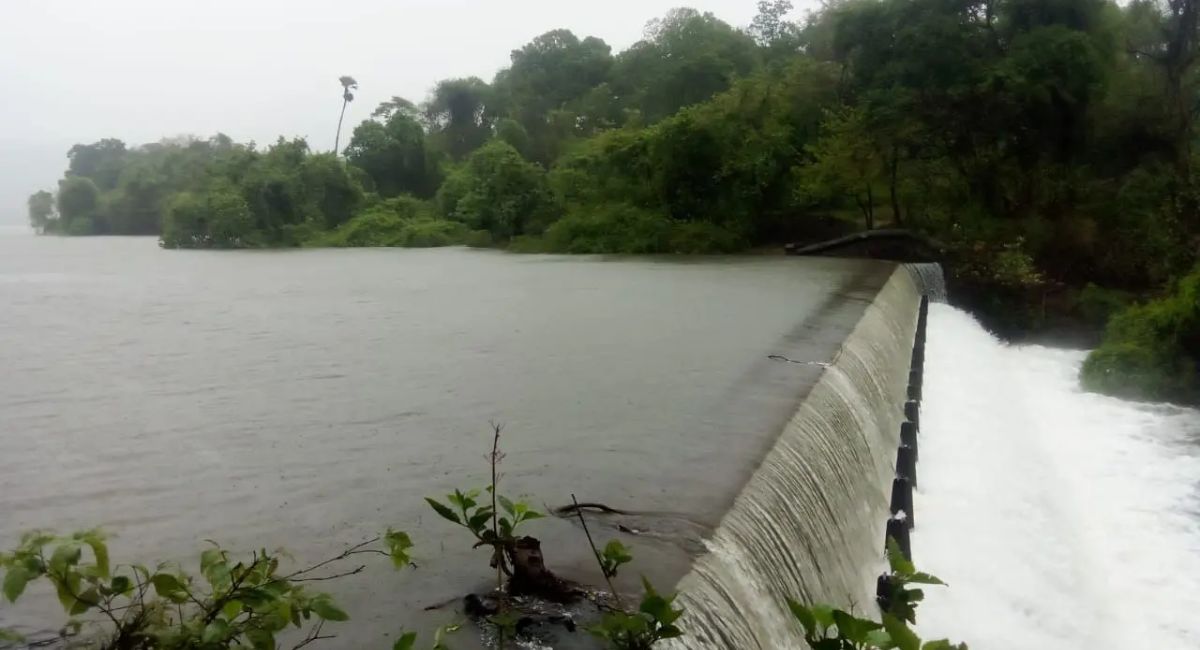
Mumbai is entering the final days of August with its seven drinking-water reservoirs holding almost 96% of their combined live storage capacity, strengthening the city’s buffer ahead of the post-monsoon period. The latest figures show 13,88,785 million litres of useful water in storage as of 6 am on August 29, giving Mumbai a stronger position against the seasonal uncertainty that typically follows the monsoon. The combined Mumbai water stock rose to 95.95% from 95.87% a day earlier. The increase of 0.08 percentage points represents an additional 1,251 million litres. The total live storage capacity of the seven reservoirs is 14,47,363 million litres, according to data from the civic administration’s Hydraulic Engineer’s Department.
The distribution of water across the system remains relatively strong. Vihar is completely full, while Modak Sagar is at 99.99%. Tansa stands at 98.37%, Middle Vaitarna at 97.95% and Bhatsa at 95.98%. Upper Vaitarna, the lowest among the seven, is at 89.76%, while Tulsi has reached 98.12%. Fresh rainfall in the catchment areas has continued to support inflows. Middle Vaitarna received 18 mm over the preceding 24 hours, followed by Tansa with 17 mm and Upper Vaitarna with 12 mm. Tulsi recorded 11 mm, Modak Sagar 7 mm, Bhatsa 3 mm and Vihar 1 mm. The current Mumbai water stock is marginally below the level recorded on the same date last year. On August 29, 2025, the seven reservoirs held 96.51% of their useful storage. However, the present level remains above the 95.75% recorded on August 29, 2024.
The comparison suggests that the city is entering the post-monsoon transition with a substantial reserve, even though the season has not produced a new storage record. The improvement has followed a strong monsoon build-up. Vihar and Tulsi began overflowing on July 7, while Tansa reached overflow conditions on July 22 and Modak Sagar followed on July 23. These gains matter beyond immediate household supply because dependable water availability supports Mumbai’s residential, commercial and industrial activity while reducing pressure for emergency conservation measures.
For a city increasingly exposed to rainfall variability, however, high reservoir levels are only one part of water resilience. Urban planners and water experts continue to emphasise the importance of reducing distribution losses, protecting catchments and improving long-term demand management. With August ending on a strong note, attention will now shift from capturing monsoon water to using the reserve efficiently through the drier months.