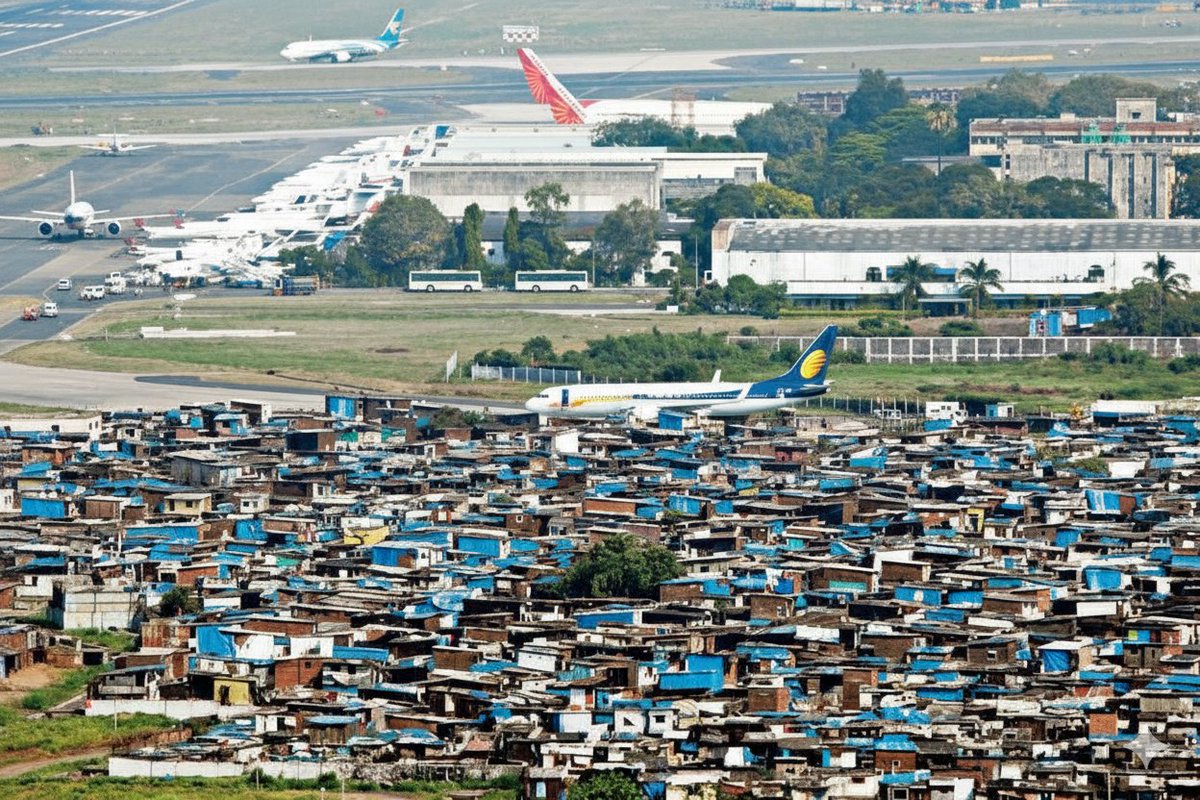
Mumbai Airport Slum Rehabilitation Enters New Phase
A long-stalled effort to rehabilitate informal settlements around Chhatrapati Shivaji Maharaj International Airport has returned to the policy agenda, potentially releasing land for future aviation infrastructure in Mumbai. The proposal is being examined alongside the planned redevelopment of Terminal 1 and could eventually increase the airport’s operational footprint by about 15%. The challenge will be balancing aviation safety and capacity needs with secure, in-city rehabilitation for thousands of residents. The settlements occupy portions of airport land in areas including Kurla and Santacruz. Official planning records identify approximately 125 hectares of airport land as encroached by slum settlements, while earlier assessments have put the affected area at around 275 acres. The Airports Authority of India owns the broader landholding, with the airport operated under a long-term lease arrangement.
The rehabilitation proposal is still being developed. Authorities are considering an in-situ model, meaning eligible households would be rehoused within or close to the existing locality rather than moved to distant parts of the metropolitan region. A fresh survey is expected to establish current occupancy and eligibility before the scale of the intervention is determined. That process is crucial because previous estimates of the affected population are now dated. The final rehabilitation requirement will influence the amount of land that can eventually be released, the number of housing units required and the infrastructure needed to support the relocated communities. The Mumbai airport expansion opportunity is closely tied to how that land is ultimately used. Existing planning documents already envisage aeronautical and non-aeronautical development on portions of land currently occupied by encroachments after rehabilitation. Some eastern airport areas also fall beneath flight paths, meaning future construction will remain subject to aviation height restrictions.
The potential release of land comes as Mumbai prepares for changes at Terminal 1. The terminal is scheduled for partial demolition from January 2027, with traffic expected to be redistributed between Terminal 2 and Navi Mumbai International Airport during the transition. For the Mumbai airport expansion, therefore, land availability is only one part of the equation. Airport capacity must be matched by surface transport, passenger circulation, emergency infrastructure and surrounding urban services. Additional aviation infrastructure without corresponding road and public transport planning could simply shift congestion beyond the airport boundary. The social dimension is equally significant. MMRDA’s current airport rehabilitation framework includes established processes for surveys, eligibility and rehabilitation construction, showing that the issue has moved beyond being only a land-clearance proposal. Urban development specialists say transparency will be essential as the plan advances. Updated surveys, publicly accessible eligibility criteria, clear rehabilitation timelines and adequate community infrastructure will determine whether the redevelopment produces a durable urban outcome.
The next stage is expected to clarify the rehabilitation footprint and development strategy. If executed with strong safeguards, the process could address a longstanding airport safety constraint while creating capacity for Mumbai’s future aviation needs without treating existing communities as an afterthought.