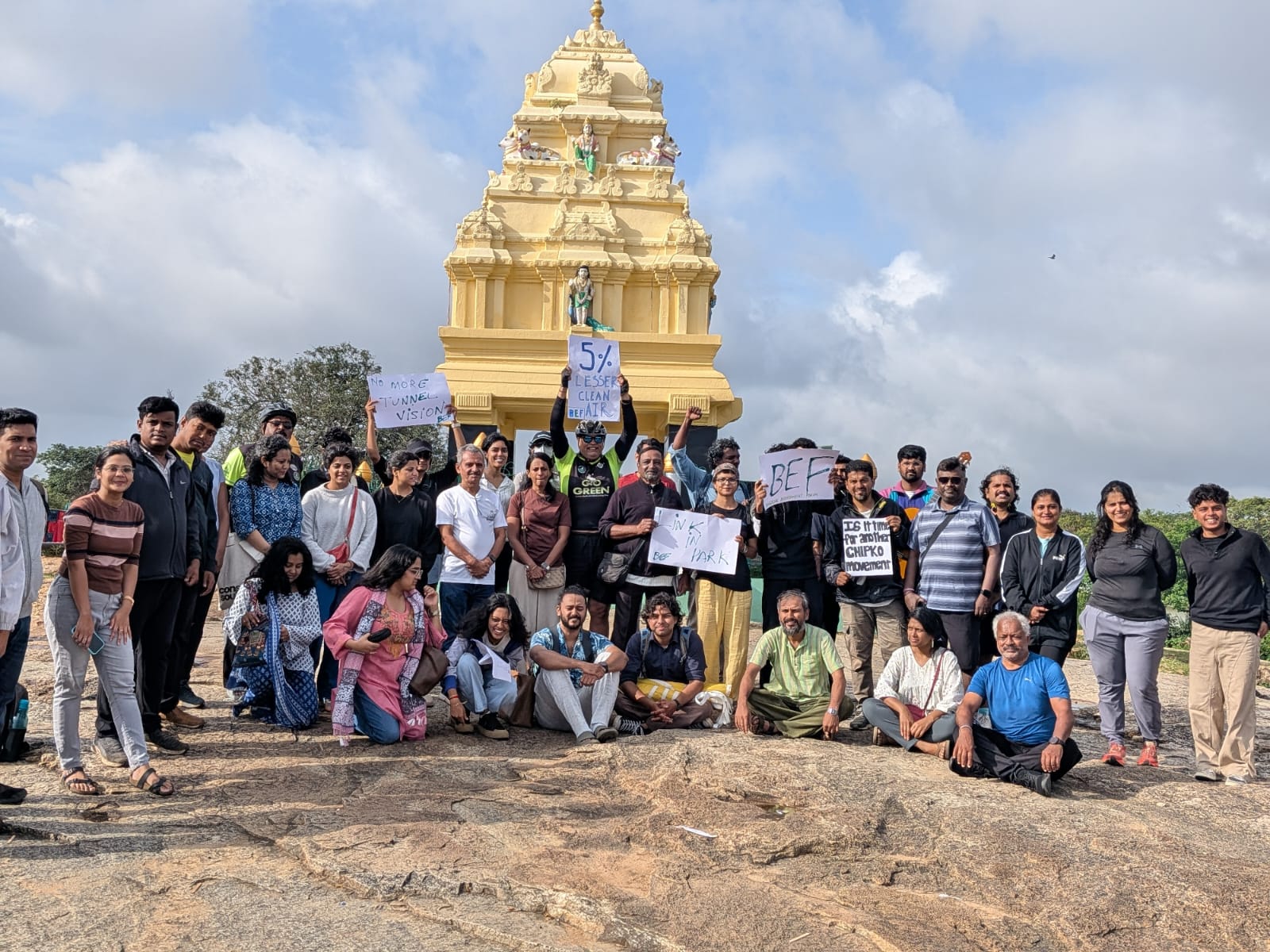
Residents and citizen groups have stepped up opposition to a proposed change that could permit wider infrastructure use within public parks, organising a human chain in the city to highlight concerns over shrinking open spaces. The mobilisation reflects a broader debate over how Bengaluru can accommodate transport and civic infrastructure without weakening the green areas that support public health, drainage and neighbourhood liveability.
The demonstration was held against a proposed amendment to the Karnataka Parks, Playfields and Open Spaces (Preservation and Regulation) Act. Citizen groups argue that expanding the range of infrastructure permitted inside parks could gradually reduce the amount of land available for recreation and greenery. The concern is particularly relevant in Bengaluru, where parks are among the most accessible forms of public open space. They provide residents with places for walking, exercise, children’s recreation and community activity without requiring private membership or long-distance travel. Urban parks also perform functions that are less visible. Vegetated areas can help absorb rainfall, reduce local heat and support urban biodiversity. In a city experiencing intense monsoon events as well as rising development pressure, retaining permeable land can contribute to neighbourhood-level climate resilience. Citizen groups have therefore questioned whether public infrastructure should be placed inside parks when alternative locations may be available. Their concern is not limited to the footprint of an individual project; repeated encroachment by multiple small facilities could cumulatively reduce the ecological and recreational value of open spaces. The debate also raises a planning question about how Bengaluru identifies land for essential infrastructure.
Transport facilities, utilities and public-service projects require space, but placing them in existing parks can create a conflict between immediate infrastructure needs and long-term public value. Urban planners often distinguish between infrastructure that directly supports park users and facilities that could reasonably be located elsewhere. Applying clear criteria could help prevent green spaces from becoming convenient reserve land whenever the city faces a shortage of sites. There is also an equity dimension. Public parks are particularly important in dense neighbourhoods where residents may have limited access to private gardens, clubs or large homes with outdoor space. Losing park area can therefore affect households differently depending on their access to alternative recreational environments. For Bengaluru, the issue comes as the city continues to expand its metro network, roads and other public infrastructure. A more integrated land-use approach could identify infrastructure sites before projects reach the approval stage, reducing pressure on established open spaces. The environmental value of parks should also be considered over the full life of a project. Once paved or built over, soil functions, mature vegetation and natural drainage capacity can be difficult and expensive to restore. The public response indicates that residents increasingly view parks as essential urban infrastructure rather than surplus land.
That perspective is important as Bengaluru plans for higher density and continued investment.The immediate question is how policymakers will balance genuine infrastructure requirements with the need to protect public open space. For a city seeking to become more climate-resilient and liveable, preserving its parks will require treating greenery, recreation and natural drainage as integral components of urban infrastructure rather than land available for routine conversion.