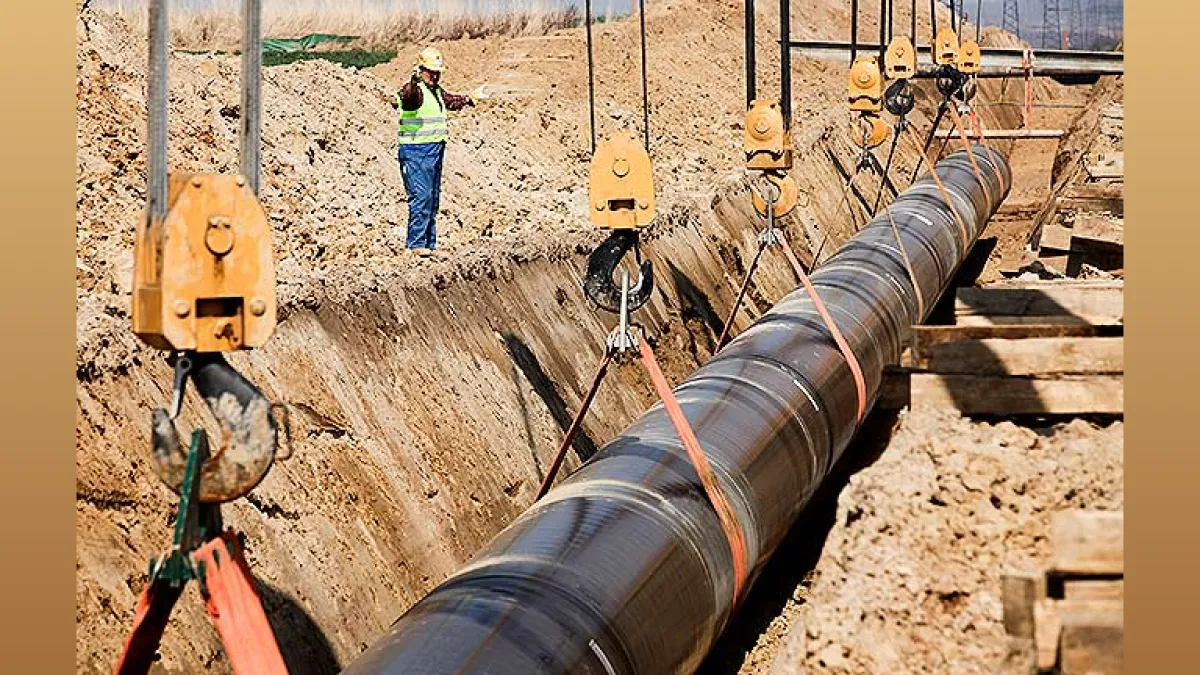
Kolkata Gas Pipeline Push Could Reshape City Energy
Kolkata is moving towards a broader natural-gas network as pipeline construction across West Bengal enters its final stages, potentially expanding access for households, transport and industrial users. The shift matters beyond fuel supply: reliable gas infrastructure could influence urban air quality, industrial competitiveness and the cost of energy, while testing how quickly the city can build utility networks without disrupting established neighbourhoods.
The wider expansion is being supported by the national natural-gas grid, with the city already connected to the Jagdishpur-Haldia-Bokaro-Dhamra pipeline system. The network currently spans more than 18,600 km nationally and covers West Bengal among other states.For Kolkata, the more immediate change is expected to come from the completion of pipeline links towards Haldia and surrounding districts. Recent project updates indicate that the remaining sections of the Durgapur-Haldia and Dhamra-Haldia corridors are advancing, with gas transportation targeted from September 2026. These links are intended to strengthen supplies to Haldia and extend availability towards industrial and city-gas markets in Bengal.The Kolkata gas pipeline network also has a direct household dimension. Bengal Gas, the city-gas joint venture operating across the Kolkata geographical area, had reported more than 5,300 domestic piped-natural-gas connections alongside 23 CNG stations. Its authorised area covers Kolkata and adjoining parts of Howrah, Hooghly and Nadia.
That expansion could gradually change how parts of the metropolitan region consume energy. Piped natural gas can replace more carbon-intensive fuels in some applications, while CNG infrastructure can offer an alternative for sections of the transport fleet. However, the climate benefit depends on how the network is operated, the source of gas and whether cleaner alternatives such as electrification are developed in parallel.There is also an economic dimension. A more dependable gas corridor can improve energy access for factories and other large consumers, particularly around Haldia and industrial districts connected to the pipeline system. For Kolkata, the Kolkata gas pipeline expansion therefore represents not simply a utility project, but another layer of infrastructure supporting the metropolitan economy.
The next challenge will be ensuring that network growth reaches residents efficiently while limiting road excavation, construction disruption and unequal access. For a densely built city, the success of the expansion will ultimately be measured not by kilometres of pipe installed, but by how safely, affordably and equitably the infrastructure serves Kolkata’s households and businesses.