


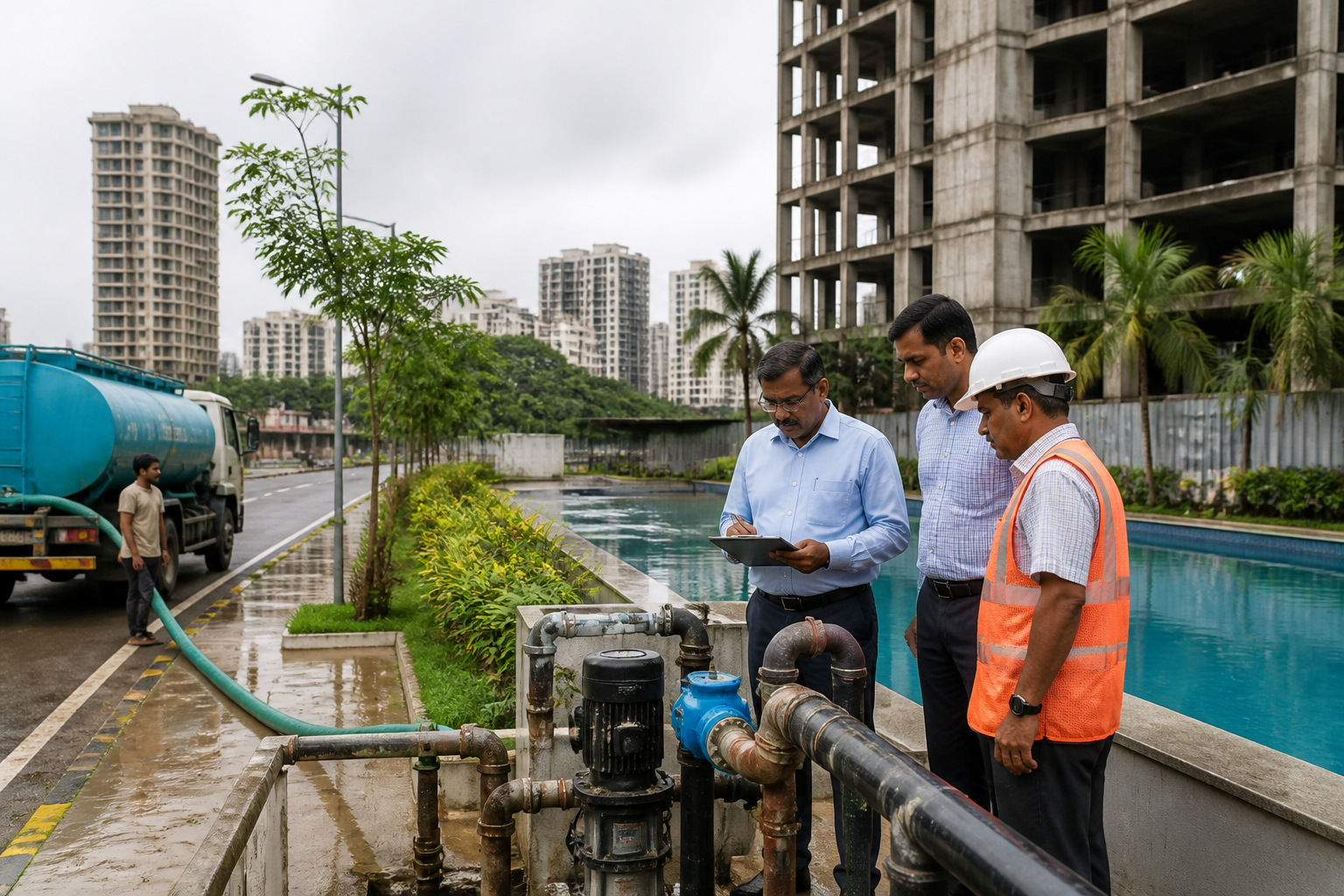
Navi Mumbai’s water supply system is under renewed pressure after a weak monsoon in August and September prompted the municipal administration to deploy special teams to monitor swimming pools and construction projects, while reviewing the condition of Morbe Dam before any fresh decision on water cuts.
Navi Mumbai Municipal Corporation Commissioner Dr Kailas Shinde has ordered strict inspections to ensure that drinking water is not being supplied to construction projects. Special teams have also been formed to monitor water use at swimming pools and construction sites across the municipal area, according to a report by Loksatta – Navi Mumbai.
The administration is scheduled to conduct a detailed review of the water stock in Morbe Dam on November 30. The dam is the principal source supplying water to Navi Mumbai, making its storage position central to decisions on municipal water distribution and possible rationing.
The report said Navi Mumbai received good rainfall in July, but rainfall weakened in August and remained inadequate in September. As a result, the reservoir has not reached the storage levels recorded during the corresponding period last year.
On September 16 last year, Morbe Dam had reached 100% total storage, with 84% usable water available. This year, the dam has 91% total storage and 75% usable water, according to the figures cited in the report. The distinction between total and usable storage is significant for the city’s operating reserves, although the report does not provide a revised timetable for any reduction in supply.
The municipal corporation had decided at the end of May to stop evening water supply for two days each week. That decision was later withdrawn from Gokulashtami after Mayor Sujata Patil urged the administration to restore normal supply following an increase in Morbe Dam’s water level. The commissioner subsequently accepted the request, the report said.
The withdrawal of the cuts has coincided with a renewed decline in rainfall during September. The water-supply department has therefore moved to strengthen monitoring, particularly at locations where water consumption can be significant but is not directly connected to household demand. Construction activity and swimming pools are now the immediate focus of the inspection teams.
For residents, the administration’s approach places the emphasis on controlling non-household consumption before imposing another citywide reduction in supply. The report does not specify the number of inspection teams, the penalties for violations, or whether notices have already been issued to any construction site or swimming pool.
Commissioner Shinde has reviewed the city’s water-supply arrangements and the broader reservoir situation. Instructions have been issued to departmental officers and senior officials in the water-supply division. The next major administrative milestone is the detailed Morbe Dam review scheduled for November 30, after which the corporation is expected to assess its water-supply position and further conservation measures.
