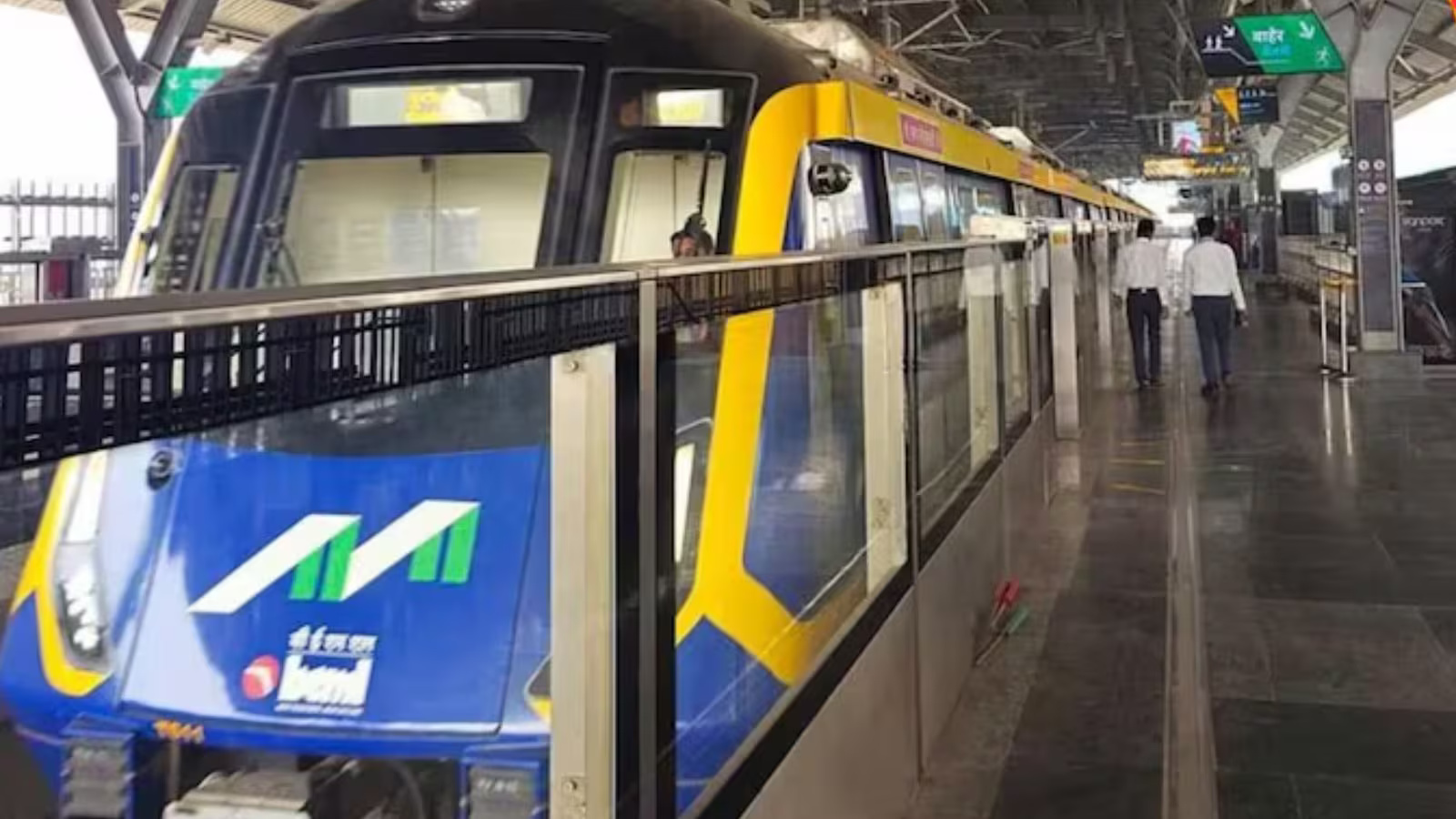
Mumbai’s northern suburban belt is set for a new transport connection after the Maharashtra Cabinet approved Metro Line 13, a proposed 25-km corridor linking Bhayandar with Virar. The project combines an elevated Metro route with a 4.92-km road-and-rail crossing over Vasai Creek, addressing one of the region’s most persistent connectivity constraints while creating a new link between growing residential areas and Mumbai’s employment centres. The Mumbai Metro 13 corridor is planned across the Bhayandar-Vasai-Virar region, where population growth has placed sustained pressure on existing rail and road networks. For many residents, suburban trains remain the principal high-capacity option, while road journeys can become unpredictable around the creek crossing.
The integrated bridge is expected to change that equation. The proposed six-lane structure will carry road traffic alongside the Metro alignment and is projected to reduce the road journey between Bhayandar and Vasai from roughly 40 minutes to about 10 minutes under suitable traffic conditions. That time saving has wider economic implications. Faster and more predictable movement can expand access to jobs, education and services across municipal boundaries. It may also make it easier for businesses to draw workers from a larger catchment, supporting the economic integration of the northern suburbs. The Mumbai Metro 13 project could also provide additional capacity for public transport. Urban mobility specialists say new Metro corridors are most effective when stations are integrated with buses, walking routes and other local transport rather than functioning as isolated rail infrastructure. Last-mile connectivity will therefore be critical to determining how many residents shift from private vehicles to public transport.
The bridge itself will be an important piece of regional infrastructure. Vasai Creek currently acts as a physical barrier between communities, making the resilience and reliability of the crossing particularly important. Designing for drainage, extreme rainfall and long-term maintenance will be essential as climate risks become a larger consideration for infrastructure planning. The corridor is also likely to influence development patterns. Better transport accessibility can raise the attractiveness of areas around stations and potentially accelerate residential and commercial activity. Planners, however, emphasise that transport investment needs to be matched by adequate water supply, drainage, public amenities and open spaces to prevent infrastructure-led growth from creating new civic pressures. For commuters, the project’s value will ultimately be measured by reliability rather than headline travel-time reductions alone. A well-connected Metro network, efficient interchange points and safe pedestrian access will determine whether the new corridor delivers a meaningful shift in everyday mobility.
As construction planning progresses, attention will turn to execution, environmental considerations and integration with existing transport systems. The larger test for Mumbai Metro 13 will be whether it connects the northern suburbs more efficiently without encouraging disconnected urban expansion.