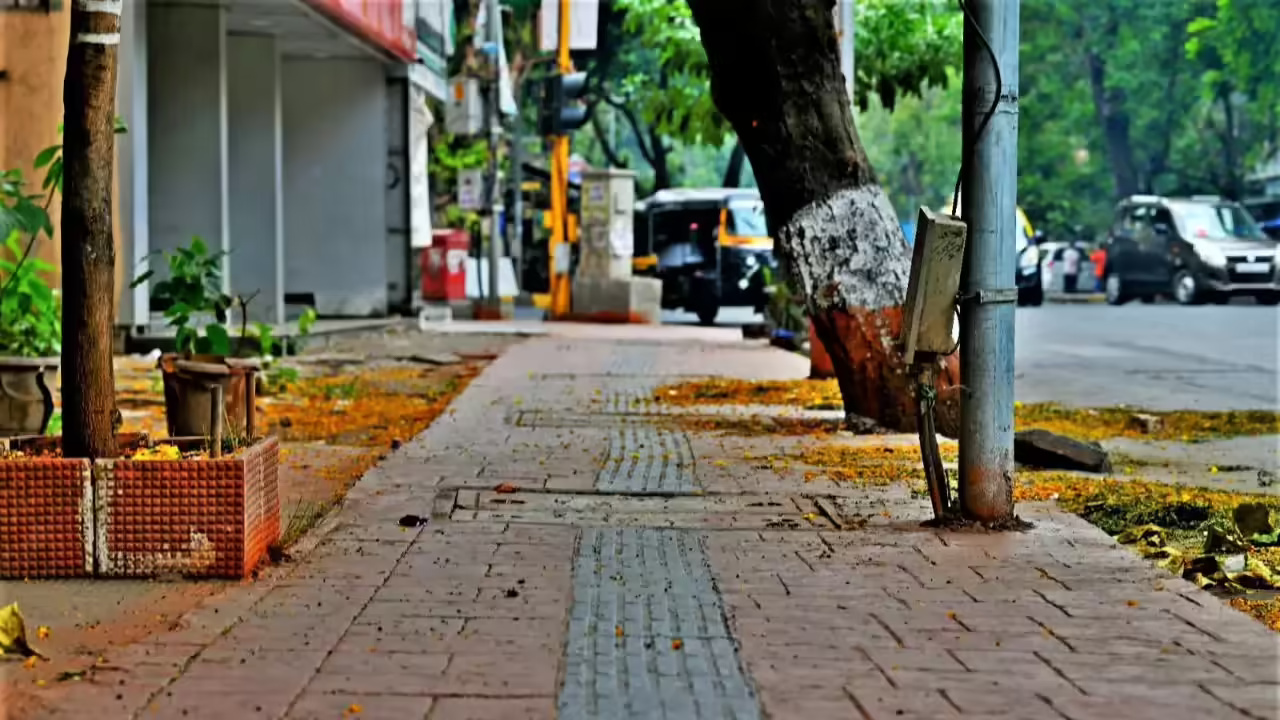
Mumbai Pedestrian First Drive Reaches Eastern Suburbs
Mumbai’s eastern suburbs are seeing renewed civic scrutiny of pedestrian infrastructure, with inspections covering footpaths and surrounding streets in Mulund, Bhandup, Kanjurmarg and Ghatkopar. The exercise is examining encroachments, pedestrian movement and traffic conditions, particularly around railway stations. The focus matters because gaps in walking infrastructure can push commuters onto busy carriageways, increasing safety risks while weakening access to public transport. The inspections form part of the Pedestrian First initiative, under which the civic administration is reviewing stretches where walking space has been reduced by unauthorised structures, vehicle access points and other obstructions. Officials have been asked to develop more detailed arrangements for footpaths and traffic management, including measures suited to peak-hour movement.
The eastern suburbs present a particularly important test for the approach. Mulund, Bhandup, Kanjurmarg and Ghatkopar combine dense residential areas with major railway and road corridors. Large numbers of commuters transfer between trains, buses, autos and private vehicles every day, making the quality and continuity of footpaths an important part of the wider transport network. Earlier phases of the citywide programme identified 320 kilometres of footpaths for action against encroachments. The civic administration has also directed ward-level officials to monitor implementation regularly. In western suburbs, the programme has included action against unauthorised hawkers, shops, ramps and other structures that reduce usable pedestrian space. The Pedestrian First approach also carries implications beyond basic road safety. Well-connected walking routes can improve access to mass transit, particularly for people who rely on public transport for work, education and daily services. Wider, unobstructed footpaths can also make streets more usable for older residents, children and people with mobility limitations.
Urban planners have long argued that pedestrian infrastructure should be treated as part of transport planning rather than as leftover road space. That becomes increasingly relevant as Mumbai expands metro and road capacity while trying to manage congestion and emissions. A commuter’s journey does not begin or end at a railway platform; the final connection between a station and a neighbourhood is often made on foot. The immediate challenge will be consistency. Clearing an obstruction provides only a temporary improvement if encroachments return or footpaths are damaged, poorly maintained or interrupted by vehicle access. The eastern-suburb inspections therefore put attention on whether enforcement, maintenance and traffic management can work together.
For Mumbai, the next measure of progress will be whether these interventions produce continuous, accessible walking corridors rather than isolated stretches of improved pavement. That will determine whether the Pedestrian First policy translates into a more dependable everyday connection between neighbourhoods and public transport.