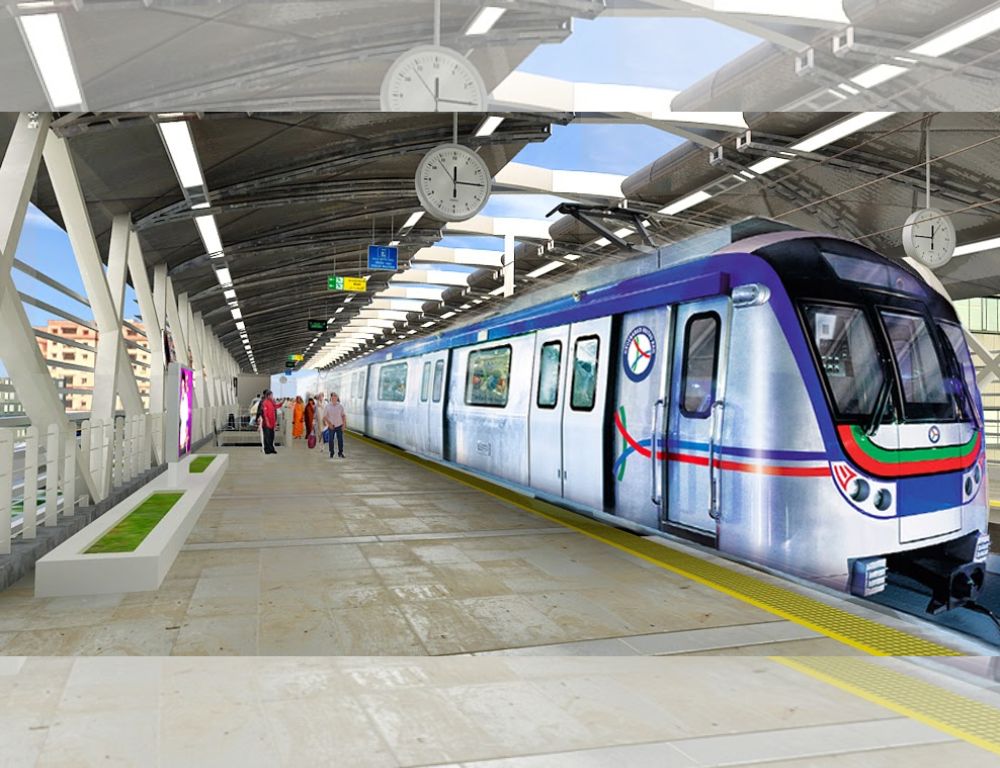
Hyderabad Metro Plans More Coaches for Crowded Routes
Hyderabad Metro Rail is preparing to increase train capacity on its busiest corridors as rising passenger demand puts pressure on existing services. The proposed addition of coaches could provide more space during peak hours, while efforts to expand the network continue. The move highlights the need to strengthen public transport capacity as Hyderabad’s population, employment hubs and daily travel demand continue to grow.
Hyderabad Metro Rail Limited is considering technical assistance from the Delhi Metro Rail Corporation for procuring additional coaches. A consultancy proposal has reportedly been submitted, with the scope expected to include technical specifications, assessment of domestic manufacturers and support through the procurement process. Metro officials are also examining potential Indian suppliers independently. The final procurement decision, however, will depend on technical assessments, manufacturing capacity and the completion of the required approvals. The immediate focus is expected to be on the LB Nagar–Miyapur and Nagole–Raidurg corridors. These routes connect several major residential and employment areas and experience substantial passenger movement, particularly during morning and evening peaks.
Adding coaches could increase the number of passengers carried by each train without requiring an equivalent increase in service frequency. That matters for a network where platform capacity, signalling systems and train headways can limit how frequently services can operate. For commuters, the benefit would extend beyond reducing crowding. Greater train capacity could lower the number of passengers forced to wait for subsequent services when trains reach their operating limits. More reliable peak-hour capacity could also make metro travel a stronger alternative to private vehicles for daily journeys. However, additional coaches alone cannot resolve Hyderabad’s wider mobility challenge. Growing residential development on the urban fringe is increasing travel distances, while employment remains concentrated in several major corridors. Better integration between metro stations, buses, walking routes and cycling infrastructure will be important if the city is to reduce dependence on private vehicles.
Meanwhile, planning for the MGBS–Chandrayangutta Old City corridor is progressing, with land acquisition reportedly nearing completion. The proposed 7.5-km route is expected to improve public transport access across parts of the Old City and strengthen connections with the existing network. The government is also pursuing the transition of the first phase of Hyderabad Metro operations, alongside financing and institutional arrangements. These developments come as the city seeks to expand mass transit while managing the infrastructure demands created by rapid urban growth. The exact number of additional coaches and their commissioning schedule remain undecided. The immediate priority will be completing technical evaluations and procurement. In the longer term, Hyderabad’s metro strategy will need to combine higher train capacity with network expansion and stronger last-mile connectivity to deliver a more accessible and lower-carbon transport system.