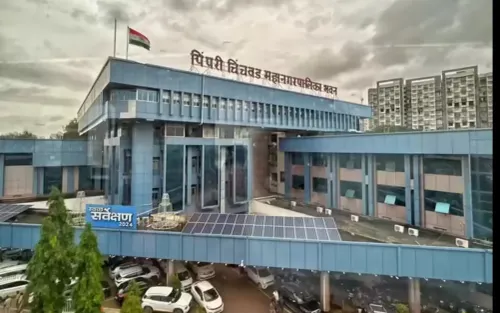
Pimpri-Chinchwad Municipal Corporation (PCMC) is preparing a wider enforcement drive against unauthorised commercial structures, roadside stalls and encroachments as the monsoon season recedes. The move will focus on footpaths, municipal land and other public spaces, but the civic body currently lacks a consolidated count of the structures it plans to remove.
The corporation has instructed officials across its zones to undertake regular field surveys and identify both existing and newly emerging unauthorised development. Beat inspectors are expected to monitor their jurisdictions, while engineering and zoning teams will use survey findings to plan enforcement action. The immediate focus is on commercial structures and roadside stalls. Action against certain unauthorised residential structures is expected after September 30, following restrictions applicable during the monsoon period. The distinction matters because enforcement in a rapidly expanding city cannot depend only on demolition after a structure has appeared; early detection is central to preventing permanent encroachment on public land. The absence of an exact citywide inventory, however, remains a significant administrative gap. PCMC officials have indicated that numbers change as surveys are completed and enforcement progresses. This makes it difficult to assess the scale of the problem, measure progress or determine whether enforcement is reducing new violations over time.
For an industrial urban region such as Pimpri-Chinchwad, the issue extends beyond land-use compliance. Unauthorised structures on footpaths can reduce pedestrian space, obstruct access for people with disabilities and force pedestrians towards moving traffic. Encroachments around drains, roads and municipal plots can also complicate maintenance and affect stormwater management during heavy rainfall. Urban planners argue that unauthorised construction should therefore be treated as a planning and public-space management issue, rather than only an enforcement problem. Clear land records, transparent building permissions, routine inspections and accessible grievance systems can help authorities intervene before informal structures become established.
PCMC already provides online services covering building permissions, town planning, grievances and action against unauthorised construction. The next challenge is connecting these systems with field-level monitoring so that violations can be identified and acted upon consistently. The corporation has also signalled that accountability will extend to officials if delays or negligence are found. For residents and businesses, the effectiveness of the unauthorised construction drive will ultimately depend not on the number of demolitions alone, but on whether public spaces remain accessible and whether new violations are prevented through predictable, transparent planning.