Maharashtra Moves To Strengthen Hospital Emergency Safety
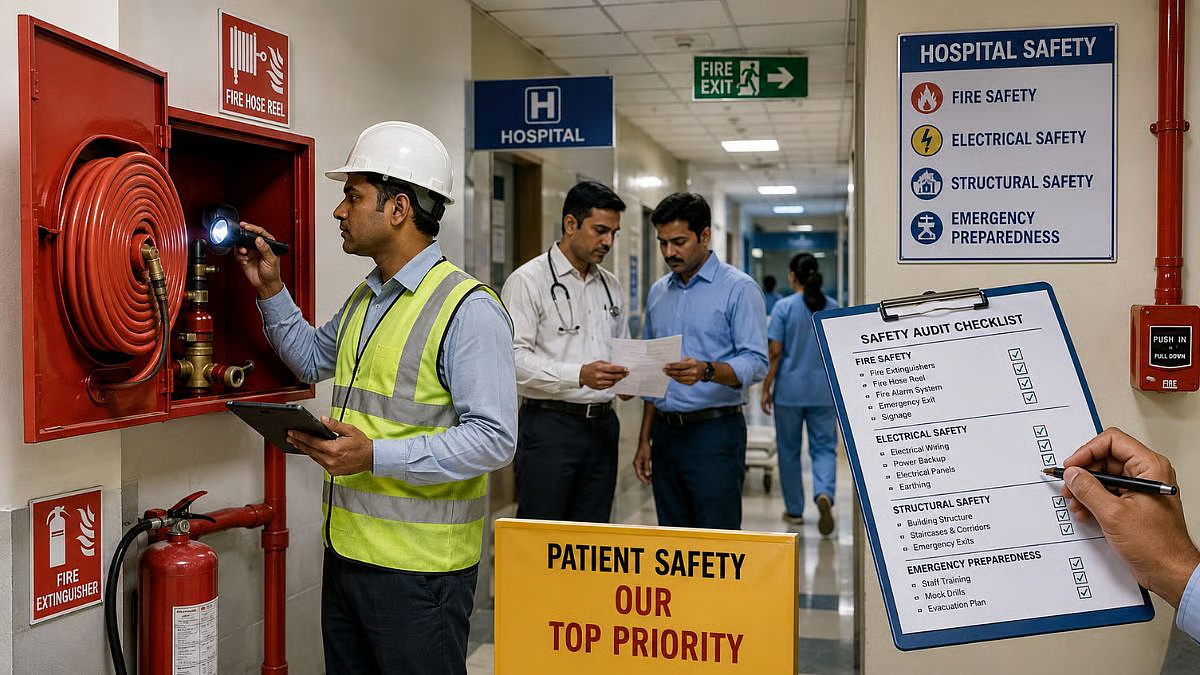
Maharashtra has ordered a fresh round of safety assessments across government, private and charitable hospitals, bringing fire protection, electrical systems, building structures and critical hospital infrastructure under closer scrutiny. The move follows a deadly fire at a government hospital in Amravati and places renewed attention on whether safety systems are not only certified but functional when patients need them most. The directive covers sensitive hospital areas including intensive care units, neonatal units, nurseries and operation theatres. Inspectors are expected to examine firefighting equipment, electrical installations, medical-gas systems, evacuation arrangements and other infrastructure that can become critical during an emergency.
The policy is significant because hospital safety presents a different challenge from ordinary building compliance. Patients may be sedated, connected to equipment, physically weak or unable to evacuate without assistance. A fire or electrical failure can therefore become a life-safety crisis within minutes. The latest instructions require hospitals to examine their actual preparedness rather than rely solely on certificates or completed paperwork. A key requirement is a recurring assessment cycle. Each building and block within hospital campuses is to undergo fire-safety evaluation every six months. Facilities must document deficiencies, establish priority-based corrective plans and report compliance. Hospitals are also expected to designate fire-safety nodal officers responsible for monitoring equipment, evacuation systems, training and mock drills. The need for stronger implementation has been highlighted by earlier state-level audit findings. A 2024 report by the Comptroller and Auditor General found substantial gaps among sampled public health institutions, including missing fire clearances, inadequate smoke detection and alarm systems, and incomplete evacuation planning. It also found that some institutions had not implemented recommendations made after earlier fire and electrical audits.
The findings point to a broader governance issue for Maharashtra’s healthcare infrastructure. Building a compliant hospital is only the first step; maintaining electrical networks, fire equipment, emergency exits and structural systems over time requires funding, trained personnel and continuous oversight. This is particularly important as hospitals become increasingly dependent on sophisticated electrical and medical equipment. National hospital safety guidance issued in 2026 similarly places responsibility on hospital administrations to maintain fire-safety plans, conduct regular audits and train staff in emergency response. It also calls for dedicated fire-safety oversight within healthcare facilities. For patients and families, the value of the Hospital Safety Audit will ultimately be measured through visible improvements rather than the number of reports submitted. Defects must be repaired, evacuation routes kept usable and staff trained to respond under pressure.
The Hospital Safety Audit programme now creates an opportunity to shift Maharashtra’s approach from periodic compliance towards continuous risk management. Its success will depend on whether authorities follow up on deficiencies and ensure that safety standards remain operational long after inspections are completed.