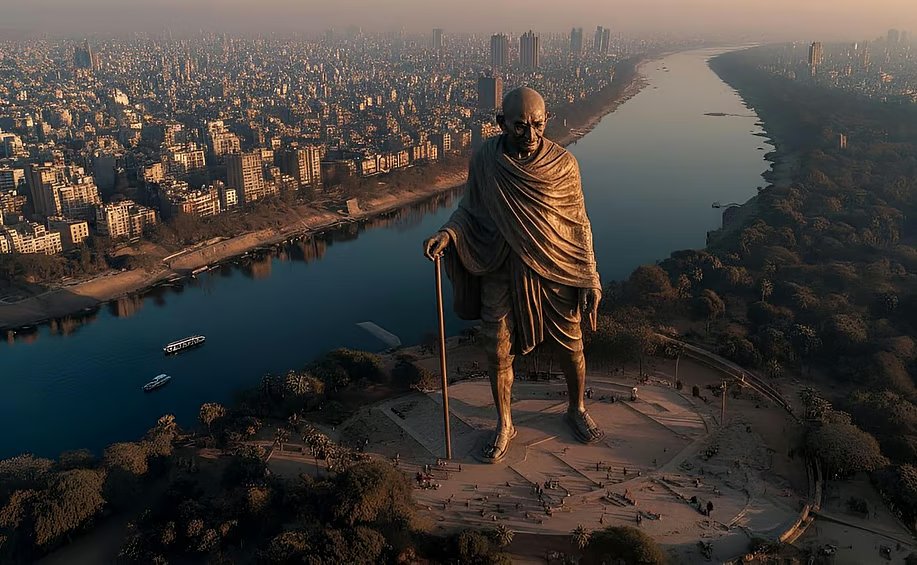
Hyderabad Gandhi Sarovar Project Reshapes Defence Land
Hyderabad’s proposed Gandhi Sarovar project has moved into a critical planning phase, with the Telangana government preparing to relocate and rebuild defence infrastructure at alternative locations to unlock 83 acres of land near Bapu Ghat. The exercise could reshape a strategically important stretch of the Musi river corridor, but its success will depend on how effectively infrastructure expansion is balanced with environmental restoration, connectivity and public access.
The Ministry of Defence has approved the transfer and working permission required for the identified land, allowing the Musi Riverfront Development Corporation Limited to begin preparations for relocating existing assets associated with the Artillery Centre at Golconda. The proposed Gandhi Sarovar project is planned near the meeting point of the Musi river and two smaller watercourses, Musa and Esi. Before development can begin, existing defence facilities occupying the designated land will need to be reconstructed at sites approved by defence authorities. The relocation exercise is substantial in scale. It involves permanent buildings, covered facilities, internal roads and other operational infrastructure spread across thousands of square metres. New utility networks, drainage systems, water supply, sewerage and electrical infrastructure are also expected to form part of the reconstruction programme.
Connectivity will be another major component. Preliminary plans include bridges, underpasses, culverts and an elevated road network designed to maintain movement between relocated defence facilities. Several new road links are proposed across existing water channels and major roads in the area. MRDCL is expected to engage specialist consultants to prepare a master plan, architectural and structural designs, cost estimates, tender documents and a detailed project report. The consultants will also assess existing facilities and operational requirements before finalising the relocation strategy. For Hyderabad, the Gandhi Sarovar project represents more than a land redevelopment exercise. The proposed intervention forms part of the wider Musi riverfront transformation, where land use, flood management, ecology and urban infrastructure are increasingly interconnected.
Urban planners have often highlighted that riverfront projects require careful attention to natural drainage and flood resilience, particularly in rapidly urbanising areas. Construction near rivers and watercourses can alter runoff patterns, making scientifically planned drainage and protection of natural water systems essential. The relocation programme will also require coordination between state agencies, defence authorities and infrastructure planners. Timelines could depend on approvals, technical assessments and the availability of suitable replacement facilities that meet defence operational standards. As planning advances, the next phase will determine how the project integrates new infrastructure with the Musi’s ecological character. Detailed designs and environmental assessments will be closely watched, particularly for their approach to water management, public infrastructure and long-term climate resilience. The redevelopment opportunity is significant, but the outcome will ultimately depend on whether Hyderabad can combine major infrastructure investment with a river-sensitive approach that strengthens the city’s resilience rather than placing additional pressure on its urban environment.