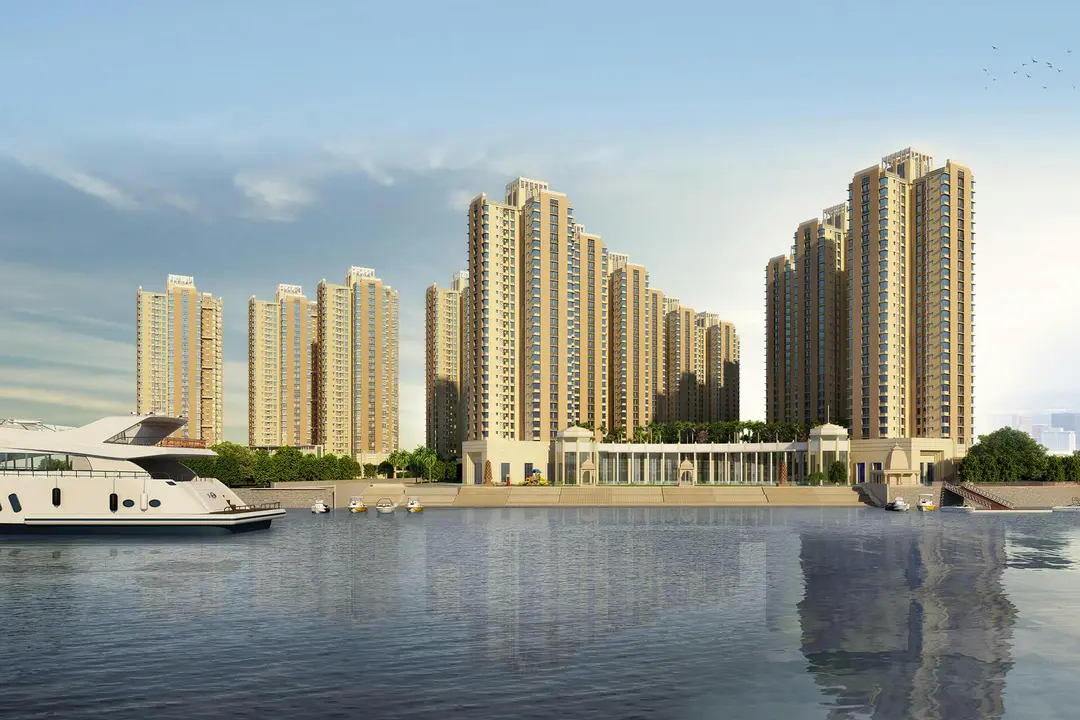
Surat is set to add a new vertical landmark after the Gujarat government’s Special Technical Committee cleared a 142.99-metre commercial building near Pal RTO. The project will become the city’s tallest structure, signalling continued demand for high-density development. The approval also puts greater focus on whether transport, emergency services and public infrastructure can keep pace with a rapidly intensifying urban skyline.
The proposed tower has been cleared under Gujarat’s tall-building framework, with a maximum Floor Space Index of 5.40. The development is also expected to generate ₹30.56 crore in additional infrastructure charges for the Surat Municipal Corporation. The proposal was first placed before the state committee in June and was revised after technical requirements were raised before receiving final clearance.For Surat, the significance goes beyond the height of one building. The city has been expanding through new residential, commercial and infrastructure projects, making land-use efficiency an increasingly important planning issue. Higher buildings can accommodate more activity on limited land, but they also place greater pressure on roads, water supply, drainage, electricity networks, fire response and public transport.
The Surat tallest building will therefore be judged not only by its engineering specifications but also by how effectively the surrounding neighbourhood can absorb additional traffic and daily activity. Urban planners say tall developments work best when density is matched by reliable public infrastructure, pedestrian access and emergency preparedness rather than being treated as isolated construction projects.The approval process itself reflects the additional scrutiny required for structures of this scale. The state-level committee includes specialists in structural engineering, soil mechanics and fire services, alongside senior urban development officials. Surat’s municipal approval system also subjects high-rise and commercial proposals to centralised scrutiny before development permission is issued.The city’s wider redevelopment agenda also shows why the conversation around vertical growth cannot be separated from basic urban needs. Separately, the municipal corporation has cleared redevelopment of the Man Darwaja tenement colony, involving rehabilitation of 1,312 families along with provisions for a fire station, school and anganwadi.
For Surat, the next test will be ensuring that new density translates into efficient use of land without creating infrastructure gaps. As the Surat tallest building moves towards construction, its impact will ultimately be measured less by its place on the skyline and more by how well the surrounding city supports the people who live, work and travel there.