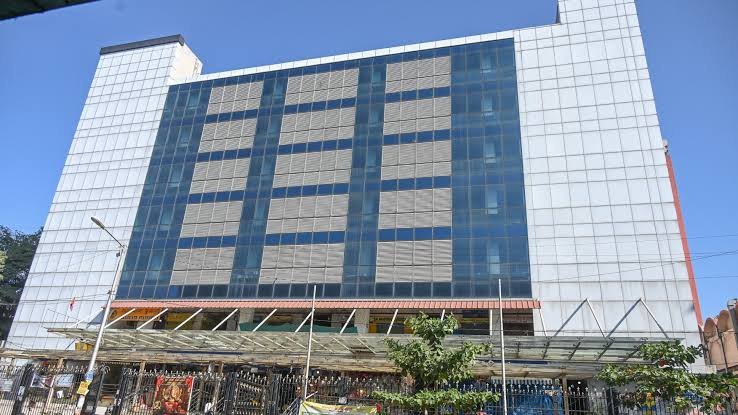
Bengaluru Jayanagar Complex Revamp Still Awaits Completion
A redevelopment plan for Bengaluru’s Jayanagar Shopping Complex remains incomplete 14 years after work was initiated, leaving traders and shoppers navigating an ageing commercial property despite repeated efforts to modernise the landmark market. The prolonged delay highlights a wider problem in Bengaluru’s public commercial assets, where redevelopment can become trapped between construction, contracts, finances and the everyday needs of existing businesses.
The complex, located in one of south Bengaluru’s established commercial neighbourhoods, has long served as a retail destination for residents. Its redevelopment was intended to modernise the facility and improve the experience for traders and visitors, but progress has remained slow over the years. For businesses operating within the complex, prolonged construction uncertainty can create direct economic pressure. Retailers depend on predictable access, visibility and footfall, while incomplete works can affect circulation, parking, sanitation and the overall attractiveness of the market. The issue also has a land-use dimension. Established markets occupy strategically located urban land with strong public transport access and existing customer networks. Keeping such properties underutilised or partially redeveloped for extended periods can represent a significant opportunity cost, particularly as Bengaluru’s commercial land becomes increasingly expensive.Redevelopment, however, cannot be evaluated only through construction speed. Markets are complex urban ecosystems where traders, workers, delivery vehicles, pedestrians and customers interact throughout the day.
Any modernisation plan needs to preserve these functions while improving safety, accessibility, waste management and public amenities. The Jayanagar case also raises questions about how civic bodies manage long-duration public projects. When timelines stretch across multiple administrations and contractual arrangements, responsibility can become fragmented. Clear milestones, public progress reporting and stronger contract management can reduce the risk of projects remaining in an unfinished state for years. A successful market redevelopment should also address climate and mobility requirements. Better ventilation, natural lighting, energy-efficient systems, rainwater management and waste segregation can reduce operating costs while improving the experience for users. Safe walking connections and integration with public transport can help reduce dependence on private vehicles. For traders, the priority is likely to be a clear and credible completion pathway rather than another round of promises. Any revised plan should provide realistic timelines, explain outstanding construction or contractual issues and establish mechanisms for maintaining business continuity during the remaining work. Jayanagar’s commercial complex demonstrates how delayed redevelopment affects more than a building.
It influences livelihoods, public land productivity, local commerce and neighbourhood mobility. The next phase should therefore focus on delivering a functioning market rather than simply restarting construction. Bengaluru’s older commercial properties can be valuable civic assets if redevelopment is completed with transparent management, climate-sensitive design and the needs of traders and shoppers built into the process.