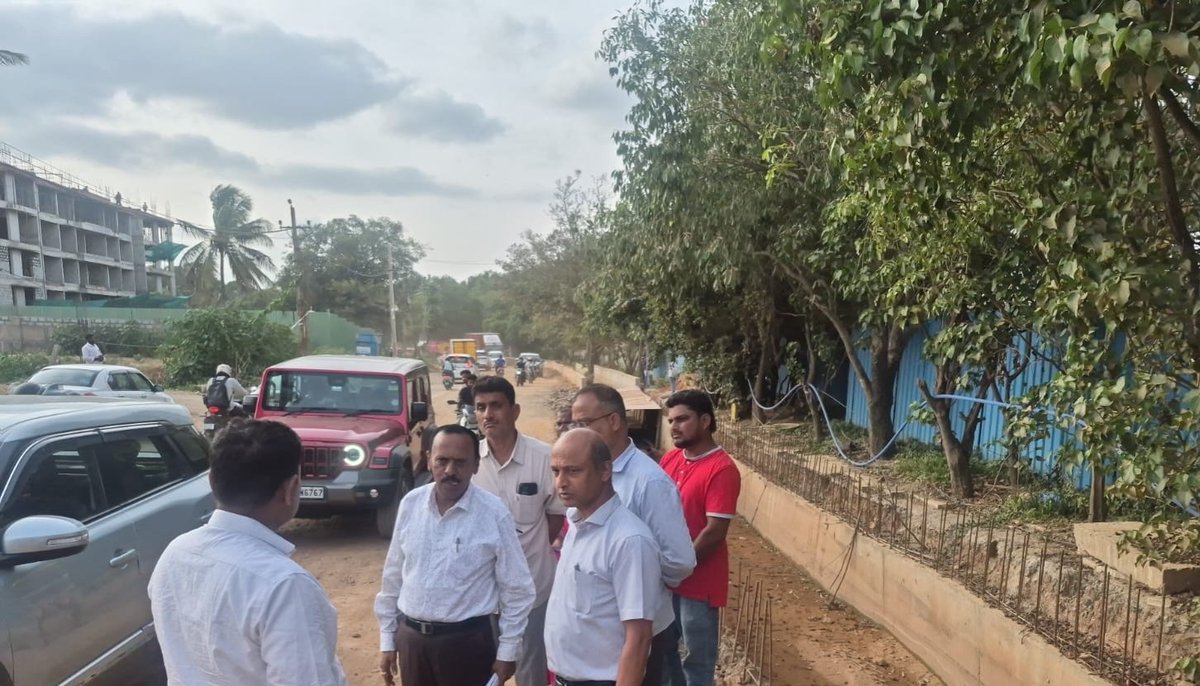
Bengaluru commuters using Gunjur Club Road will face temporary traffic diversions until September 4 as road repair work takes place on the busy corridor. The restriction is intended to allow construction crews to complete the works safely, but it also highlights the growing pressure on eastern Bengaluru’s road network, where rapid residential and commercial development has outpaced supporting infrastructure.
Traffic movement has been altered around the affected stretch, with motorists being directed towards alternative routes while repairs are under way. The disruption is particularly relevant for residents and workers travelling between Gunjur, Varthur and surrounding employment and residential areas, where road capacity is already under pressure during peak periods. For local commuters, even short-term closures can produce disproportionate delays when alternative roads are narrow or already congested. Diversions can also shift traffic into residential streets, increasing conflicts with pedestrians, cyclists and local access traffic. The repair work nevertheless points to a necessary component of urban infrastructure management. Roads subjected to heavy daily traffic require regular resurfacing and structural maintenance, particularly during and after the monsoon. Delaying such interventions can result in deteriorating surfaces, waterlogging and higher long-term repair costs. The wider challenge is that road maintenance in Bengaluru often operates separately from development patterns. Eastern Bengaluru has seen substantial housing and commercial construction, creating new travel demand without always matching investment in local road capacity, footpaths, drainage and public transport.
This mismatch is especially important around Gunjur and neighbouring growth corridors. A road may be repaired to improve vehicle movement, but its usefulness remains limited if pedestrians have no continuous footpath or if drainage problems repeatedly damage the carriageway. Durable road upgrades therefore need to address the underlying causes of deterioration rather than focus only on the surface. The temporary diversion also offers an opportunity to assess how traffic is distributed across the surrounding network. Authorities can use traffic observations during the repair period to identify bottlenecks and dangerous turning points that may require permanent improvements. For residents, clear communication about the duration and location of restrictions will be important. Advance signage, visible diversion routes and coordination with public transport can reduce confusion and unnecessary vehicle movement. The road is expected to return to normal traffic arrangements after the scheduled repair period, but the larger infrastructure challenge will remain.
As Bengaluru expands eastwards, maintaining existing roads must be accompanied by better planning for walking, drainage, public transport and local connectivity. The immediate objective is to complete the repair safely and restore normal movement. The longer-term goal should be a road network capable of supporting growth without repeatedly placing commuters through disruptive cycles of deterioration, emergency repairs and diversions.