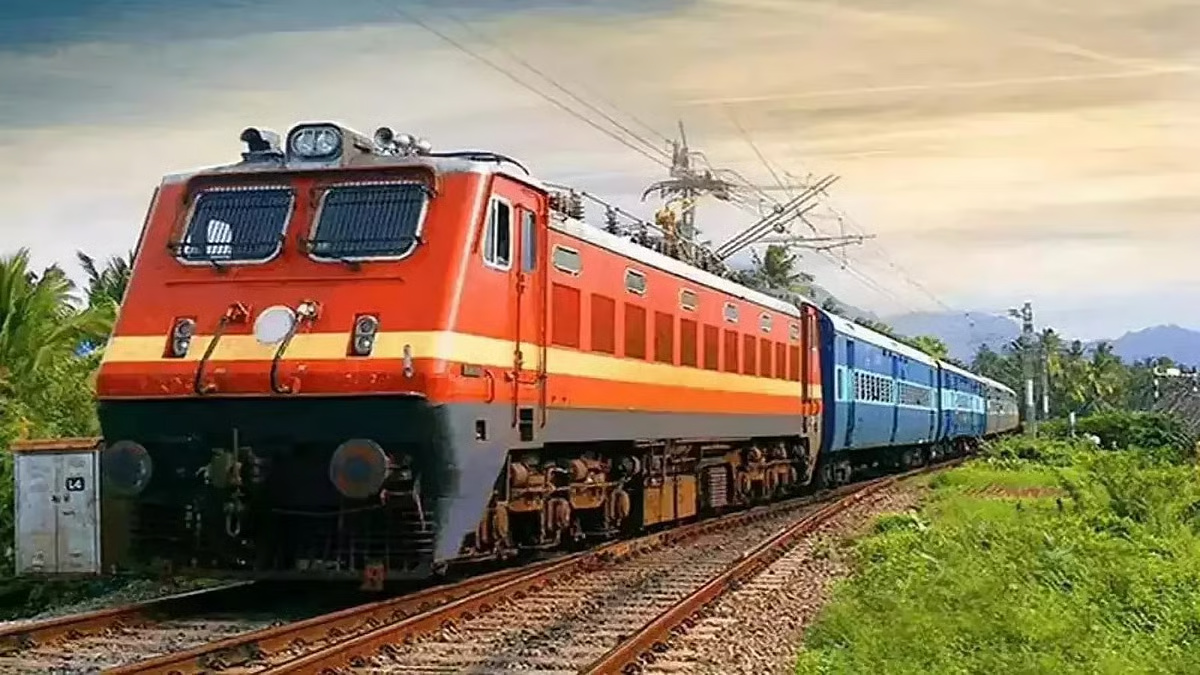
Mumbai’s Central Railway network faced a fresh operational setback on Tuesday after repeated opening of a level crossing at Diva disrupted suburban train movements and affected some long-distance services. The incident exposed the tight interdependence between rail and road traffic around one of the region’s busiest transport systems, with even a short interruption creating knock-on delays across multiple railway lines. The disruption occurred at Diva level crossing LC-29, which was opened for road traffic between 12.11pm and 12.21pm amid heavy vehicular movement. Railway officials said the opening affected train operations across the up and down main lines as well as the fifth and sixth lines.
Several suburban services were detained during the disruption. Trains operating towards the down line, including PK11, TAN3 and K43, were affected, while S21 and A21 on the down Thane line also faced delays. The incident highlights a structural challenge for the Mumbai local train disruption system. Level crossings create points where two transport networks compete for the same right of way. In a metropolitan region where suburban rail carries very large passenger volumes, a brief road-related interruption can quickly spread through a tightly scheduled timetable. Diva is also a strategically important interchange area within the expanding Mumbai Metropolitan Region. Rapid residential development around the wider Kalyan-Dombivli and Thane belt has increased road traffic alongside continued dependence on suburban rail. That combination makes grade separation increasingly important, particularly where road and rail movements intersect frequently.
Urban transport specialists say the wider issue is not simply the duration of a single disruption, but the resilience of the network to small operational shocks. When services run close to capacity, delays can cascade as trains wait for paths, platforms become crowded and subsequent services inherit the disruption. For commuters, the economic impact can be immediate. A delayed local train can mean missed connections, late arrivals at workplaces and longer journeys for people travelling between peripheral residential areas and employment centres. Crowding can also increase discomfort and safety concerns, particularly during peak periods. The Mumbai local train disruption also reinforces the importance of separating major road and rail movements wherever practical. Road overbridges, underpasses and other grade-separated solutions can reduce conflicts between vehicles and trains, although such projects require careful land, engineering and construction planning.
The incident serves as another reminder that Mumbai’s transport resilience depends on more than adding new services. Existing infrastructure must also be designed to absorb unexpected interruptions as the metropolitan population and traffic demand continue to grow. For Central Railway, maintaining reliable operations will require close coordination between railway authorities and road agencies, alongside continued investment in infrastructure that removes avoidable conflicts. For passengers, the priority remains straightforward: a network that can keep moving even when pressure rises elsewhere in the city.