


Delhi’s firecracker ban is back in force after the permitted window for bursting crackers ended, with the Delhi Police warning that violations will invite legal action. The restriction follows a sharp rise in the reported contribution of firecrackers to the capital’s pollution during the two days around Diwali.
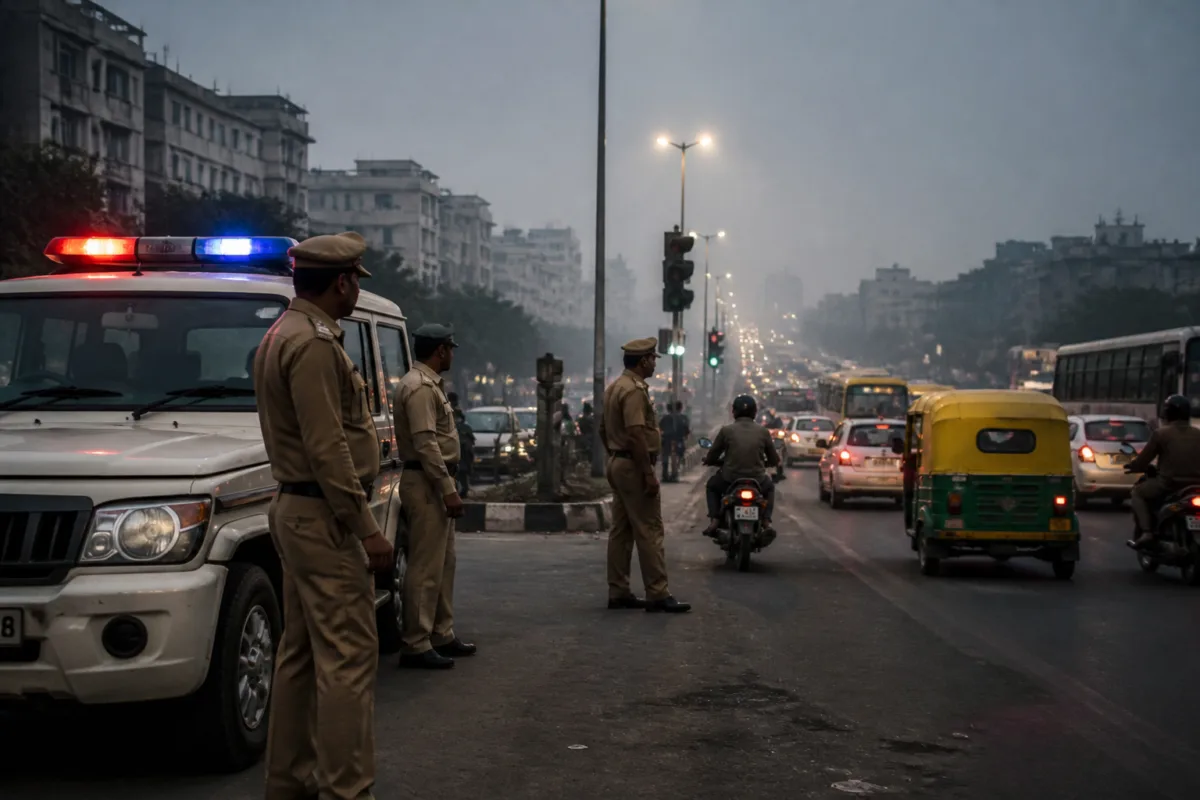
The Delhi Police said in a post on X that permission to burst firecrackers in the national capital was limited to specified hours on 7 and 8 November. That permission has now ended, and the use of firecrackers is prohibited, the police said. It appealed to residents to follow the restriction and described compliance as a mark of responsible citizenship.
The warning comes as Delhi’s air quality deteriorated into the ‘very poor’ category. The city recorded an air quality index, or AQI, of 303 on Wednesday morning, according to the report. A day earlier, Delhi’s 24-hour average AQI was 299, placing the air in the ‘poor’ category.
Data attributed to the Indian Institute of Tropical Meteorology showed that firecrackers made up the largest reported share of Delhi’s pollution on Monday and Tuesday. Their contribution was put at 71.1% on Monday and 29.8% on Tuesday. The report did not provide the corresponding dates in calendar format, but linked the figures to the Diwali period.
The same report said vehicles accounted for 6.9% of Delhi’s pollution on Monday. The figures underline how pollution sources can change sharply over short periods during festival-related emissions, even as the city continues to manage other contributors to poor air quality.
The wider seasonal picture was also worsening. An analysis by the Centre for Science and Environment said the Delhi-NCR region experienced poorer pollution conditions at the beginning of this winter than in previous years. Average PM2.5 concentration during the week before Diwali was recorded at 236 micrograms per cubic metre, compared with 179 micrograms per cubic metre in 2024. The report described the latest figure as 32% higher than the 2024 level and the highest pre-Diwali weekly average in three years.
The Central Pollution Control Board has also identified stubble burning in neighbouring states as one of the factors contributing to Delhi’s pollution. The city’s air quality is therefore being shaped by emissions within the capital as well as by pollution sources across the wider NCR and surrounding agricultural regions.
For residents, the immediate change is enforcement: firecrackers are no longer permitted under the window announced by the police, and those who continue to use them could face action. The Delhi Police has asked citizens to respect the restriction as the capital’s AQI remains in the very poor range.

