Delhi Waste Management Plan Targets Landfill Relief
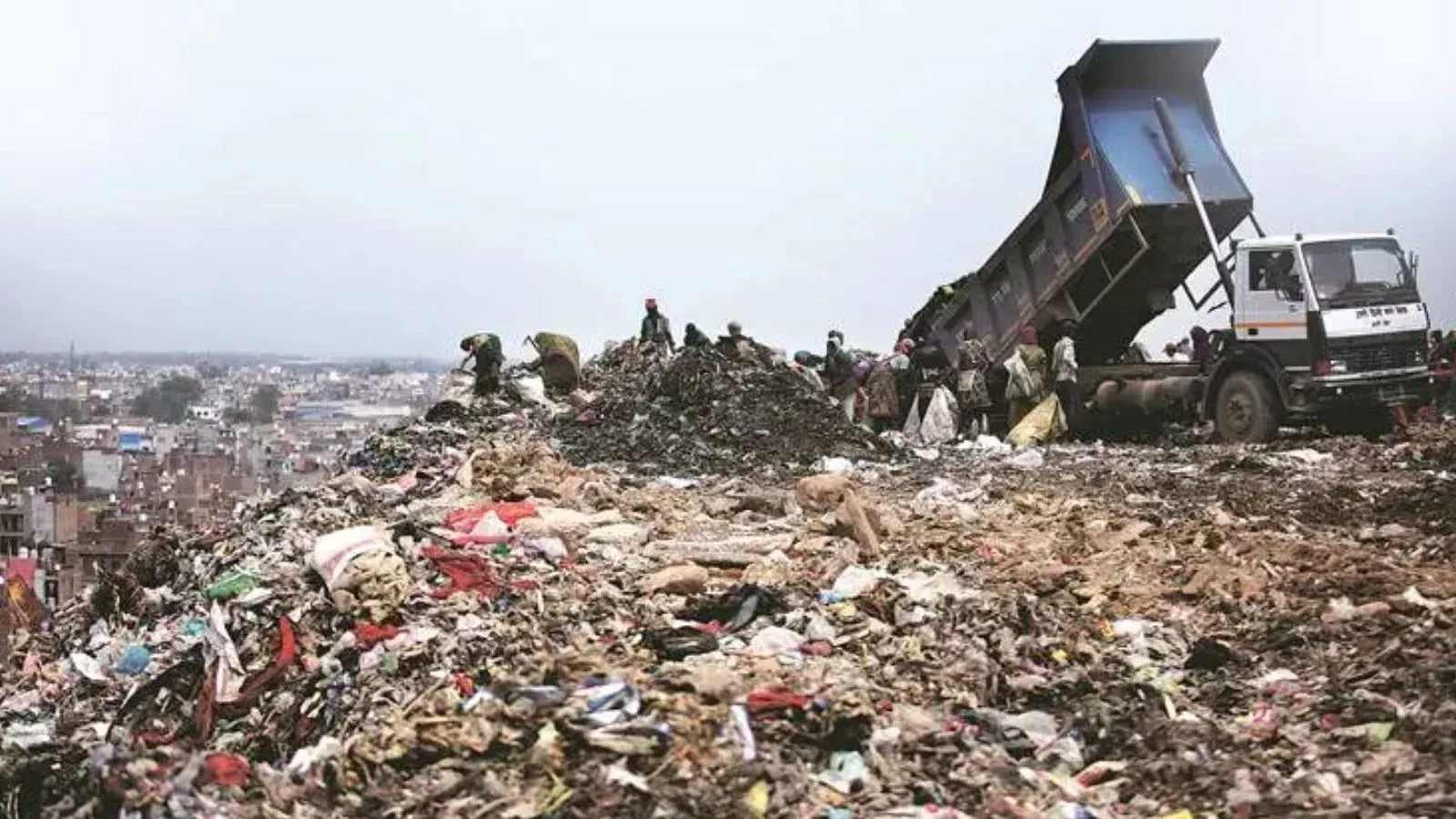
Delhi is attempting to tackle its landfill crisis on two fronts: removing the waste accumulated over decades while stopping fresh garbage from creating new mountains. The Municipal Corporation of Delhi has approved processing facilities with a combined capacity of 5,900 tonnes a day, alongside continuing biomining at Bhalswa, Ghazipur and Okhla. The shift matters because landfill clearance alone cannot solve the city’s waste problem if daily disposal continues at the same scale.
Delhi generates roughly 11,500–12,000 tonnes of municipal waste every day, leaving a significant gap between generation and existing treatment capacity. Four waste-to-energy facilities currently provide part of the processing infrastructure, but the remaining load has continued to put pressure on the three major dumpsites. The new programme covers five locations Bhalswa, Okhla, Ghazipur, Singhola and Narela-Bawana. Their planned capacities are 1,800, 1,400, 800, 700 and 1,200 tonnes per day respectively. Together, they represent an investment of about ₹596 crore. Contracts for processing the fresh waste have also been awarded, moving the programme beyond the planning stage. The other half of the strategy is legacy waste remediation. Biomining separates old landfill material into usable or recyclable fractions and inert residue, allowing portions of the occupied land to be reclaimed.
Official records show that the three dumpsites originally held about 280 lakh tonnes of legacy waste in 2019. However, more recent data indicates that substantial quantities remain, particularly at Ghazipur. MCD has set different timelines for the three sites. Bhalswa and Okhla are targeted for completion by the end of 2026, while Ghazipur has a longer deadline extending to December 2027. Recent data, however, suggests the task remains substantial, with about 115 lakh tonnes of legacy waste still reported across the three sites in early 2026. For residents, the outcome will depend less on the headline capacity figures and more on whether waste is segregated, transported and processed consistently. Urban planners also point to the importance of what happens to reclaimed landfill land. MCD documents refer to environmental safeguards that include using part of cleared sites for dense green cover and waste-processing infrastructure.
That has a wider planning implication for Delhi. Reclaimed land near established urban areas could eventually support environmental buffers and carefully planned public infrastructure, but it should not automatically be treated as development land. For the city, the immediate test is simpler: process today’s waste fast enough that tomorrow’s landfill problem does not recreate itself.