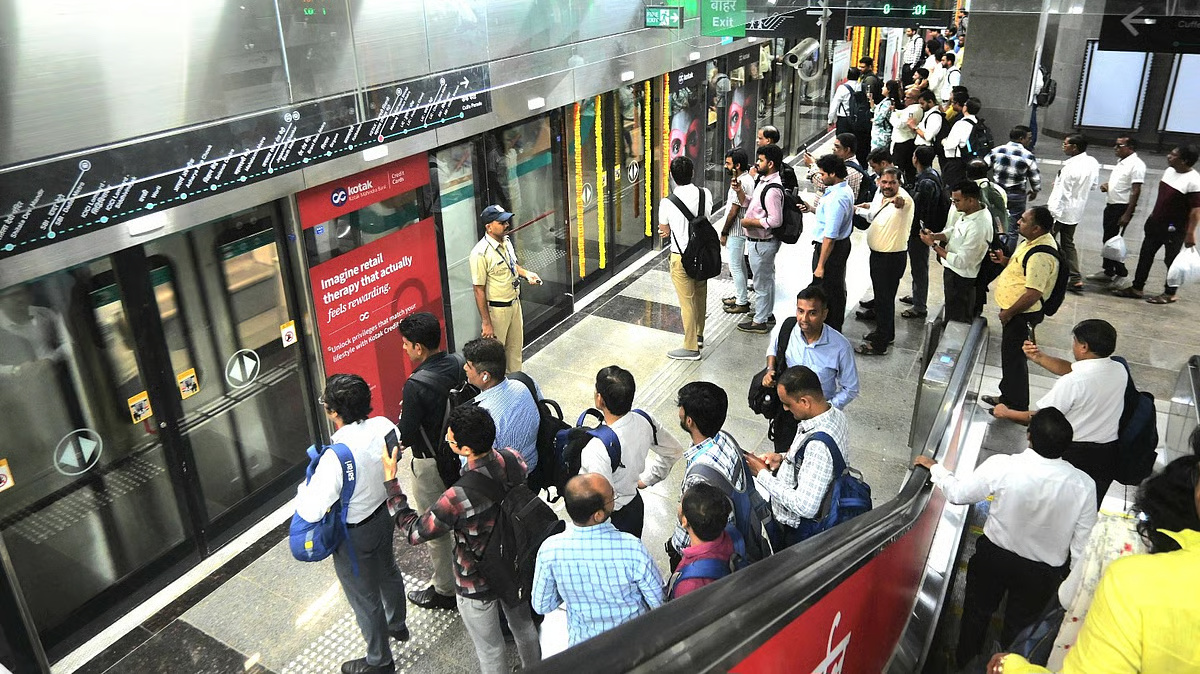
Mumbai Metro Network Loses Underground Mobile Coverage
Mumbai’s Aqua Line is facing a complete mobile connectivity disruption after the shutdown of a third-party telecommunications infrastructure provider, leaving passengers without reliable cellular services across the underground corridor. The interruption affects operators including Vodafone Idea and BSNL, raising concerns about communication access inside a critical mass-transit system where passengers may need connectivity for payments, emergency contact and travel information. The disruption follows the termination of the infrastructure provider’s contract with the Mumbai Metro Rail Corporation. The arrangement was intended to provide cellular coverage inside the underground network through shared telecommunications infrastructure rather than separate systems operated independently by each mobile operator.
The immediate impact extends beyond ordinary passenger convenience. Underground transport systems have different communication requirements from surface networks because conventional mobile signals cannot easily penetrate tunnels. Dedicated infrastructure is therefore needed to distribute cellular signals through stations and tunnel sections. For commuters, the loss of coverage can affect several everyday functions. Mobile-based ticketing, digital payments, navigation, work calls and access to travel updates can become harder when passengers enter areas without a signal. More importantly, dependable communications form part of the wider resilience of urban transport systems, particularly when services are disrupted or passengers need assistance. The dispute also highlights a procurement and infrastructure-design issue. Industry observers have raised concerns about models in which multiple telecom operators depend on a single intermediary for access to specialised infrastructure. Such arrangements can simplify deployment and maintenance, but they may also create a single point of failure if the underlying contract becomes inactive.
The situation is particularly significant for Aqua Line because much of the corridor operates underground. Unlike an elevated metro route, where mobile networks can often rely on conventional outdoor infrastructure, underground sections require purpose-built systems such as distributed antenna networks to carry signals through tunnels and stations. A longer disruption could also affect the broader passenger experience as Mumbai expands its reliance on digitally enabled public transport. The city’s transport network increasingly depends on smartphones for information, payments and journey planning. Connectivity is therefore becoming less of an optional amenity and more of a supporting layer of urban infrastructure. The priority now is restoring a stable and competitively accessible communications system. Any future arrangement should provide continuity during contractual transitions and avoid prolonged dependence on a single infrastructure pathway. For a city investing heavily in underground mobility, Mumbai Metro connectivity will need to be treated as part of transport resilience rather than an isolated telecommunications service.
The episode offers a wider lesson for infrastructure planning: digital systems supporting public transport require the same attention to redundancy, accountability and service continuity as physical assets. For passengers, the measure of success will ultimately be simple — reliable connectivity whenever the train is running underground.