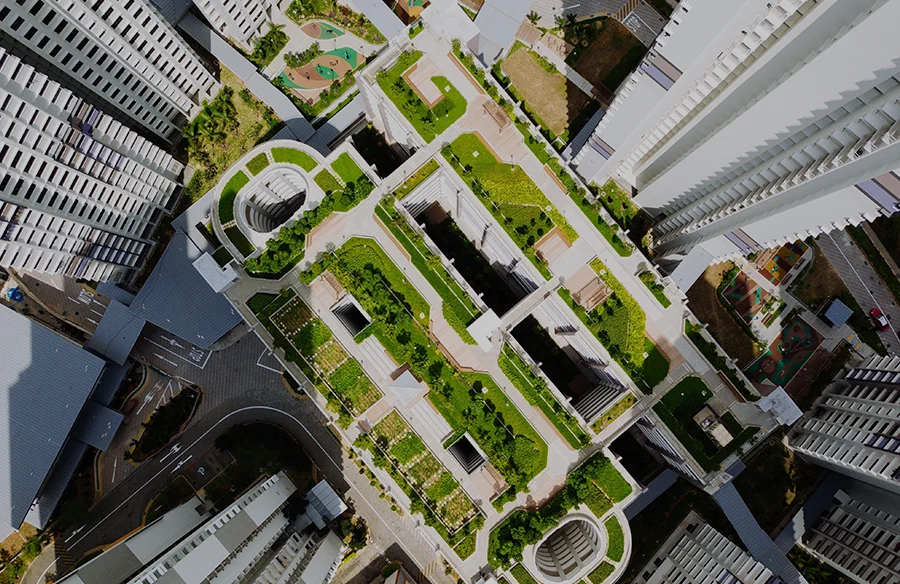
As extreme summer temperatures intensify across Chennai, policymakers are increasingly exploring green roofs and rooftop farming as part of the city’s climate adaptation strategy. But the emerging debate is no longer just about cooling buildings it is about whether climate-resilient infrastructure can succeed in a water-stressed coastal metropolis already struggling with uneven urban planning and recurring supply shortages.
The push for rooftop gardens comes amid rising concern over heat retention in dense neighbourhoods where shrinking tree cover, paved surfaces and vertical construction have amplified the urban heat island effect. Officials associated with city resilience programmes say rooftop cultivation systems can lower indoor temperatures, improve food access and support rainwater reuse. Early pilot projects in schools and childcare centres have shown measurable reductions in room temperatures during peak summer periods. However, urban planners and environmental researchers warn that scaling such systems across the city may expose deeper structural vulnerabilities, particularly around water availability. Chennai’s memory of the 2019 water crisis continues to shape public scepticism around solutions that rely on regular irrigation.
Experts tracking urban wetlands and water governance argue that rooftop farming cannot be viewed independently from the city’s broader consumption patterns. With per capita water availability already under pressure during summer months, concerns are growing that large-scale rooftop cultivation could increase household demand unless supported by decentralised reuse systems. The debate has also highlighted a larger policy gap in how Indian cities approach climate adaptation. Urban infrastructure strategies often treat flooding and drought as separate emergencies, despite both being linked to weak water storage, poor groundwater recharge and inadequate reuse networks. Specialists involved in resilience planning say rooftop systems are intended to function alongside rainwater harvesting and treated greywater circulation, reducing dependence on freshwater supplies.
The current model being promoted in public institutions focuses on compact edible gardens rather than ornamental landscaping. Modular units installed across schools and anganwadis are being used to grow leafy vegetables for nutrition programmes while simultaneously reducing rooftop heat absorption. State agencies see these pilots as low-cost interventions that combine public health, food resilience and climate adaptation in land-constrained neighbourhoods. The expansion aligns with Tamil Nadu’s broader heat action measures after extreme heat was categorised as a state-specific disaster risk. Cooling strategies are increasingly moving beyond emergency response toward long-term urban design interventions, especially in vulnerable communities where exposure to heat is highest.
Still, several planners argue that rooftop farming alone cannot address Chennai’s escalating climate pressures. Environmental groups continue to push for larger investments in shaded streets, urban forests and open public spaces that deliver citywide cooling benefits without creating maintenance burdens for individual households. For Chennai, the future of green roofs may ultimately depend less on technology and more on governance. Questions around water reuse infrastructure, building maintenance, affordability and neighbourhood-level equity are likely to determine whether rooftop cooling becomes a scalable urban solution or remains limited to isolated demonstration projects.