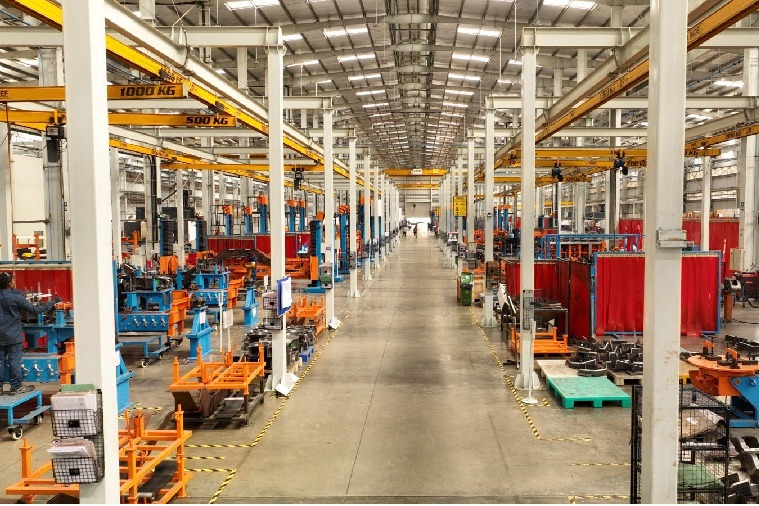
Bengaluru’s long-delayed suburban rail network has moved a step closer to operations after project authorities placed a major rolling stock order with Chennai’s Integral Coach Factory for 153 air-conditioned train coaches. The procurement is expected to support the first operational stretches of the Bengaluru Suburban Rail Project (BSRP), a transport system positioned as critical to easing traffic congestion, reducing emissions and improving regional mobility across the expanding metropolitan region.
The order, valued at over Rs 1,500 crore, has been issued through Bengaluru Integrated Rail Infrastructure Development Enterprises Ltd, a subsidiary of the state-led rail infrastructure joint venture overseeing the suburban network. The coaches are intended for two priority corridors connecting northern, eastern and southern growth zones of Bengaluru, where rapid urbanisation has outpaced transport infrastructure for over a decade.Officials associated with the project indicated that the train sets are expected to begin arriving within 18 months, aligning with revised execution timelines discussed at the national level earlier this year. The Bengaluru Suburban Rail Project has repeatedly faced delays linked to land acquisition, contracting disputes and financing gaps, pushing several packages behind schedule despite the project receiving approval in 2020.The decision to source the rolling stock directly from Chennai’s government-run manufacturing facility follows multiple unsuccessful attempts to lease trains through private procurement models. Urban transport analysts note that the shift reflects a broader trend among public transit agencies seeking greater operational control and cost predictability amid volatile infrastructure markets.
Beyond manufacturing the coaches, the agreement includes system integration, safety testing, signalling coordination and regulatory clearances. These technical elements are increasingly significant as Indian cities move towards higher-capacity commuter rail systems designed to operate alongside metro networks and intercity services.Transport planners view the Bengaluru Suburban Rail Project as an important intervention in reshaping daily mobility patterns in one of India’s fastest-growing technology and employment hubs. Bengaluru continues to experience rising private vehicle ownership, worsening travel times and deteriorating air quality. A functioning suburban rail network could provide a lower-emission alternative for commuters travelling from peripheral residential zones into employment centres.Experts in sustainable urban mobility argue that suburban rail systems can significantly reduce road dependency if supported by integrated bus services, safe pedestrian access and transit-oriented development around stations. Without these complementary investments, large-scale rail infrastructure risks underutilisation despite substantial public spending.
The procurement also highlights the growing role of domestic rail manufacturing in India’s urban transit expansion. Chennai’s coach-building ecosystem has increasingly become central to supplying rolling stock for metro and regional rail projects across multiple states, supporting local industrial capacity while reducing dependence on imported systems.However, infrastructure specialists caution that rolling stock procurement alone will not accelerate delivery unless pending civil works and corridor contracts progress simultaneously. Several sections of the Bengaluru Suburban Rail Project remain under tendering or re-bidding stages, particularly along the city’s outer growth corridors where urban expansion pressures are intensifying. With Bengaluru’s mobility crisis increasingly tied to economic productivity and liveability, the timely execution of the Bengaluru Suburban Rail Project is likely to remain under close scrutiny from residents, businesses and planners alike.