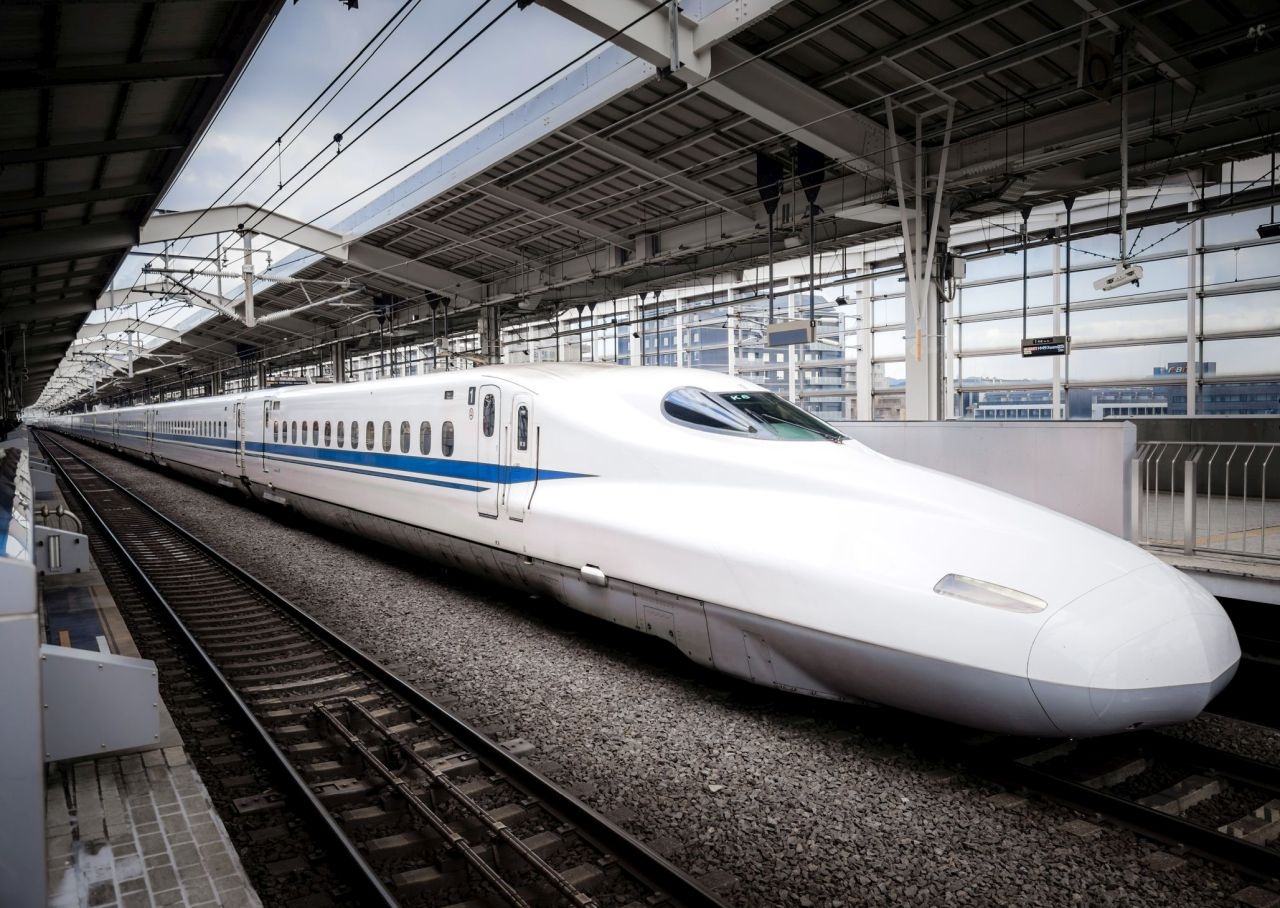
India’s first high-speed rail corridor between Mumbai and Ahmedabad is entering a decisive construction phase, with large sections of viaducts, tunnels, depots and specialised rail infrastructure now taking shape across Gujarat and Maharashtra. The 508-kilometre Mumbai bullet train corridor is emerging not only as a transport project but also as a test case for how India adapts advanced rail technology, urban connectivity and climate-resilient infrastructure into a rapidly expanding mobility network. Designed for speeds of up to 320 kilometres per hour, the Mumbai bullet train system is expected to fundamentally alter travel patterns between two of western India’s largest economic centres. Officials associated with the project say elevated tracks, seismic-resistant bridges and complex tunnel engineering are being prioritised to ensure operational safety in densely populated and environmentally sensitive regions.
A major portion of the corridor is being constructed on elevated viaducts rising more than 20 metres above ground level. Engineers involved in the project indicated that grade-separated infrastructure became essential due to land constraints, urban density and safety risks linked to human and animal crossings along conventional railway alignments. The project also represents one of India’s largest technology transfer exercises in rail infrastructure. Japanese engineering systems, specialised machinery and technical training programmes are being integrated with Indian manufacturing and construction capabilities. At dedicated casting facilities in Gujarat, thousands of precision-engineered track slabs are being produced for the high-speed network under strict dimensional tolerances required for ultra-fast rail movement. One of the most technically sensitive components of the Mumbai bullet train corridor is the track support system that reduces vibration and stabilises rail movement at high speeds. Engineers are deploying specialised cement-asphalt cushioning systems beneath the tracks using imported equipment adapted for Indian conditions. Research institutions are simultaneously studying these technologies to support future domestic capability development.
In Maharashtra, the corridor enters far more challenging terrain. Mountain tunnels, deep excavations and India’s first undersea rail tunnel beneath Thane Creek are pushing the boundaries of domestic rail engineering. Officials working on the alignment said advanced geological monitoring systems and real-time structural sensors are being used to minimise risks during excavation through unstable basalt formations and densely built urban zones. The project’s urban interface is equally significant. In Mumbai, the underground terminus at Bandra Kurla Complex is expected to integrate high-speed rail into the city’s broader transport ecosystem, potentially influencing future commercial growth patterns and regional commuting behaviour. However, infrastructure experts caution that the long-term success of the Mumbai bullet train will depend on affordability, multimodal integration and environmental management. Large transport corridors often generate secondary urbanisation pressures, land-use changes and ecological concerns that require careful governance alongside engineering execution. Communities along the route are already experiencing the social and environmental effects of large-scale construction activity, including noise, land transformation and changing local economies. At the same time, the project is creating new technical employment opportunities and accelerating skill development in specialised rail engineering sectors previously absent in India.
As construction advances towards operational targets later this decade, the Mumbai bullet train corridor is increasingly being viewed as a blueprint for the next generation of Indian transport infrastructure — one where speed, sustainability and urban resilience must evolve together rather than independently.