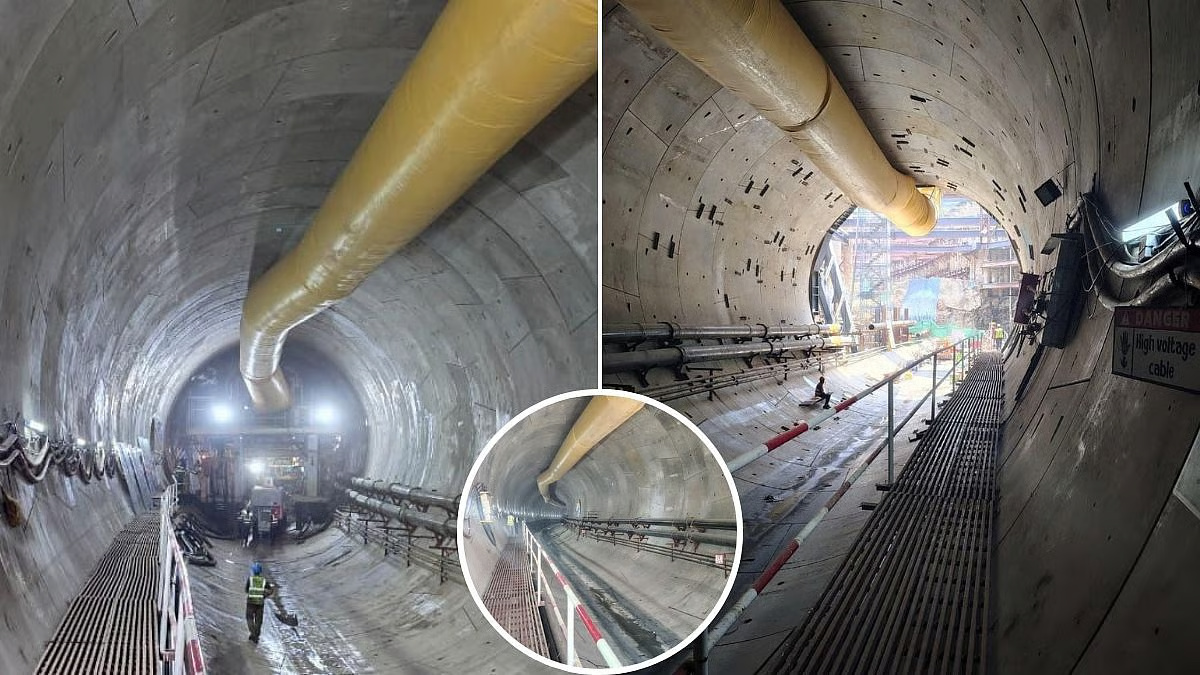
Construction progress on Mumbai’s Orange Gate underground road corridor has entered a new phase after tunnelling work crossed the 250-metre mark, signalling the city’s accelerating shift towards multi-layered transport infrastructure aimed at easing congestion in one of India’s most land-constrained urban regions. The Mumbai Metropolitan Region Development Authority (MMRDA) has advanced excavation works on the strategic underground road project using tunnel boring technology designed for dense urban environments. Officials overseeing the project said the milestone includes both excavation and installation of permanent structural tunnel lining, a critical stage that stabilises underground sections for long-term operational use.
The Orange Gate tunnel project is emerging as a significant component of Mumbai’s evolving mobility strategy, particularly as conventional road widening options become increasingly difficult across the island city. Urban planners say subterranean transport systems are likely to play a larger role in future infrastructure planning as cities attempt to expand transport capacity without large-scale demolition or disruption at street level. Positioned beneath one of Mumbai’s most infrastructure-intensive zones, the alignment passes through a complex network of utilities, transport links and densely built neighbourhoods. Engineers involved in the project indicated that underground excavation in such conditions requires continuous monitoring to minimise settlement risks and maintain surface-level stability. The Mumbai Orange Gate tunnel is intended to strengthen east-west connectivity while reducing dependence on overcrowded arterial roads that currently face chronic traffic congestion during peak hours. Civic transport assessments suggest that travel times along key sections could decline substantially once the corridor becomes operational. Infrastructure experts view the project as part of a broader transformation in metropolitan mobility planning where underground corridors, metro systems, coastal roads and elevated connectors are being integrated into a layered urban transport network.
Such infrastructure, experts argue, becomes increasingly necessary in megacities where rising vehicle ownership and economic activity continue to pressure ageing road systems. At the same time, transport researchers caution that tunnel-based mobility solutions must operate alongside strong public transport systems to ensure balanced and climate-sensitive urban growth. While underground roads can reduce bottlenecks and improve logistics efficiency, long-term sustainability goals still depend on reducing excessive private vehicle dependence and improving multimodal connectivity. The project also reflects growing investments in engineering-intensive infrastructure across the Mumbai Metropolitan Region, where authorities are increasingly prioritising high-capacity mobility corridors to support economic expansion, redevelopment activity and intercity movement. Construction specialists note that advanced tunnelling methods help limit disruption above ground, particularly in compact urban environments where land acquisition remains both socially and financially challenging. Environmental analysts say underground infrastructure may also contribute to reducing surface-level traffic emissions if congestion and idle vehicle movement are effectively lowered. However, they stress that mobility projects must be accompanied by pedestrian-friendly planning, green urban design and efficient transit integration to create more liveable city environments.
As tunnelling operations continue, the Orange Gate corridor is expected to become a test case for how Indian megacities deploy underground infrastructure to manage future urban growth. Urban policy observers believe the success of such projects will depend not only on engineering execution, but also on how effectively they integrate with broader sustainability and mobility objectives shaping Mumbai’s next phase of expansion.