


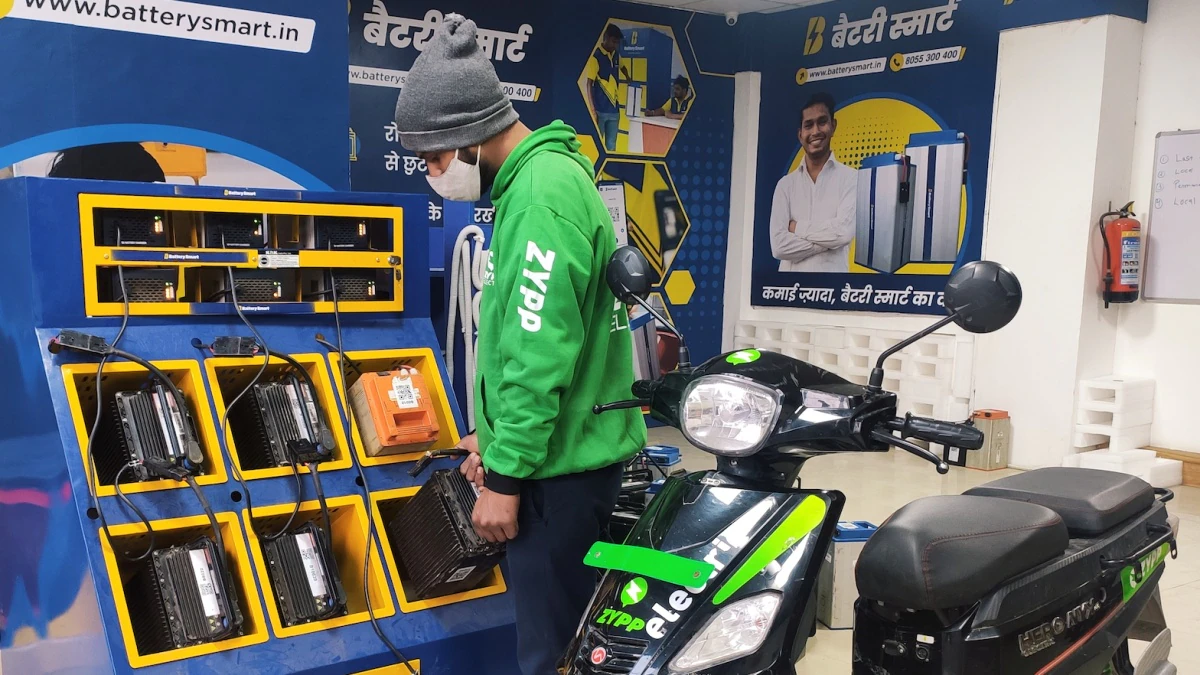
Vietnam-based electric mobility company VinFast has begun deploying battery swapping infrastructure across Delhi-NCR ahead of its planned entry into India’s electric scooter market, signalling a shift in how global EV firms are approaching urban mobility in one of the world’s fastest-growing two-wheeler economies.
The rollout of battery swapping stations in the National Capital Region comes at a time when Indian cities are struggling to scale public charging infrastructure quickly enough to support rising electric vehicle adoption. Urban mobility analysts say the move reflects growing industry recognition that dense metropolitan regions require faster and more space-efficient energy solutions, particularly for delivery workers, daily commuters and shared mobility operators. Industry observers note that battery swapping could reduce dependence on long charging cycles, which remain a challenge in apartment-heavy urban environments where private charging access is limited. In cities such as Delhi, Gurugram and Noida, where road congestion and pollution levels remain persistent concerns, the expansion of EV infrastructure is increasingly being linked to broader clean-air and climate resilience targets.
Senior company executives have previously indicated that VinFast intends to introduce premium electric scooters in India later this year through a dedicated retail and service ecosystem rather than integrating the business into its passenger vehicle operations. Market analysts believe this strategy reflects the competitive intensity of India’s electric two-wheeler segment, where customer experience, after-sales support and charging convenience are becoming critical differentiators. The company is also expected to initially rely on completely knocked down (CKD) imports before increasing domestic sourcing and manufacturing over time. Such localisation plans align with India’s broader industrial policy goals, which aim to reduce import dependence while strengthening domestic EV supply chains and clean manufacturing ecosystems. Urban planners tracking the electric mobility transition say battery swapping infrastructure may offer immediate advantages in land-constrained cities because stations typically require less time and lower grid load management compared to conventional fast-charging hubs. However, experts caution that the long-term success of battery swapping in India will depend on interoperability standards, battery safety norms and pricing transparency for consumers.
The company’s proposed manufacturing expansion in Tamil Nadu’s Thoothukudi region also reflects a wider trend of global EV manufacturers using southern India as a production and export base due to port connectivity and industrial corridor development. Transport economists say such investments could generate new employment clusters linked to advanced manufacturing, logistics and battery assembly. According to recent industry estimates, electric two-wheelers accounted for less than 10 per cent of India’s monthly two-wheeler sales, indicating that adoption remains at an early stage despite strong policy support. Analysts believe infrastructure-led strategies such as battery swapping could help bridge consumer hesitation around range anxiety and charging access, especially in large urban regions where daily commuting distances are relatively predictable. As Indian cities continue balancing mobility growth with climate and air-quality pressures, the effectiveness of new EV infrastructure models will likely shape how quickly cleaner transport becomes accessible beyond early adopters and premium consumers.
