


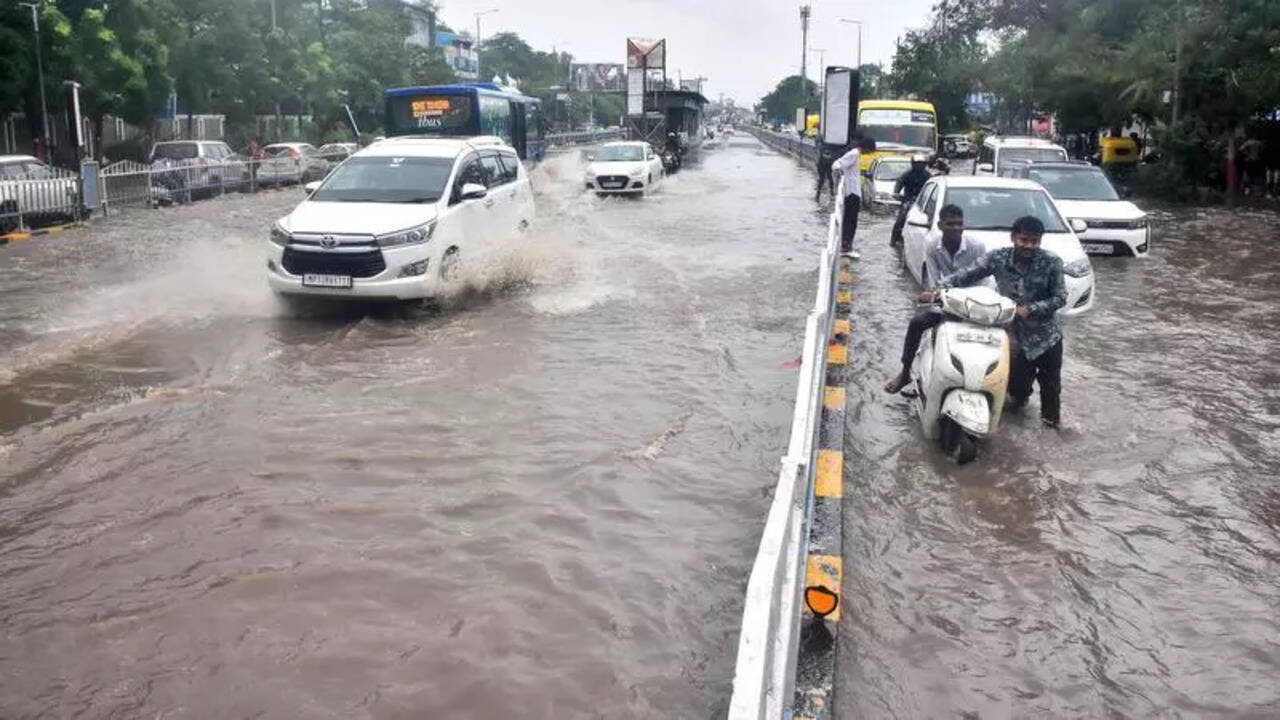
Heavy rainfall across Bengaluru has led to a noticeable increase in snake sightings in residential neighbourhoods, highlighting the growing ecological pressures created by rapid urban expansion, habitat disruption and extreme weather patterns in India’s technology capital.Wildlife rescuers and civic responders have reported a rise in calls from households and apartment complexes after persistent rainwater flooded underground burrows and low-lying green patches, forcing snakes to emerge into human-dominated spaces.
Several sightings have been recorded in eastern and peripheral parts of Bengaluru where construction activity has intensified in recent years.Environmental experts say the phenomenon reflects a broader urban ecological imbalance rather than an isolated seasonal occurrence.Bengaluru’s shrinking wetlands, fragmented green corridors and large-scale land-use changes have steadily reduced natural habitats for reptiles and other small wildlife species, increasing the likelihood of human-animal encounters during periods of climatic stress.The Bengaluru rains have also exposed vulnerabilities in urban drainage systems, with waterlogging in multiple neighbourhoods disrupting not only mobility but also local ecosystems. Ecologists note that reptiles typically avoid human interaction, but flooding and habitat displacement leave them with fewer safe shelter options during intense monsoon conditions.Urban planners argue that biodiversity considerations continue to receive limited attention in mainstream infrastructure and real estate development. As Bengaluru expands outward through residential layouts, road projects and commercial corridors, natural stormwater channels and vegetated zones are increasingly being altered or encroached upon, affecting ecological balance.The rise in wildlife sightings carries important public health and safety implications.
Rescue volunteers say many snake encounters result from panic or lack of awareness rather than direct threat, with non-venomous species often mistaken for dangerous reptiles. Experts stress the importance of rapid-response rescue networks, community awareness campaigns and ecological mapping in high-growth urban zones.Climate researchers warn that extreme rainfall events linked to changing weather patterns may intensify such interactions in the future. Urban flooding, rising surface temperatures and habitat fragmentation are expected to place additional stress on biodiversity within expanding metropolitan regions.The issue also reflects a wider challenge confronting Indian cities attempting to balance infrastructure growth with environmental resilience. Ecologically sensitive urban planning, preservation of green buffers and restoration of lakes and wetlands are increasingly seen as essential not only for flood mitigation but also for sustaining urban biodiversity.Authorities and wildlife groups are expected to continue rescue operations and public advisories during the ongoing monsoon period. Environmental observers say Bengaluru’s experience demonstrates how climate adaptation in cities must extend beyond engineering solutions to include ecosystem preservation and coexistence strategies within rapidly changing urban landscapes.
As Bengaluru confronts recurring monsoon disruptions, the increase in wildlife movement serves as another reminder that environmental systems remain deeply interconnected with urban planning decisions and the long-term liveability of growing cities.
Also Read:Bengaluru Underbridge Project Moves Towards Public Opening
