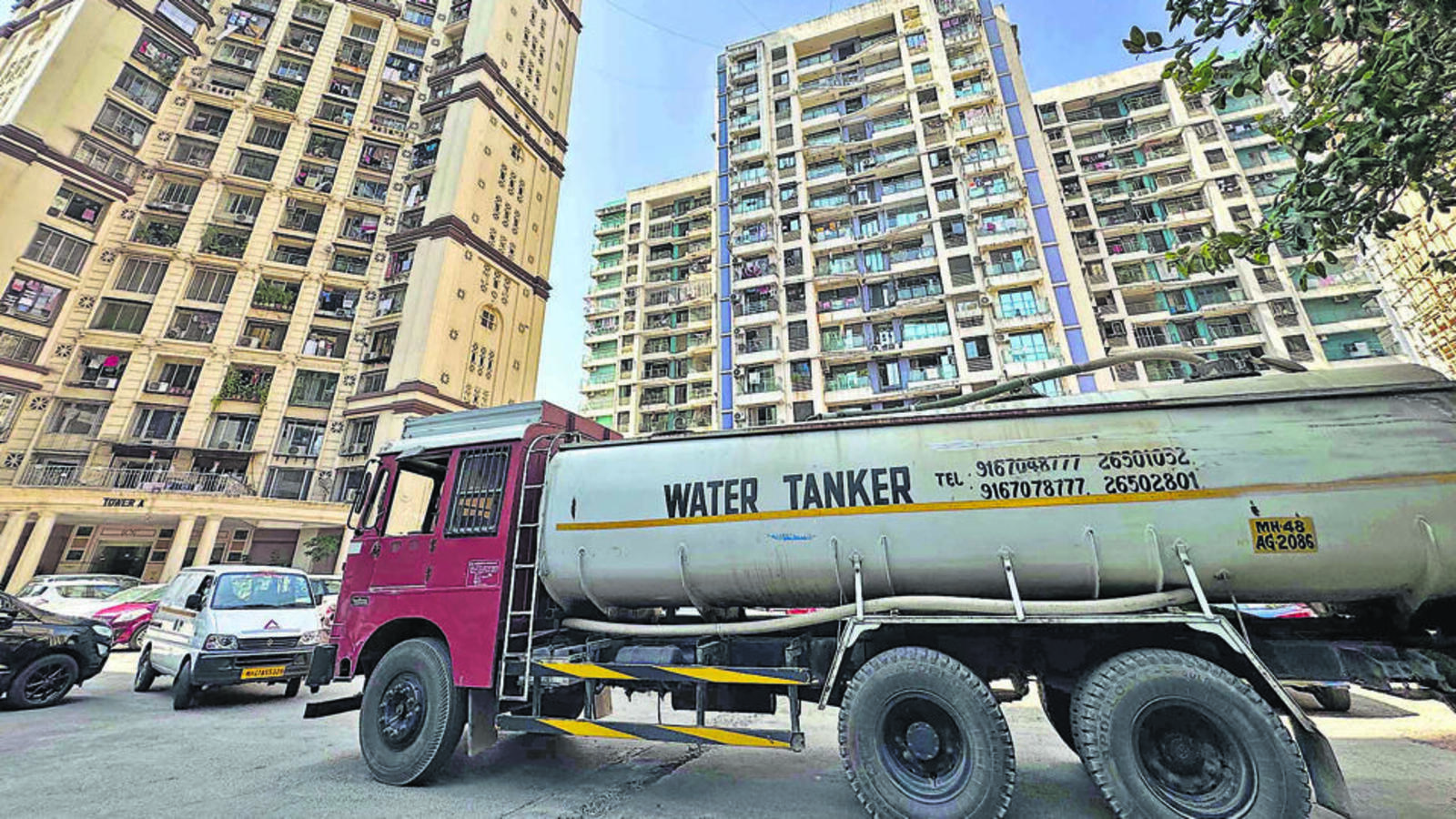
Hyderabad Midnight Tanker Supply Reveals Growing Water Stress
Mumbai will begin implementing phased water restrictions from mid-May as civic authorities attempt to preserve reservoir reserves ahead of the monsoon, highlighting the growing vulnerability of India’s financial capital to climate-linked water stress and uneven urban resource planning. The Brihanmumbai Municipal Corporation (BMC) has confirmed a 10 per cent reduction in water supply beginning May 15 after reviewing reservoir levels and weather forecasts indicating the possibility of weaker-than-expected rainfall during the coming monsoon cycle. The decision comes at a critical point in the summer season, when rising temperatures and increasing consumption place pressure on the city’s ageing water infrastructure.
Mumbai depends on seven lakes located in neighbouring districts for its daily water needs. Civic data reviewed by officials shows available reserves remain higher than levels recorded during the same period over the past two years. However, with the city consuming more than 4,000 million litres each day, authorities are seeking to extend available supplies until fresh inflows arrive later in the monsoon season. The planned Mumbai water cut is expected to affect residential neighbourhoods, commercial establishments and sections of the construction sector already dealing with rising operating costs and infrastructure delays. Urban analysts say such restrictions increasingly reflect structural challenges rather than isolated seasonal shortages. Climate experts point to shifting rainfall patterns, delayed monsoons and prolonged dry spells as growing risks for large metropolitan regions dependent on distant reservoirs. In Mumbai’s case, rapid urban expansion, population density and high levels of non-revenue water loss through leakages continue to intensify supply pressures.
Several civic representatives have urged the administration to move beyond temporary restrictions and accelerate long-term water security measures. Proposals under discussion include expansion of recycled water networks, stricter groundwater monitoring, rainwater harvesting enforcement and faster upgrades to ageing distribution pipelines. Urban planners note that while emergency conservation measures may help stabilise reserves in the short term, Mumbai’s long-term resilience will depend on decentralised water management and reduced dependence on a single seasonal rainfall cycle. Industry observers also warn that repeated summer water cuts could affect real estate activity and increase operational costs for businesses reliant on uninterrupted supply. The issue has renewed focus on equitable water distribution across the metropolitan region. Informal settlements and densely populated low-income communities are often disproportionately affected during periods of reduced supply, with residents relying on private tankers or shared access points. Water experts argue that climate adaptation planning in Indian cities must prioritise both infrastructure efficiency and social equity.
Environmental specialists further stress the need to protect catchment areas surrounding Mumbai’s reservoir network, warning that deforestation and unchecked development in ecologically sensitive zones can weaken long-term water retention capacity. As the city enters the peak pre-monsoon period, the effectiveness of the Mumbai water cut strategy will likely depend on rainfall patterns over the coming weeks, alongside the administration’s ability to balance conservation, infrastructure upgrades and fair access to essential urban resources.