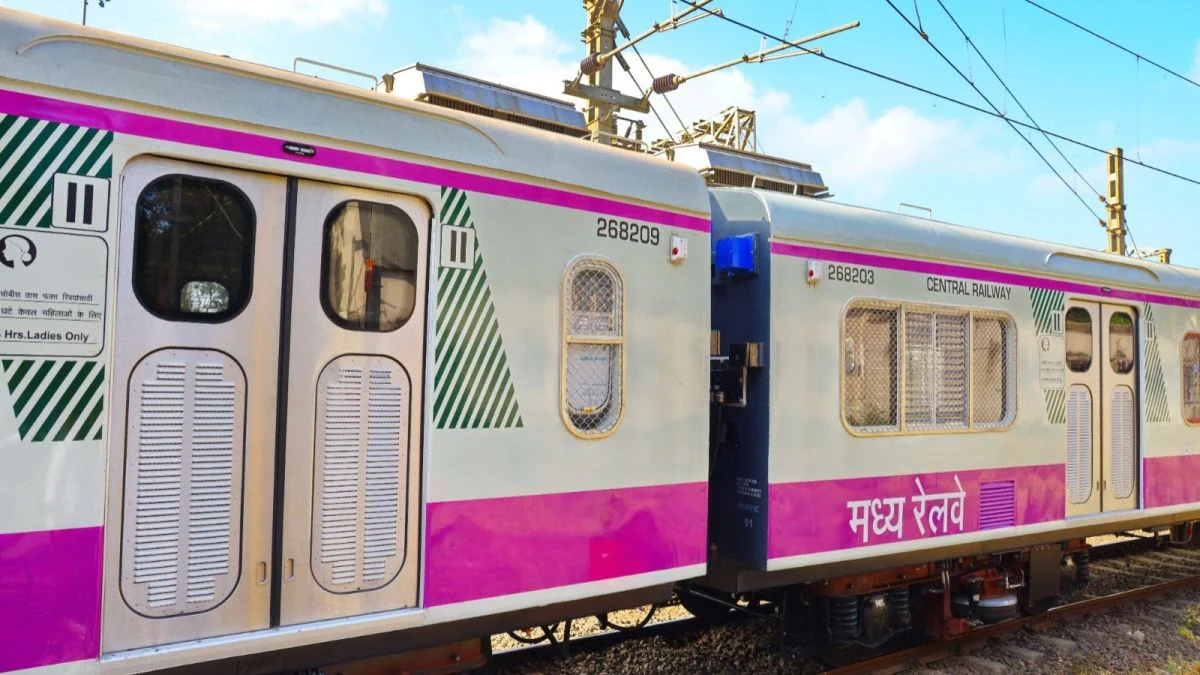
Mumbai’s suburban rail network is preparing for a significant operational upgrade, with authorities planning to introduce Mumbai local automatic doors in non-air-conditioned trains to improve passenger flow and safety. The move comes as the city’s lifeline continues to grapple with extreme crowding, especially during peak hours, and signals a shift towards modernising legacy transport systems without sharply increasing operational costs. The proposed system is designed to regulate boarding and alighting by ensuring doors open only when trains halt at platforms. Transport officials suggest this could reduce delays caused by overcrowding at entry points, a common occurrence that often disrupts tightly scheduled suburban services. By structuring passenger movement, the initiative aims to create a more predictable and efficient commuting experience.
Unlike air-conditioned trains where automatic doors are standard, the integration of Mumbai local automatic doors into non-AC coaches presents both technical and behavioural challenges. Engineers are working on sensor-based mechanisms that prioritise safety while maintaining energy efficiency. The absence of air-conditioning systems reduces power demand, making the upgrade more viable across a larger fleet that serves millions daily. Urban mobility experts view the development as part of a broader transition towards safer and more inclusive public transport. Open-door travel, long associated with Mumbai’s suburban trains, has contributed to accidents and operational risks. Introducing controlled door systems could help align the network with global safety practices while addressing long-standing commuter concerns. However, the shift also raises questions about passenger comfort, particularly in a tropical coastal city where ventilation is crucial. Some commuters have expressed apprehension that enclosed coaches without climate control may lead to discomfort during summer months. Officials involved in the rollout indicate that design adjustments, including ventilation improvements, are being evaluated to balance safety with liveability.
From an infrastructure perspective, the upgrade is expected to be implemented in phases to minimise disruption to daily services. Retrofitting existing rolling stock and aligning platform operations will require coordination across multiple agencies. A senior railway planner noted that incremental modernisation, rather than large-scale replacement, is key to maintaining continuity in a high-demand system like Mumbai’s. The introduction of Mumbai local automatic doors also reflects a larger policy direction towards energy-conscious transit solutions. By avoiding the higher energy consumption associated with fully air-conditioned systems, the approach supports cost-effective expansion while keeping emissions relatively lower. This aligns with broader efforts to create sustainable urban mobility networks in rapidly growing cities. For Mumbai, where suburban trains remain the backbone of daily commuting, even incremental improvements can have wide-reaching impacts on productivity and quality of life. As passenger volumes continue to rise, the success of such upgrades will depend on how effectively they integrate with crowd management strategies, station infrastructure, and commuter behaviour.
Looking ahead, the initiative could set a precedent for similar interventions across other high-density rail systems in India. Ensuring that safety, efficiency, and affordability evolve together will be central to building a resilient and future-ready public transport ecosystem.