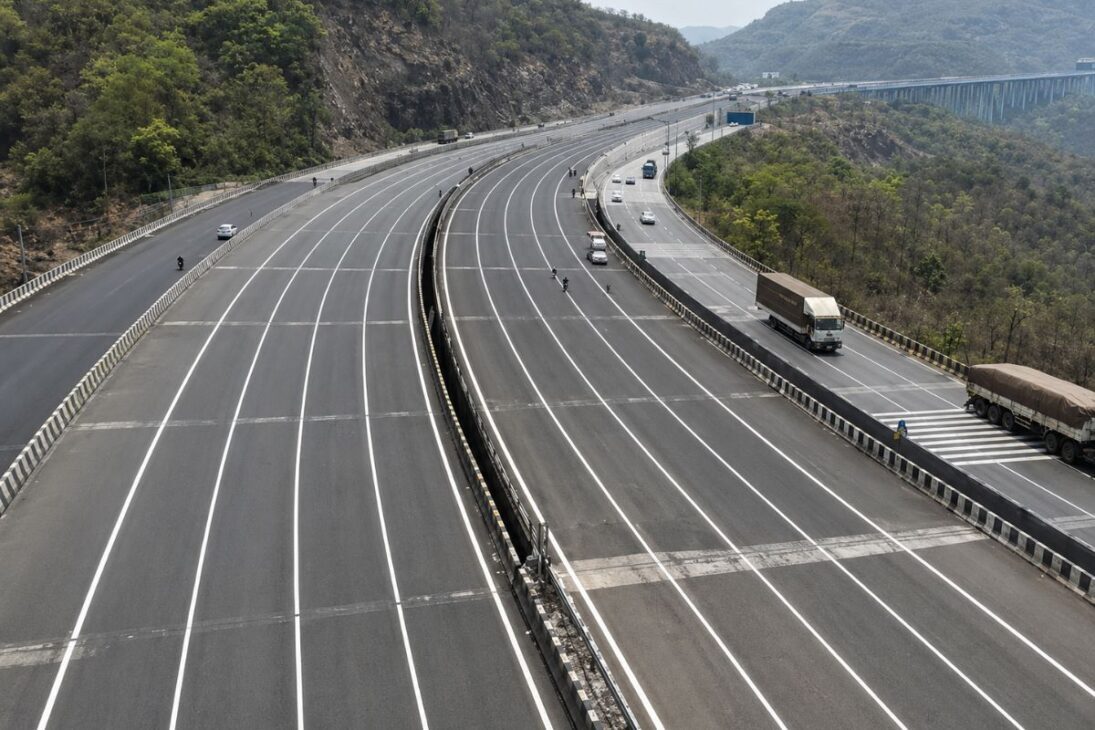
Mumbai Pune Expressway Adds Advanced Crash Barriers
A key safety upgrade is being introduced along the Mumbai–Pune Expressway, where a new generation of advanced crash barriers is being deployed as part of ongoing infrastructure improvements on the corridor’s Missing Link section. The move signals a shift towards embedding higher safety standards into highway design, particularly on high-speed routes that carry dense intercity traffic. The installation involves precast concrete barriers engineered to withstand high-impact collisions while minimising damage to vehicles and occupants. Designed for challenging traffic conditions, these systems aim to contain and redirect vehicles during accidents, reducing the likelihood of cross-lane incidents and severe injuries. Transport safety specialists note that such interventions are increasingly critical on expressways where vehicle speeds and volumes continue to rise.
The Mumbai–Pune corridor, one of the busiest economic links in western India, has long faced safety concerns due to sharp gradients, heavy freight movement, and fluctuating weather conditions in ghat sections. By integrating advanced crash barriers into newly constructed stretches, authorities are attempting to address long-standing risks while aligning with international road safety benchmarks. Infrastructure analysts highlight that the adoption of globally tested safety systems reflects a broader evolution in India’s highway development approach—from focusing primarily on capacity expansion to prioritising user safety and resilience. “Modern road design must anticipate failure scenarios and mitigate their consequences,” said a senior transport planner, pointing to the importance of protective infrastructure in reducing fatalities. The initiative also intersects with sustainability considerations. The broader Missing Link project incorporates the use of recycled construction materials, reflecting an emerging trend towards circular practices in large-scale infrastructure.
While safety features such as crash barriers are primarily designed for impact resistance, their integration within environmentally conscious construction frameworks indicates a dual focus on durability and reduced resource intensity. From an economic standpoint, safer highways can yield long-term benefits by lowering accident-related disruptions, reducing insurance and healthcare costs, and improving logistics reliability. For freight operators and daily commuters, enhanced safety measures contribute to more predictable travel conditions, supporting productivity across the Mumbai–Pune economic corridor. However, experts caution that physical infrastructure alone cannot address road safety challenges. Effective enforcement of traffic regulations, driver awareness, and vehicle standards remain equally important. Without these complementary measures, even the most advanced systems may have limited impact on overall accident rates. The deployment of advanced crash barriers also raises questions about standardisation across India’s highway network. As more expressways and economic corridors are developed, consistent safety benchmarks could play a crucial role in ensuring equitable protection for road users across regions.
Looking ahead, the success of such upgrades will depend on how well they are integrated into a comprehensive road safety strategy—one that balances engineering solutions with behavioural and policy interventions. As India expands its high-speed road network, embedding safety and sustainability at the design stage will be essential to building transport systems that are not only efficient, but also resilient and people-centric.