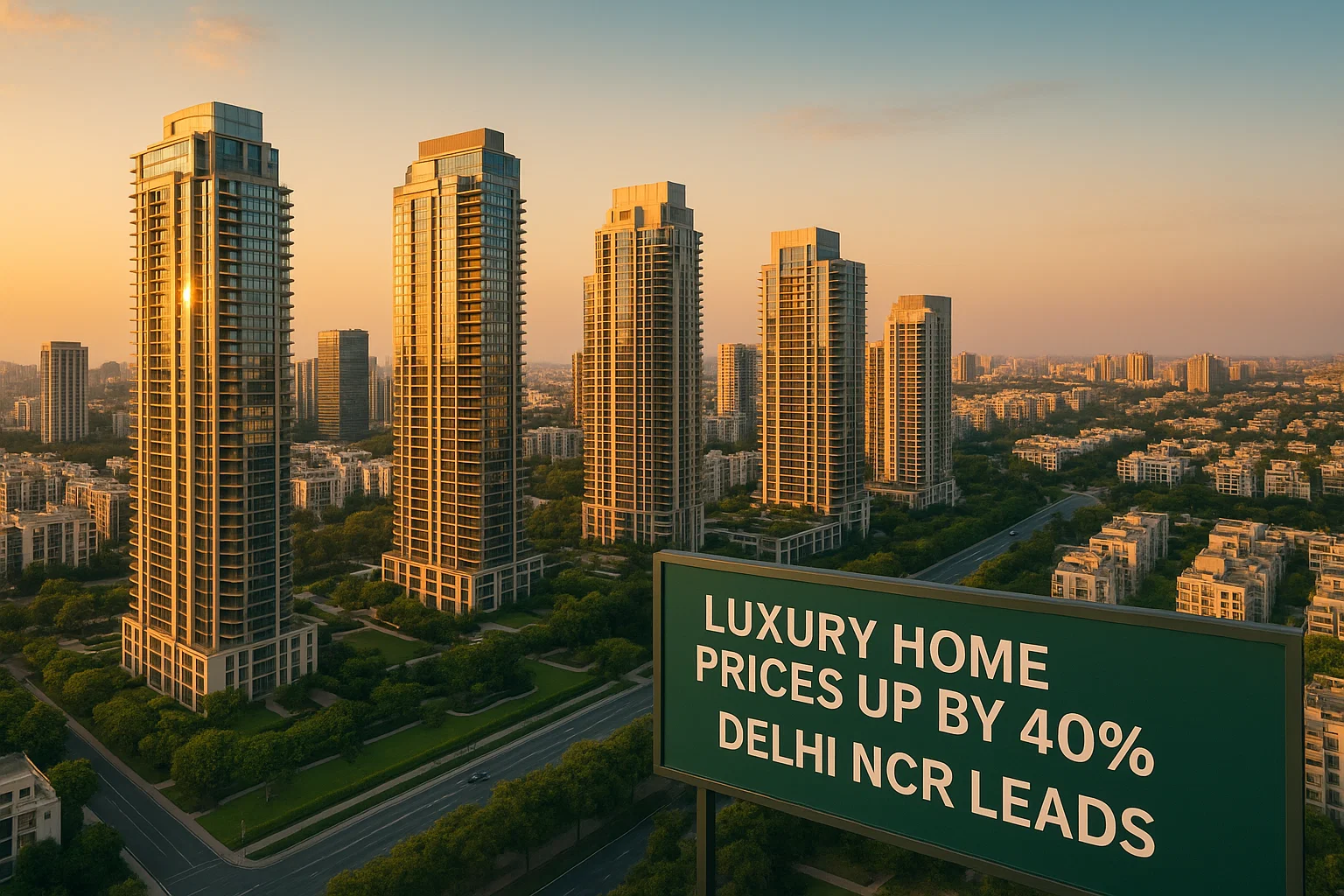
A sharp escalation in housing costs across India’s largest urban centres is reshaping affordability dynamics, with Delhi-NCR and other major cities witnessing apartment price increases of up to 20% in the first quarter of 2026. The trend reflects mounting construction costs and a shift toward higher-end developments, raising concerns about equitable access to housing in rapidly expanding urban regions. Across seven key metropolitan markets including Delhi-NCR, Mumbai, Bengaluru, Pune, Chennai, Hyderabad and Kolkata residential prices continued their upward trajectory between January and March. Industry estimates indicate that while housing demand remains resilient, its pace is beginning to moderate, even as supply expands more aggressively. This divergence suggests a market recalibration, where developers are responding to cost pressures rather than purely demand-driven growth.
The rise in India housing prices is closely tied to increasing input costs, including land acquisition, raw materials, and labour. Urban planners point out that this cost escalation is pushing developers toward premium and luxury segments, where margins are higher. However, such a shift risks sidelining mid-income and affordable housing, deepening existing inequalities in access to urban homeownership. At the same time, new housing supply has outpaced sales growth, indicating cautious optimism among developers. While additional inventory could stabilise prices over time, experts warn that without a stronger focus on inclusive housing, surplus supply may not translate into improved affordability for lower-income groups.
The implications extend beyond real estate markets. Rising housing costs are increasingly shaping migration patterns, commuting distances, and urban sprawl. In regions like Delhi-NCR, where peripheral areas such as Noida, Ghaziabad and Faridabad continue to absorb demand, infrastructure strain and environmental stress are becoming more pronounced. Longer travel times and dependence on private vehicles also challenge sustainability goals. Urban development specialists highlight that the current trajectory of India housing prices underscores the need for policy alignment. Incentivising green construction, promoting rental housing frameworks, and ensuring land use efficiency could help balance growth with inclusivity. There is also a growing call for integrating climate resilience into housing design, particularly in cities facing heat stress, water scarcity, and extreme weather variability.
Interestingly, recent weather fluctuations including unseasonal rainfall and cooler conditions in northern regions have provided temporary relief from rising temperatures, but they also highlight the increasing unpredictability of urban climates. As cities expand and densify, the intersection of housing, infrastructure, and environmental resilience will become even more critical. Looking ahead, the housing market’s direction will depend on how effectively policymakers, developers, and urban authorities respond to these converging pressures. Without targeted interventions, the current rise in India housing prices may continue to challenge the vision of inclusive, sustainable urban growth.