


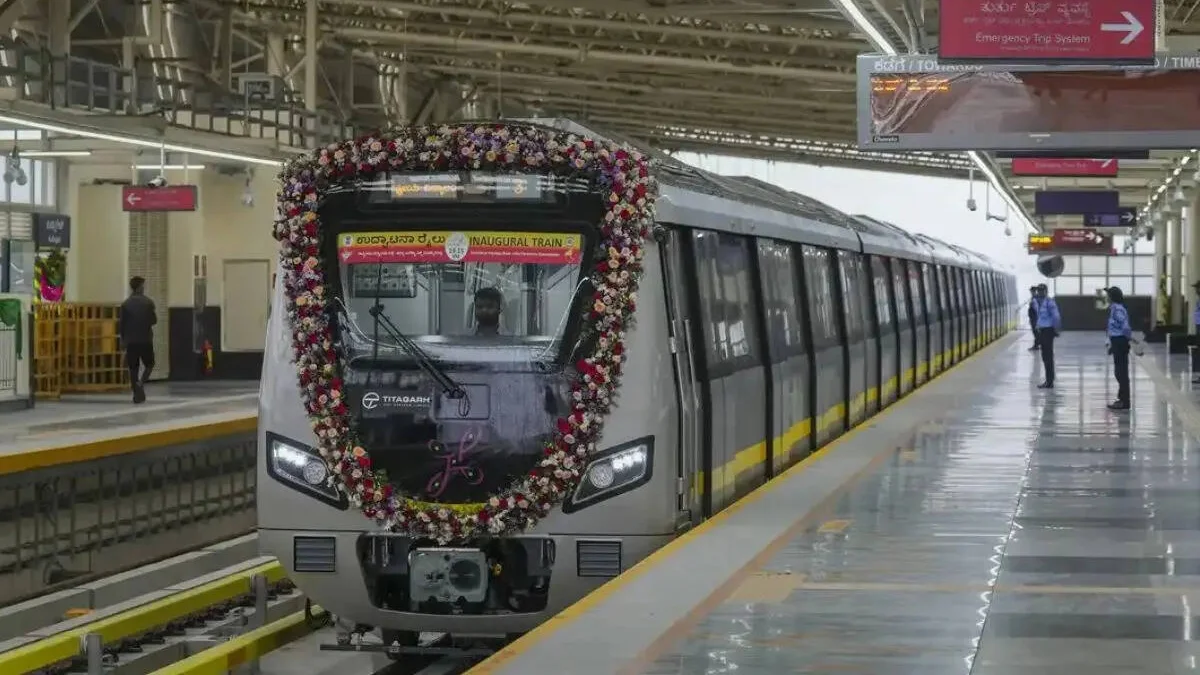
Bengaluru’s metro expansion has received a fresh operational boost with the induction of an additional train set for the upcoming Yellow Line, signalling steady progress towards enhancing capacity on one of the city’s most anticipated transit corridors. The development comes as authorities prepare for the eventual launch of the line, which is expected to serve key residential and employment zones.
The addition of rolling stock is a critical step in ensuring service readiness, particularly in a city where demand for reliable public transport continues to outpace supply. The latest update to the Bengaluru Metro Yellow Line fleet reflects a phased approach to building operational capacity ahead of full-scale passenger services.Officials indicate that the Yellow Line will connect major urban nodes, including industrial and IT corridors, potentially easing pressure on road networks that currently experience heavy congestion. The increased fleet strength is expected to support higher service frequency, reduce waiting times, and improve overall commuter experience once the line becomes operational.Urban mobility experts view the expansion of the Bengaluru Metro Yellow Line as central to the city’s long-term transport strategy. With rising vehicle ownership and limited road capacity, metro systems are increasingly seen as the backbone of sustainable urban mobility. Expanding metro coverage not only improves connectivity but also encourages a modal shift away from private vehicles.The addition of train sets also highlights the importance of synchronising infrastructure readiness with operational planning.
While track construction and station development form the backbone of metro projects, adequate rolling stock is essential to ensure efficiency and reliability. Delays in fleet deployment can limit the effectiveness of otherwise completed infrastructure.From a sustainability perspective, strengthening metro capacity aligns with efforts to reduce urban emissions and improve air quality. Public transport systems, particularly electric rail networks, offer a lower-carbon alternative to road-based commuting. As Bengaluru grapples with pollution and traffic congestion, investments in metro infrastructure are seen as a step towards building a more climate-resilient city.However, experts caution that the success of the Yellow Line will depend on its integration with the broader transport ecosystem. Last-mile connectivity, feeder services, and pedestrian-friendly infrastructure around stations will play a crucial role in determining ridership levels. Without seamless connectivity, the benefits of expanded metro capacity may not be fully realised.There are also implications for urban development. Metro corridors often drive real estate growth and commercial activity in surrounding areas.While this can stimulate economic development, it also requires careful planning to ensure that growth remains inclusive and does not lead to unregulated expansion or displacement.
As Bengaluru continues to expand its metro network, the focus will remain on aligning infrastructure development with commuter needs and sustainability goals. The strengthening of the Bengaluru Metro Yellow Line fleet marks another step towards improving urban mobility, but its long-term impact will depend on effective execution and integration within the city’s evolving transport framework.
Also Read:Bengaluru Metro Pink Line Trials Begin Boosting Connectivity
